
Carrier surcharges for UK ecommerce brands: the extra charges that raise your real delivery cost
Fuel, remote postcode, oversize, peak and address correction surcharges explained, plus how to work out your real cost per parcel from your own order mix.

Carrier surcharges are the extra charges a carrier adds to the base parcel rate: fuel, remote postcodes, home delivery, heavy or awkward parcels, peak periods and address corrections. Fuel alone is a moving percentage. FedEx's UK domestic fuel surcharge is 22.25% from 2 November to 6 December 2026, so the cost on your invoice sits well above the headline rate you were quoted.
Below are the common surcharges with figures from carriers' own pages, checked on 4 November 2026, then how they reach a 3PL invoice and how to model your real cost. Carriers change these often, so check with the carrier before you ship.
The pain points
Our quote said one price per parcel and the first invoice averaged a lot more.
There's a fuel line on every invoice and I can't tell how it's worked out.
Orders to the Highlands and Northern Ireland cost us more to send than we charge the customer.
Our delivery bill jumped in November and nobody warned us it would.
We got charged for address corrections on orders our own checkout let through.
The surcharges you will actually see
Names and prices differ by carrier, and contract rates vary.
Fuel surcharge
Fuel is a percentage tied to a fuel price index. FedEx bases its UK domestic surcharge on monthly average diesel prices with a one month lag, and applies it to the net transportation rate and a set of listed surcharges, says its UK fuel surcharge page. UPS resets its Standard fuel surcharge weekly against European diesel prices from two weeks earlier, per its fuel surcharge page.
Royal Mail's business surcharges page sets its Fuel and Energy Surcharge at 16% from 3 May 2026, covering services including Tracked 24 and Tracked 48. Parcelforce Worldwide moved to 16% from 5 October 2026. It applies to the price after discounts and before VAT, and not to non-contract parcels.
Residential delivery
UPS defines a residential delivery as one made to a home, including a business run from a home. Its UK service guide effective 7 June 2026 lists a residential surcharge of GBP 3.40 per shipment for its core services. Ask whether your carrier's rate already assumes a home address.
Remote postcodes
Carriers keep postcode lists for areas that cost more to reach. The same UPS guide charges extended area delivery at GBP 0.74 per kg with a GBP 37.25 minimum. FedEx calls its version Extended Area Service, with out of delivery area charges set by a global postcode list. Royal Mail's business surcharges page lists no geographic surcharge.
The Scottish Government's statement of principles for parcel deliveries asks retailers to keep geographic surcharges to the true extra cost and show them at the earliest possible stage of buying, noting particular relevance to the Highlands and Islands. Lists differ by carrier, so run your customer postcodes, including Northern Ireland and the islands, against each carrier's list.
Additional handling and oversize
UPS charges GBP 12.10 per package for additional handling when the longest side passes 100 cm, the actual weight passes 25 kg, or the item is not fully enclosed in a corrugated cardboard box. A package whose length plus girth passes 300 cm is a Large Package, charged GBP 56.55 with a 40 kg minimum billable weight. FedEx lowered its domestic additional handling weight trigger from 31 kg to 25 kg from 1 June 2026. Royal Mail added a £4.15 Manual Handling Surcharge per Parcelforce item from 5 October 2026. Size changes the base rate too, as our guide to volumetric weight and shipping cost explains.
Peak surcharges
Royal Mail's UK Peak Surcharge runs from 2 November 2026 to 10 January 2027 inclusive, at £0.15 per Tracked 48 parcel and £0.22 per Tracked 24 parcel. UPS has a Surge Emergency Fee of GBP 0.48 per domestic package delivered to a home from 20 September 2026 to 6 February 2027, with fuel charged on top. Its demand surcharges add GBP 7.25 to additional handling packages and GBP 68.95 to Large Packages until 6 February 2027. Plan for these in your peak season capacity planning.
Address correction
UPS bills GBP 10.30 per package when it has to correct an address. Royal Mail charges return to sender fees for incorrect or incomplete addresses, gone aways and refusals, set at £3.50 per Royal Mail 24 parcel excluding VAT since 11 August 2025. Address checks at checkout catch typos before a label prints.
How surcharges reach you through a 3PL invoice
A 3PL usually ships on its own carrier accounts, and you see carrier costs in one of three ways:
At cost. Each surcharge is its own line, matched to a tracking number.
With a margin. The same lines, with a percentage added.
An all-in parcel rate. One price, reviewed when carriers change charges.
Some 3PLs let you ship on your own carrier account, so you see the carrier's invoice directly. In every model, watch for fuel stacking: when a carrier applies fuel to surcharges, every remote or oversize charge carries fuel on top. Our guide to choosing a 3PL for ecommerce in the UK covers comparing full quotes.
Model your real cost per parcel from your own order mix
A headline rate prices a plain parcel to an ordinary address. Build your average from your real orders.
Export three to six months of orders with weight, box size, postcode and service.
Tag each order for remote postcode (against the carrier's list), handling or oversize, and peak dates.
Price each order at the base rate for its weight band and service.
Add each surcharge, multiplied by the share of orders it hits.
Apply fuel to the base rate, and to the surcharges the carrier says fuel covers.
Divide by the number of orders to get your effective cost per parcel.
A worked example: 8,000 parcels a month at a base rate of £3.50. Fuel at 16% adds £0.56. 3% of orders go to remote postcodes at £9.00, which averages £0.27 per parcel. 1.5% trigger additional handling at £12.00, adding £0.18. 0.5% need address corrections at £10.00, adding £0.05. Fuel at 16% on those surcharges adds £0.08. Effective cost: £4.64 per parcel, £1.14 above headline. These figures are made up to show the method.
Set your free shipping threshold on this effective figure.
What to ask a 3PL
Do you ship on your carrier accounts or mine, and can I see each carrier's current surcharge list?
Are surcharges passed through at cost or with a margin? Can I see a sample invoice line?
Which fuel index does each carrier use, how often does it change, and does fuel apply to surcharges too?
Which of my postcodes do your carriers treat as remote, and can you route those to a cheaper carrier?
Which of my SKUs trip additional handling or oversize rules, and can a different box avoid it?
Who pays for an address correction caused by your labelling error, and who pays for a customer typo?
Which peak surcharges apply this season, from which dates, and can I get a monthly export of charges by tracking number?
Our recommendation: model your effective cost per parcel before you sign
Get the current surcharge list for every carrier your 3PL would use, with the date it applies from.
Run your last three to six months of orders through the method above to get your effective cost per parcel.
Ask each 3PL for a sample invoice showing real surcharge lines.
Rebox any SKU that trips handling rules where a smaller box works.
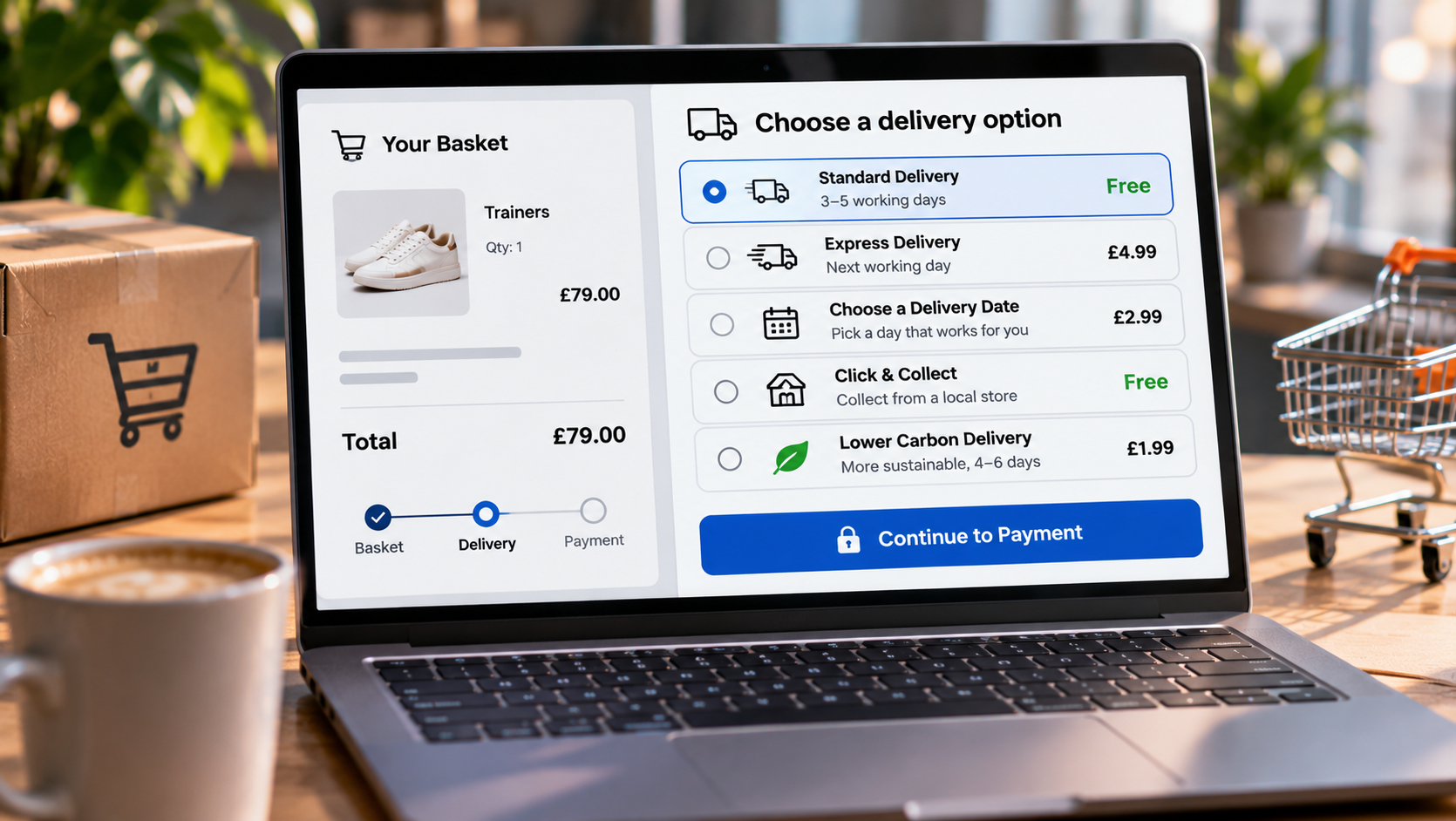
Show remote delivery charges early in checkout, and price free delivery on the effective cost.
Check a month of invoices against your model each quarter, and update it when carriers change charges.
What waiting costs
Each month priced on the headline rate takes the gap out of margin. Remote orders can lose money on every sale. Peak surcharges land at your busiest time. Customers who meet a surcharge at the last step of checkout can leave, and our State of Ecommerce Fulfilment 2026 report covers how delivery costs now shape conversion. Fuel percentages move weekly or monthly, so an old model drifts from your invoices.
A worked example: a brand sends 8,000 parcels a month and budgets on a £3.50 headline rate when its effective cost is £4.64. The gap is £1.14 a parcel, or £9,120 a month and £27,360 a quarter, gone before anyone reprices delivery. These figures are made up to show the method.
People Also Ask
What is a fuel surcharge on parcel delivery?
It is a percentage a carrier adds to its rate, tied to a fuel price index. FedEx's UK domestic surcharge follows monthly diesel prices, and UPS adjusts its Standard surcharge weekly. Royal Mail's is 16% for contract services from 3 May 2026.
Why do couriers charge more to deliver to the Highlands and Northern Ireland?
Carriers keep postcode lists for areas that cost more to serve, and lists differ by carrier. The Scottish Government's statement of principles asks retailers to keep any geographic surcharge to the true extra cost and show it early in the buying process.
Can a 3PL remove carrier surcharges?
The carrier sets its surcharges, and a 3PL passes them on in some form. A good 3PL cuts how often you pay them by routing remote postcodes to cheaper carriers, packing SKUs into boxes that avoid handling triggers, and checking addresses before labels print.
Finding the right 3PL partner
Logan, FulfilQ's advisor on the website, matches brands to verified providers by order volume, product type and region. Tell Logan your monthly parcel volume, your typical box sizes and where your customers are, and you get a shortlist to ask about carrier accounts, fuel surcharges and how surcharges show on the invoice. Start at fulfilq.com and Ask Logan, or Submit an RFP and verified providers come back to you. You can also browse the full provider directory.



Comments
Share a question or insight about this article.