
Volumetric Weight Is Quietly Taxing Every Order You Ship
Couriers bill the greater of actual and volumetric weight. See the formula, a worked example and how to right-size boxes before a 3PL ships your orders.
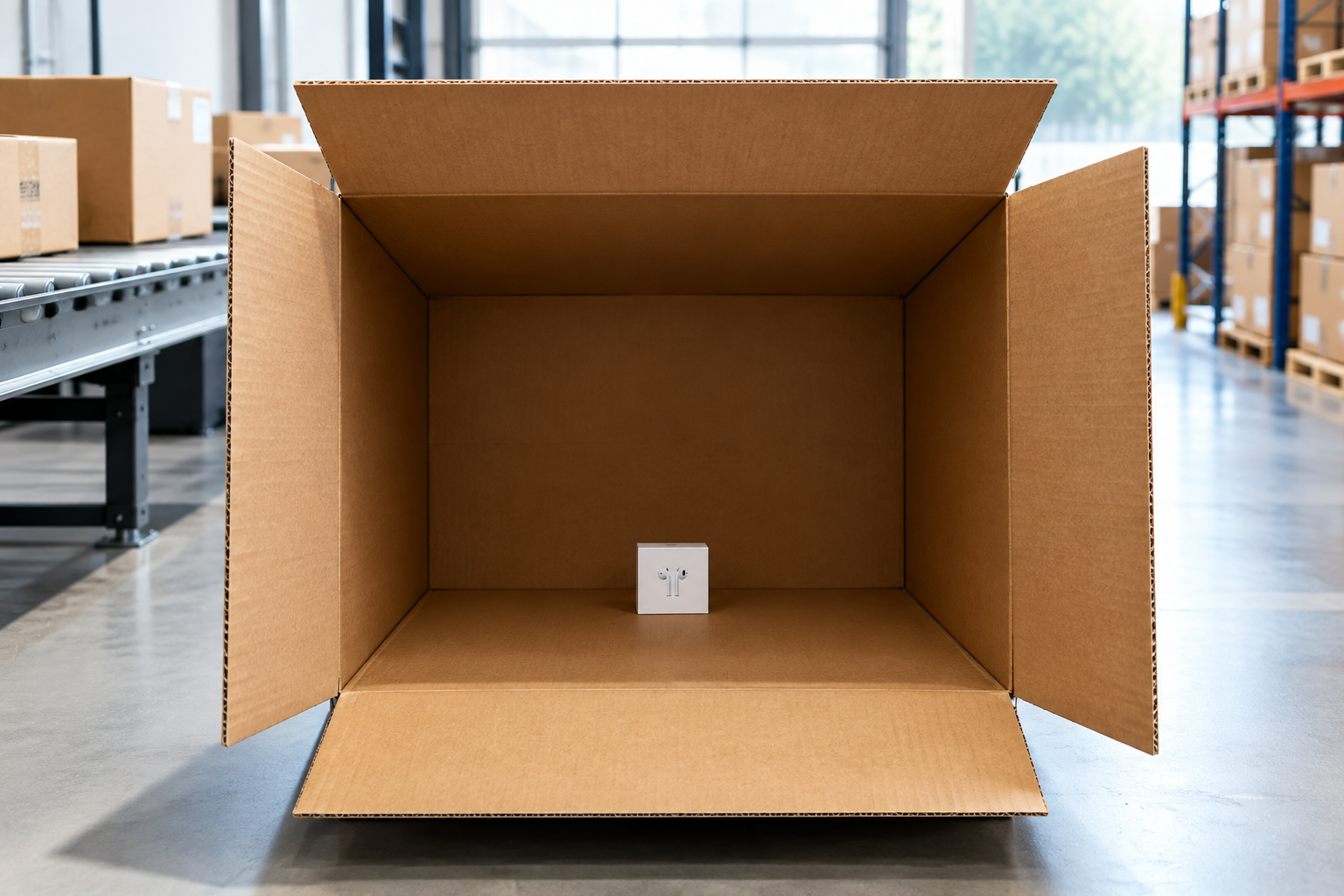
Couriers bill for the greater of two weights: what the parcel weighs and the space it takes up. The space figure is called volumetric weight, or dimensional weight in the US. A light product in a large box is billed as a heavy parcel. Many parcel carriers work it out as length times width times height in centimetres, divided by 5,000. Some services use a different divisor, so ask for yours in writing.
This guide shows the sum, an invented example, and how to choose boxes before a 3PL ships a single order.
The pain points
A light product ships in a big box and the carrier bills for the box.
The postage line jumps after a new box size is introduced, and nobody can say why.
Boxes get chosen for convenience at the packing bench, and the cost appears weeks later on an invoice.
A 3PL quote used dimensions that differ from the boxes you really use.
How volumetric weight is calculated
Measure the outside of the packed parcel in centimetres. Multiply length by width by height. Divide by the carrier's divisor, commonly 5,000 for UK parcels. The result is the volumetric weight in kilograms. The carrier then bills the higher of that figure and the actual weight.
Here is an invented example. A product weighs 1.2 kg.
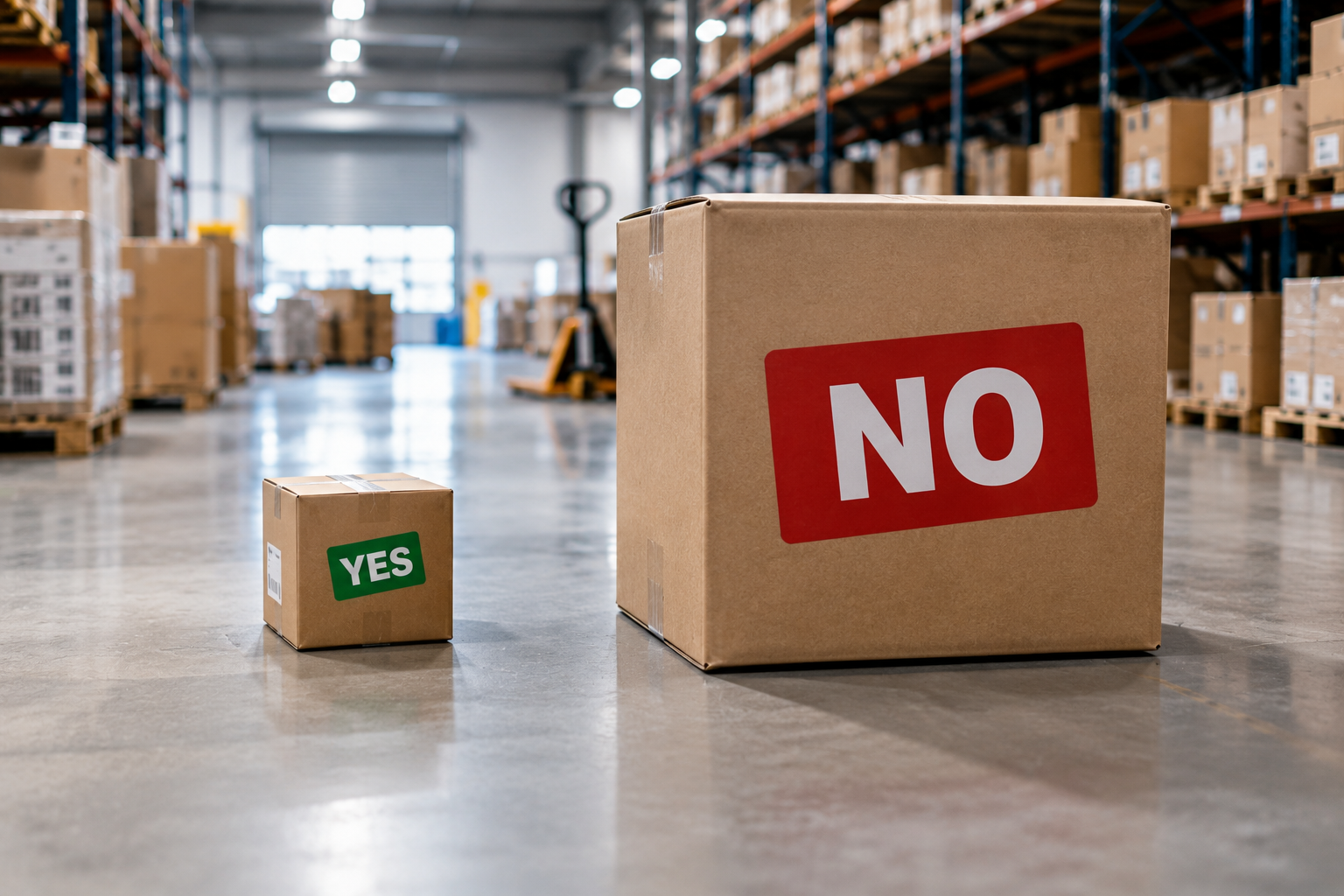
In a 40 x 30 x 25 cm box: 30,000 cubic centimetres divided by 5,000 gives 6.0 kg. The parcel is billed as 6.0 kg.
In a 30 x 20 x 15 cm box: 9,000 cubic centimetres divided by 5,000 gives 1.8 kg. The parcel is billed as 1.8 kg.
The product and the postage label are the same. The larger box is billed for 4.2 kg more. As an invented simplification, say each extra kilo adds £0.90 to the rate. That is £3.78 on every parcel, or £3,780 a month at 1,000 parcels. Real rate cards use weight bands, so check where your parcels fall.
Where volumetric weight bites
Light, bulky goods: cushions, apparel in rigid boxes, plastic items, anything packed with void fill.
Oversized outer cartons: a box chosen to fit the biggest product in the range, and then used for all of them.
International and air freight: these often use a different divisor from domestic parcels, so a box that works at home can cost more abroad.
Surcharges: many carriers charge extra for parcels over a set size, whatever they weigh.
Some carriers price on weight bands and size limits and apply volumetric weight above a threshold. Ask each one for the divisor, the rounding rule, the maximum dimensions and the surcharge list.
Our recommendation: right-size before you quote
Measure the outside dimensions of the packed parcel for your top ten products.
Work out both weights for each and mark every parcel billed above its actual weight.
Reduce your range to a small set of box sizes that fit most orders.
Use mailer bags for soft goods where the product allows it.
Send your 3PL these dimensions when you ask for a quote, and ask which cartons they stock.
Review the sizes whenever a new product launches.
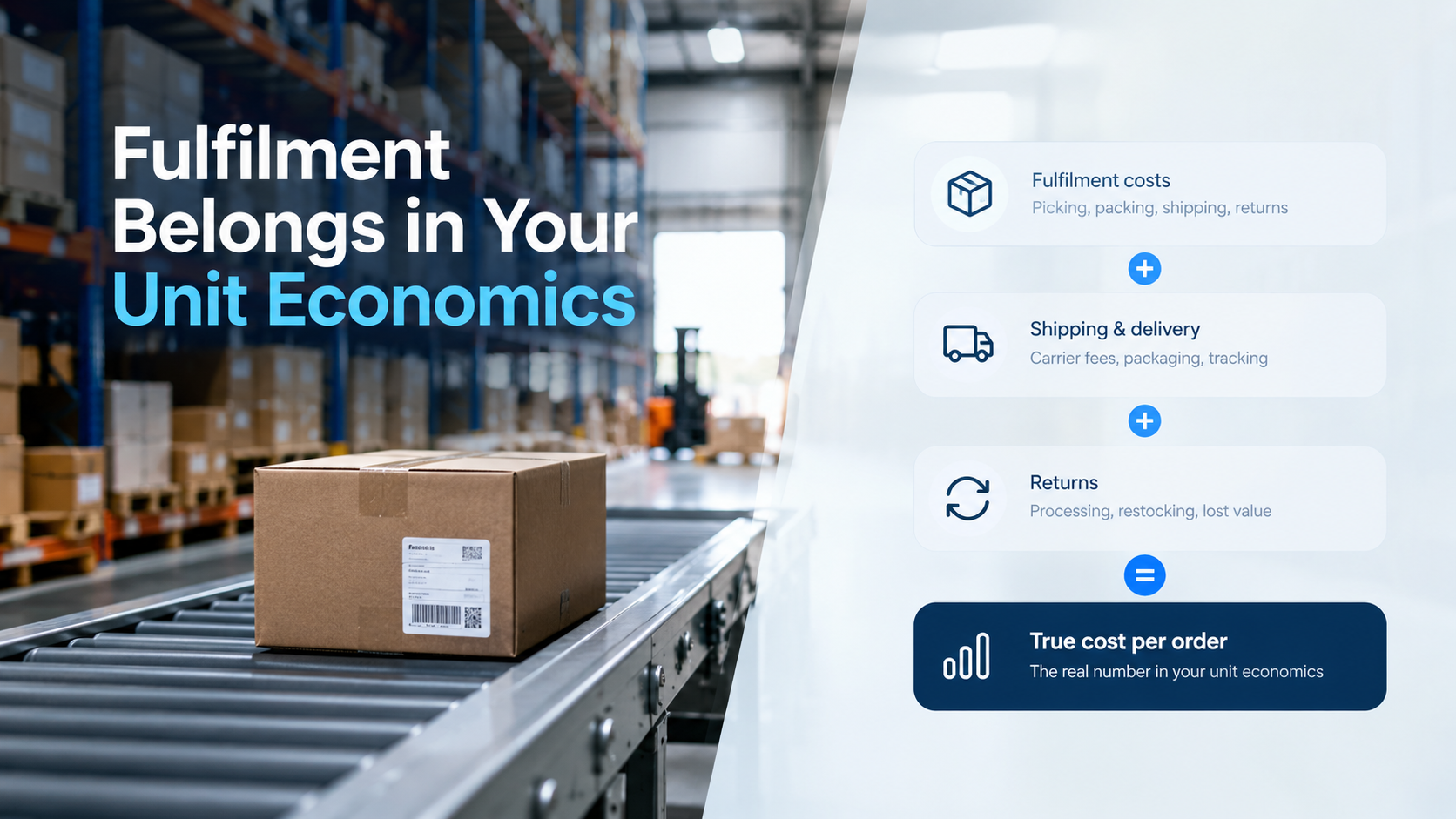
Accurate dimensions also make your 3PL cost comparison reliable, and they feed straight into your free shipping threshold and your unit economics.
What waiting costs
In the example, 1,000 parcels a month at £3.78 extra is £3,780 a month, or £11,340 a quarter. The fix is a tape measure, a calculator and an hour with your box supplier. Each month it waits costs the same again.
People Also Ask
What is volumetric weight?
It is a weight calculated from the size of a parcel. Carriers use it to charge for the space a parcel takes in their vehicles, and they bill the higher of the volumetric weight and the actual weight.
How do I calculate volumetric weight?
Multiply the length, width and height of the packed parcel in centimetres, then divide by the carrier's divisor. Many UK parcel services use 5,000. Check the divisor in your carrier's terms.
Who chooses the box when a 3PL packs my orders?
It depends on the agreement. Some providers choose from the cartons they stock, and others use the packaging you supply. Agree box sizes and packing rules during onboarding, and ask whether the provider reviews box sizes against billed weight.
Finding the right 3PL partner
FulfilQ's advisor, Logan, matches brands to verified providers by order volume, product type and region. Tell Logan what you ship and where it goes, and you get a shortlist you can ask about cartons, packing rules and carrier rates. Start at fulfilq.com or browse the full provider directory.


Comments
Share a question or insight about this article.