
Life After Royal Mail: Courier Options for Brands That Have Outgrown Click & Drop
Outgrown Click & Drop? Compare UK courier options on price, service and size limits, and see where a 3PL with negotiated carrier rates fits in.
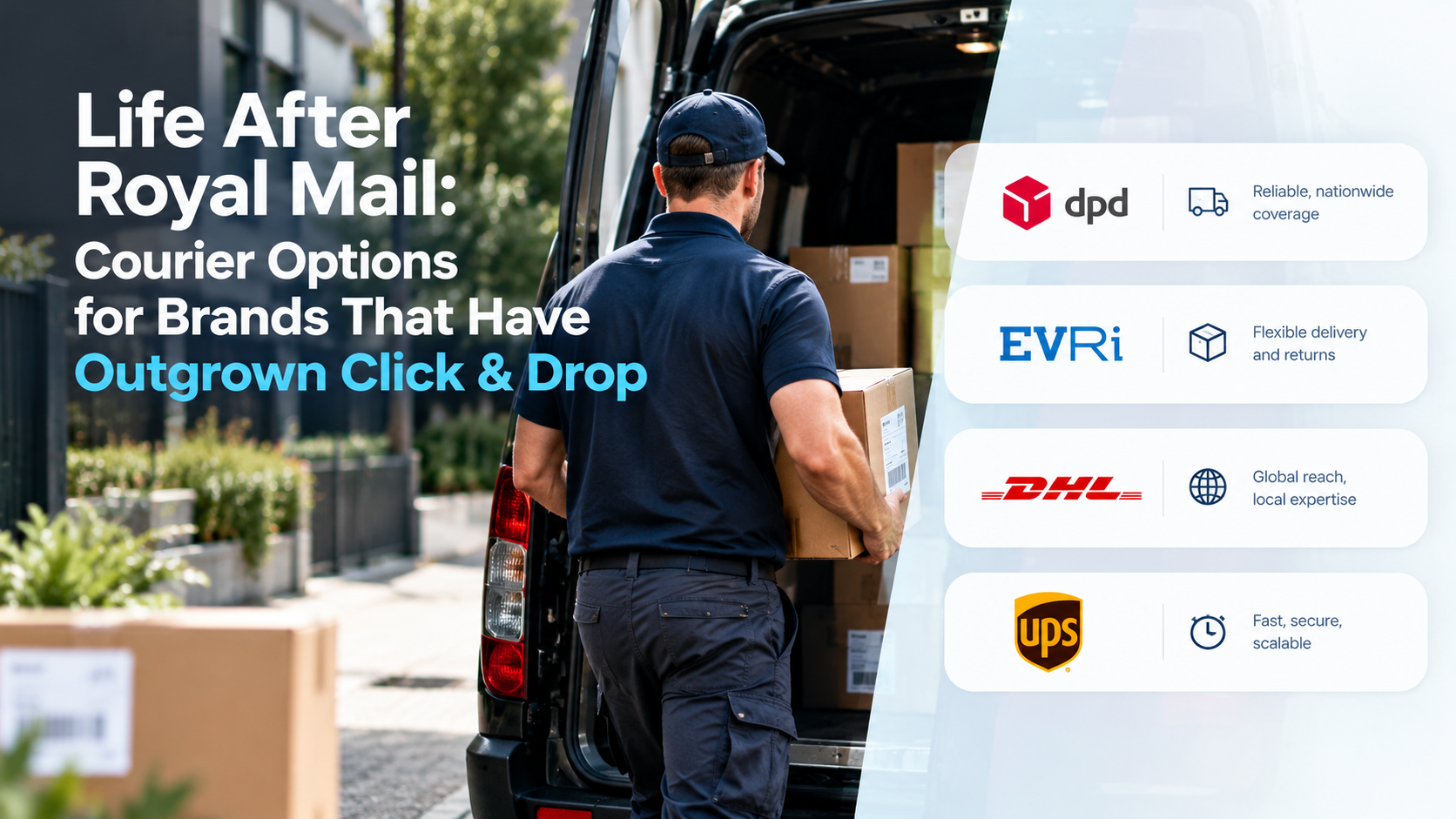
Royal Mail Click & Drop is where most small UK brands start. A delay, a price change or a growing order count sends founders looking for alternatives. The main options are other national parcel carriers such as Evri, DPD, DHL Parcel UK, Parcelforce Worldwide and UPS, or a 3PL that ships with several carriers under its own negotiated rates. The right choice depends on your parcels: their weight, their size and where they go.
This guide sets out what to compare, how to test a new carrier with little risk, and when moving to a 3PL changes the picture. Carrier services and prices change often, so check each carrier's current terms before you decide.
The pain points
Prices rise and a small shipper has little room to negotiate.
A service disruption leaves customers chasing parcels, and every complaint arrives in your inbox.
Larger or heavier products run into size and weight limits.
One carrier means one point of failure at your busiest time.
Packing and labelling for several services takes hours that could go on selling.
What to compare
Price by weight band and destination, using your own parcels. Ask for the full rate card, including surcharges.
Collection or drop-off: whether the carrier collects from your door or you take parcels to a point.
Service levels: standard, next day, timed delivery, and the cut-off for each.
Tracking: how detailed it is, and whether customers get delivery windows.
Delivery attempts and redelivery rules.
Claims: how loss and damage are handled, and the limits on compensation.
Size and weight limits, and the charge for going over them. Our guide to volumetric weight explains how box size changes the billed weight.
Surcharges: fuel, peak season, remote postcodes and address corrections.
Returns options for your customers.
Connections to your store platform and shipping software.
Why a second carrier is worth having
A single carrier ties your delivery performance to that carrier's worst week. A second carrier lets you move parcels when service slips, and it gives you a price comparison every time rates change. Many brands route by parcel weight, by destination or by service level, and shipping software or a 3PL can apply those rules automatically.
How a 3PL changes the picture
A 3PL ships for many brands, so it usually buys carrier services at volume rates that a single small shipper cannot reach. It can also offer several carriers and service levels from one warehouse. Ask a provider for its rate card by weight band and zone, its carrier mix, its cut-off times and whether your customers can pick a delivery option at checkout. Our guide to what a 3PL costs in the UK lists the other lines on the bill.
Our recommendation: test before you switch
Export 90 days of parcel data: weights, dimensions, destinations and the service used.
Group the parcels by weight band and destination zone.
Ask two or three carriers, or the 3PLs on your shortlist, to price the same parcel profile. Our guide to running a 3PL tender shows how.
Compare the total cost per parcel with surcharges included.
Send a small share of parcels through the new service for a few weeks and compare delivery times, complaints and claims.
Keep a second carrier live from then on.
Put the result next to your unit economics and your free shipping threshold, because postage is the biggest variable line in both.
What waiting costs
Take an invented example. A better-matched service saves £0.40 a parcel at 2,000 parcels a month. That is £800 a month, or £2,400 a quarter, and every disrupted week adds support time and lost repeat orders. A carrier test over a few weeks costs very little and gives you the figures to decide with.
People Also Ask
What is the cheapest alternative to Royal Mail?
No carrier is cheapest for every parcel. Price depends on weight, size and destination, so ask for quotes on your own parcel data and compare the total cost per parcel, including surcharges.
Can I use more than one courier?
Yes. Many brands use two or more and route parcels by weight, destination or service level. Shipping software or a 3PL can apply those rules for you.
When should I move from Click & Drop to a 3PL?
Consider it when packing takes hours of your week, when carrier costs limit your growth, or when you need services and carriers that your own set-up cannot reach. Price the move against your current cost per order first.
Finding the right 3PL partner
FulfilQ's advisor, Logan, matches brands to verified providers by order volume, product type and region. Tell Logan what you ship and where it goes, and you get a shortlist you can ask about carrier mix and rates. Start at fulfilq.com or browse the full provider directory.



Comments
Share a question or insight about this article.