
Bulky Item Delivery in the UK: Fulfilment for Furniture, Bikes and Anything Over 30kg
Bulky item delivery in the UK: carrier size and weight limits, two-person and pallet delivery, warehouse needs, returns rules and what to ask a 3PL.
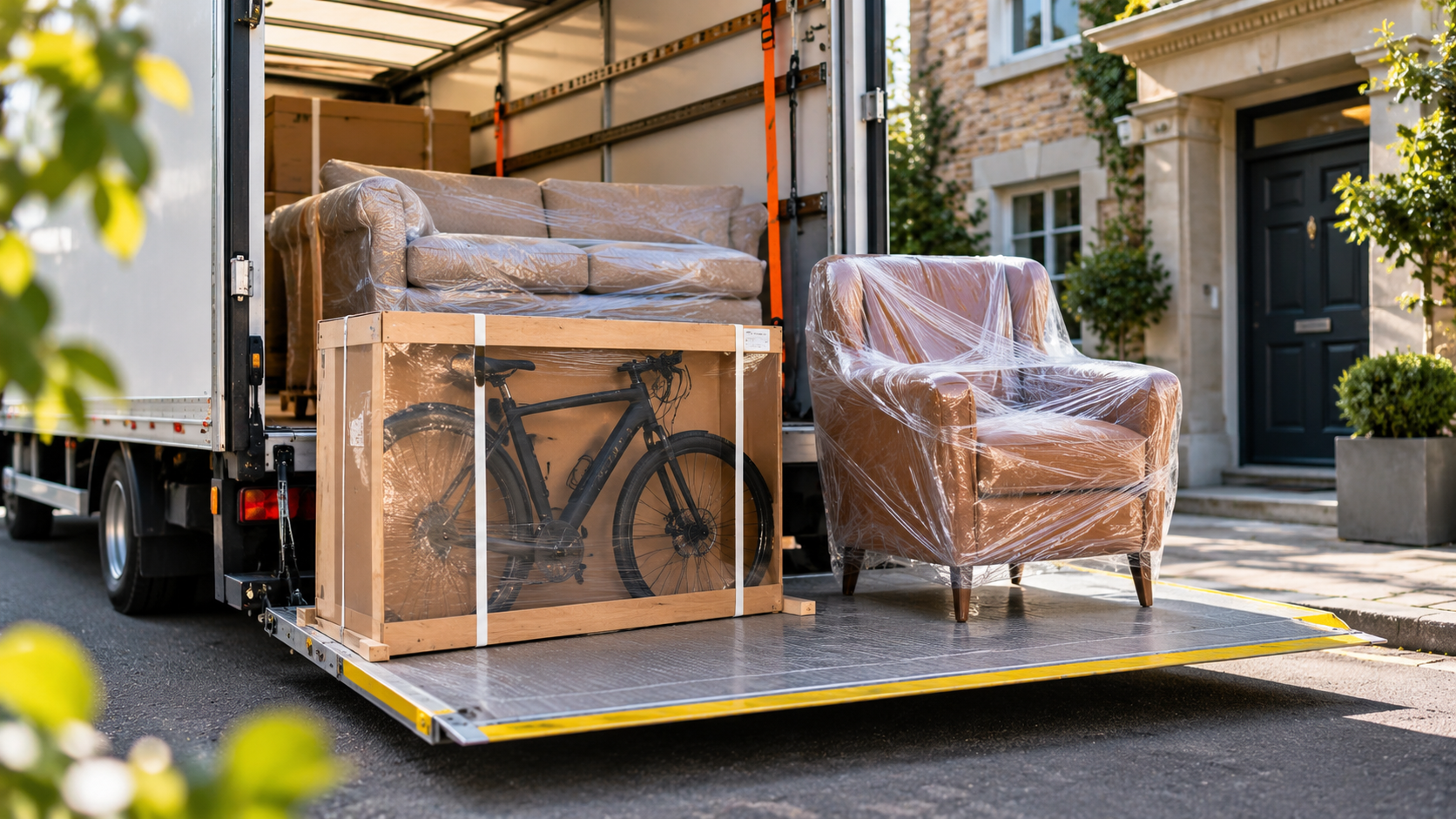
Bulky item delivery in the UK covers anything too big or too heavy for a standard parcel network: furniture, bikes, fitness equipment and most items over 30kg. These goods go by a large parcel service, a two-person delivery crew or a pallet network. The right route depends on each product's packed size and weight and on what your customer expects at the door.
This guide covers carrier limits, delivery options, warehouse needs, returns law and damage claims, then the questions to put to a 3PL.
The pain points
Our sofa ships in three boxes and one of them always turns up a day after the others.
The courier refused the treadmill at collection because it was over their weight limit.
Customers want it carried upstairs and all we offer is the doorstep.
One wardrobe return cost us more than we made on the sale.
Our 3PL quotes storage per pallet space and I have no idea whether that is fair for boxes this size.
When an item counts as bulky or heavy
Each carrier sets its own ceiling. These are the limits on the carriers' own pages at the time of writing:
Royal Mail: 20kg per parcel and a maximum of 61cm x 46cm x 46cm, according to its guide to sending heavy items.
Parcelforce: up to 30kg per parcel, up to 1.5m long, and no more than 3m in length and girth combined on its express services. Its two day large parcel service takes parcels up to 2.5m long and 4m in length and girth, still at 30kg each.
Evri: 15kg, 120cm long at most, and length plus girth under 245cm, per its parcel size and weight guide.
Business account terms can differ, so check with your carrier before you ship. A long flat bed frame can break the girth limit while weighing very little.
Carriers also charge on volume. A boxed bike often bills at well above its scale weight. Our guide to volumetric weight and shipping cost shows the sums. Run them on every bulky SKU before you set a delivery price.
Choose a delivery service for each product
Most bulky catalogues need two or three services side by side.
Standard or large parcel: for items that fit carrier limits once packed, such as a flat-pack bookcase. Splitting a product across several cartons keeps each under the limit, with the risk that the boxes arrive on different days.
Two-person delivery: a crew of two carries the item into the home. Use it for anything one driver cannot safely lift, such as treadmills, sofas and wardrobes.
Pallet delivery to customers: the item travels through a pallet network and can be set down at the kerb or on the driveway from a tail-lift vehicle. It suits very heavy items where the customer has help, and it needs a firm, level surface.
Room of choice and assembly: the crew places the item in the room the customer picks, and can build it and take the cardboard away. Agree in advance what counts as reasonable access.
What the warehouse needs
Heavy goods change how a warehouse runs. Check these on a site visit.
Storage: pallet racking for boxed stock, or floor space for items that will not sit on a standard pallet. Ask whether you pay per pallet space, per square metre or per cubic metre, because the answer moves the bill a lot for long cartons.
Equipment: forklifts, pallet trucks, sack trucks and lifting aids at the pick face.
Two-person picks: some items need two people to pick and pack, which doubles the labour on those orders.
Packaging: double-wall cartons, corner protectors, strapping and palletising.
Damage records: the damage rate on bulky orders, split by carrier.
The Manual Handling Operations Regulations 1992 require employers to avoid hazardous manual handling so far as reasonably practicable, assess what cannot be avoided, and reduce the risk to the lowest level reasonably practicable. HSE notes on its manual handling page that the law does not set specific weight limits, and its assessment guidance looks at the task, the load, the environment and individual capability. Workers should also be told a load's weight and heaviest side where reasonably practicable, so print the gross weight on every carton and mark the heavy side.
Returns and collections for bulky goods
Under the Consumer Contracts Regulations 2013, an online customer can cancel up to 14 days after the day the goods come into their physical possession (regulation 30). For an order delivered in parts, the 14 days run from the last delivery, so a sofa in three boxes starts the clock on the final box.
Who pays the return: the customer bears the direct cost unless you agreed to pay it or did not tell them they would have to (regulation 35). If you offer to collect, the customer pays for collection only if they agreed to.
State the cost before the sale: for goods that cannot normally be returned by post, your pre-contract information must include the cost of returning them (Schedule 2).
Refund timing: if you have not offered to collect, refund within 14 days of getting the goods back or of proof they were sent, whichever is earlier (regulation 34).
Made to order: goods made to the customer's specifications or clearly personalised are outside the cancellation right (regulation 28).
A bulky return can mean a two-person collection, inspection, repacking and re-storage. Price that chain before you write your policy, using our guide to returns policy and 3PL costs.
Damage claims and insurance
Under section 29 of the Consumer Rights Act 2015, goods stay at the trader's risk until they come into the physical possession of the customer or someone the customer names. If a table arrives scratched, the customer's claim is with you, and your claim is against the carrier or the 3PL under their terms.
Read each carrier's compensation limit and packaging conditions, and consider extra cover on high-value items. With your 3PL, check the liability cap per item, the deadline for raising a claim and whether you need your own stock insurance. Our guide to 3PL contract terms covers those clauses.
What to ask a 3PL
What is the largest and heaviest item you store today, and how do you store and pick it?
How do you price storage for oversized items?
Which services can you book: large parcel, two-person, pallet to customer, room of choice, assembly?
What was your damage rate on bulky orders last quarter, by carrier?
Who arranges return collections, and how long until a returned item is back in stock?
Can I see your manual handling risk assessment for items like mine?
What is your liability cap per item, and how long do I have to raise a claim?
For the full shortlisting process, read our guide on how to choose a 3PL for ecommerce in the UK.
Our recommendation: band every SKU before you talk to a 3PL
List every SKU with its packed weight, dimensions and number of cartons.
Work out actual and volumetric weight per carton and check both against your carriers' limits.
Put each SKU in one band: standard parcel, large parcel, two-person or pallet.
Decide the service each band gets at the home and price it at checkout.
Write the return cost into your terms for every item that cannot go back by post.
Send the banded list to three 3PLs that already store goods of that size, and compare quotes line by line.
Agree damage liability, claim deadlines and proof of delivery before the first order ships.
What waiting costs
Bulky goods in the wrong service cost money every week. A carton over the carrier's limit can be refused, which means a second dispatch and a late customer. Heavy items packed for the wrong network get damaged, and each one means replacement stock, a collection and another delivery.
A worked example: a brand ships 150 rowing machines a month as single large parcels. One in ten arrives damaged, so 15 units. Each costs £400 in replacement stock, delivery and collection, which is £6,000 a month. Moving that band to two-person delivery adds £18 an order, or £2,700 a month, and damage falls to 2%, which is 3 units or £1,200. The new total is £3,900 against £6,000, a saving of £2,100 a month or £25,200 a year. These figures are made up to show the method.
People Also Ask
What counts as a bulky item for UK delivery?
It depends on the carrier. Royal Mail's limit is 20kg and 61cm x 46cm x 46cm, and Parcelforce's express limit is 30kg, 1.5m long and 3m in length and girth combined. Anything larger needs a large parcel service, a two-person crew or a pallet network.
Who pays to return a bulky item bought online?
The customer pays the direct cost of the return unless you agreed to pay or did not tell them they would have to. If the item cannot normally go back by post, you must state the return cost before the sale.
Can a 3PL arrange delivery to a customer's room of choice?
Some 3PLs book two-person carriers that offer room of choice and assembly. Ask which postcodes are covered and how access problems such as narrow stairs are handled.
Finding the right bulky goods fulfilment partner
Logan, FulfilQ's advisor on the website, matches brands to verified providers by order volume, product type and region. Tell Logan your heaviest SKU, its packed size and your monthly orders, and you get a shortlist to ask about oversized storage, two-person delivery and damage rates. Start at fulfilq.com and Ask Logan, or Submit an RFP and verified providers come back to you. You can also browse the full provider directory.


Comments
Share a question or insight about this article.