
Box-free returns in the US: drop-off networks and how they work with your 3PL
Your customers hate printing labels and finding boxes. How box-free drop-off works, what it changes at your 3PL, and how to tell whether it pays.
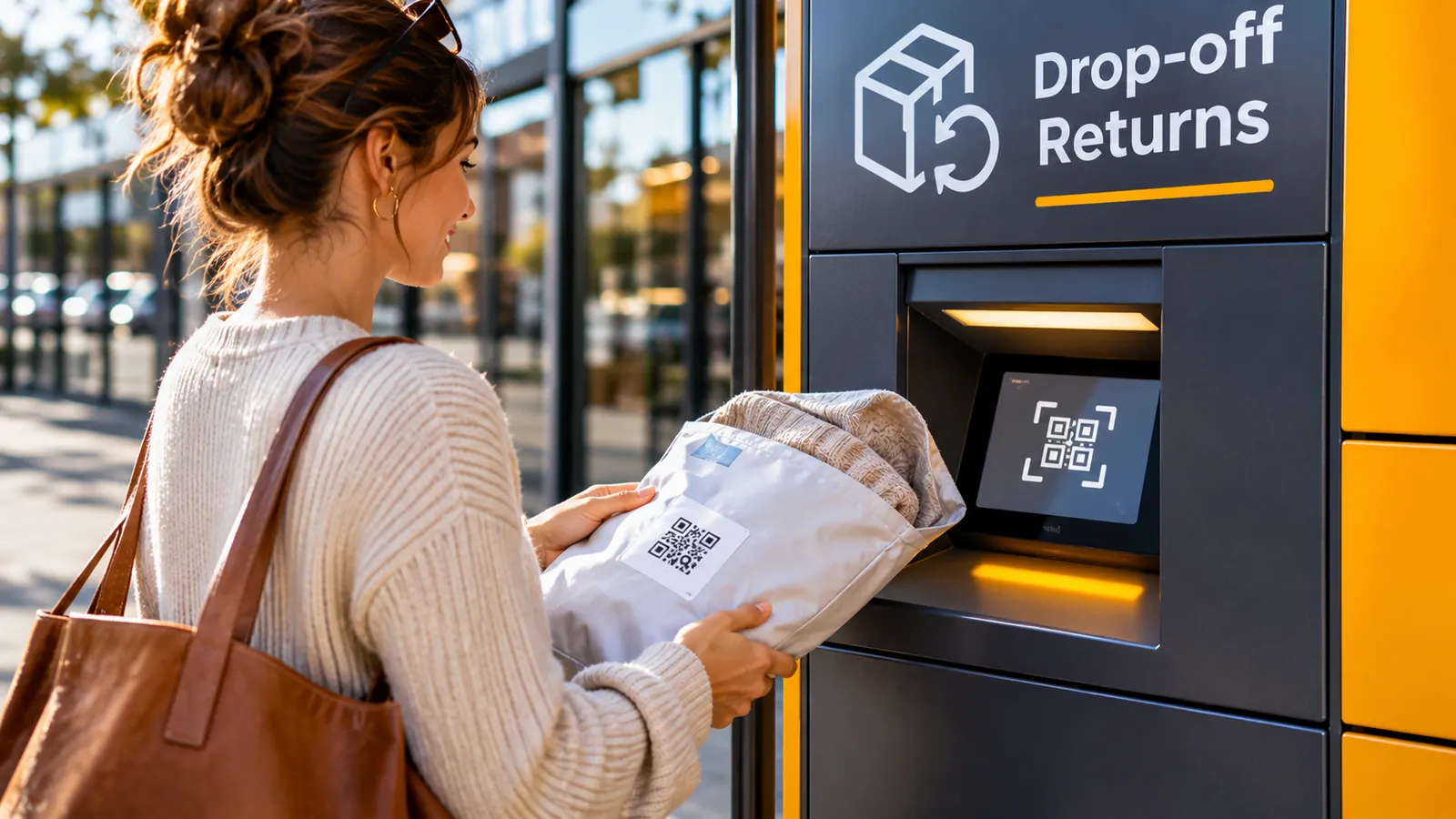
Box-free returns let a US shopper bring an item to a drop-off location with no box and no printed label. The associate scans a code, checks the item, and the refund can start straight away. The network then ships returns back in bulk to your warehouse or a returns hub, so your 3PL receives fewer, larger deliveries in place of single parcels.
The biggest network belongs to UPS. In April 2026, UPS and Happy Returns said the program had reached 10,000 US locations, including The UPS Store, Staples, Ulta Beauty and new partner outlets, with 79% of Americans living within five miles of one. For apparel, footwear and beauty brands, where returns run high and stock dates quickly, that reach has made box-free a serious option for brands of every size.
Last checked: 20 November 2026, against the UPS and Happy Returns announcement of 21 April 2026. Network pricing depends on your contract.
Why shoppers care
The hard part of a return is the admin. Finding a box, printing a label and booking a pickup are the steps people put off, and a return that sits in a closet for three weeks comes back too late to resell at full price. Box-free removes those steps. A shopper can return an item on the way to somewhere else, and it reaches you while it's still in season.
That also changes how shoppers feel about buying. A return that takes five minutes at a store they already visit lowers the risk of ordering a size they're unsure about, which is why many brands track box-free returns as a conversion tool too.
How the process works
The shopper starts a return in your returns portal and picks a drop-off location. The portal shows a code, and at the counter the associate scans it along with the item's barcode. The network then triggers the refund according to your rules, either at drop-off or once your warehouse inspects the item.
Items travel back to you in consolidated loads. UPS says returns can reach the retailer in as little as 3.6 days, with an average of seven days across its customers. Most brands keep a mail option alongside drop-off in the portal, because shoppers far from a location still need a label.
What changes at your 3PL
Your 3PL stops opening dozens of small parcels a day and starts receiving grouped deliveries. That saves labor, provided the warehouse is set up for it. Each consolidated shipment arrives with a manifest from the network, and your 3PL's system needs to read it and match every item back to its order.
Grading changes too. Items arrive with no original packaging, so write down your grades, such as resell as new, resell as open box, refurbish and write off, and agree with your 3PL who makes each call. Then agree the price. Returns pricing is often built around parcels, so get a per-item rate in writing for consolidated returns before launch.
When to trigger the refund
Refund timing is your main lever on cost and customer experience. A refund at drop-off delights shoppers and gets them buying again sooner, which suits low-value items where the risk of a bad return is small. A refund after warehouse inspection protects you on expensive items, at the cost of a wait of about a week while the consolidated load travels back. Most brands split the rule by price, refunding at drop-off below a set order value and at inspection above it.
What it costs
Networks price per return, and the rate depends on your volume and contract, so get a quote for your own numbers. Weigh it against what a label return costs you today: the prepaid label, your 3PL's per-parcel receiving fee, and the value you lose when stock comes back too late to sell at full price. For many apparel brands the saving shows up most in that last line.
Check your returns portal first
Drop-off networks connect through your returns portal, so check which networks your current portal supports before you talk to anyone. Some portals include drop-off as a standard option, and others need an add-on or a separate contract. The portal is also where the shopper chooses between drop-off and mail, so test the flow on a phone the way a customer would see it.
Return rates and fraud
Making returns easier can nudge return rates up, and it can also make shoppers more willing to buy in the first place. Track return rate by product and repeat purchase rate for three months after launch. If returns rise on one product line only, the cause is usually sizing or the product page.
The associate's scan is your first fraud check, because the item's barcode has to match the order, and UPS says its Return Vision tool scores risky returns early. Keep your own rules as well. Set refunds on high-value items to trigger at warehouse inspection, and ask your 3PL to photograph anything it grades as damaged.
A worked example
An apparel brand with 4,000 orders a month and a 20% return rate, so about 800 returns a month. Today each return travels as its own parcel on a prepaid label, its 3PL charges a receiving fee per parcel, and a return takes 16 days on average to reach the warehouse, because shoppers wait before finding a box.
With a drop-off network, the brand pays a per-return fee to the network and its 3PL receives a few consolidated deliveries a week. The bigger change is time. If returns arrive in about a week, items come back while the season is still running, and more of them go back on sale at full price.
How to decide
Pull last quarter's returns by product, with the days each took to reach your warehouse.
Add up what each return costs today: label, receiving fee and the markdown on items that came back late.
Get a per-return quote from the network for your volume.
Confirm your 3PL can read the network's manifest and give you a per-item receiving rate.
Launch with drop-off and mail side by side, and review return and repeat purchase rates after three months.
Box-free pays back fastest for brands with high return rates and seasonal stock. If you return fewer than a few dozen orders a month, the network fee is unlikely to beat a simple prepaid label, so start with your returns policy and portal, and our guide to choosing a returns management provider covers the software side. If you sell on Shopify, our list of Shopify fulfillment 3PLs in the USA is a good place to find a warehouse that already receives consolidated returns.
Need a logistics partner?
Tell Logan what you ship and where, and get a shortlist of partners that fit.
Submit an RFP
Comments
Share a question or insight about this article.