
Start your returns platform review with the return flow
A returns platform can make the customer-facing part of a return look polished while creating more work for your warehouse, customer service team and finance function.

That is why a useful returns platform review should not start with branded return portals or the number of carrier labels available. It should start with the operational question: can this system apply your rules accurately, move stock to the right place and give your team control when exceptions occur?
For a growing ecommerce brand, returns are not a standalone software decision. They affect resale recovery, inventory accuracy, refund timing, carrier cost, fraud exposure and customer lifetime value. If you sell through Shopify, marketplaces and wholesale accounts, the platform also needs to distinguish between very different return journeys without forcing your team into manual workarounds.
Map what actually happens from the moment a customer asks to return an item to the point at which that unit is resold, quarantined, refurbished or written off. Do this before watching a demo. Vendors can usually show the ideal path. Your team needs confidence in the awkward paths.
A basic apparel return may be straightforward: the customer selects a reason, receives a label, posts the parcel and is refunded once the item arrives. But that model quickly breaks down when you have bundles, gifts, exchanges, subscription orders, serialised products, made-to-order goods or products subject to hygiene restrictions.
Write down the decisions the platform must make. Can it prevent a return outside your policy window? Can it offer an exchange where the size is available, but issue a refund where it is not? Can it charge a return fee only for certain countries or reasons? Can it route a high-value item to a different inspection process? These are operating rules, not cosmetic settings.
Test the exceptions, not just the happy path
Ask to see how the platform handles a parcel returned without a reference, an item that arrives damaged, a return containing the wrong product and an order where only one unit from a multi-buy offer is sent back. If you operate in several markets, test a UK return, an EU return and a US return separately. Carrier services, customs requirements and return addresses may not be interchangeable.
The most useful test is to provide the supplier with a small but realistic sample of recent returns data. Include the return reasons, order values, channels, destinations and outcomes. Ask them to configure the intended rules and show the results. This reveals whether the product is genuinely flexible or whether your operation will have to change to fit its limitations.
Check whether warehouse execution matches the promise
A return portal only matters if the physical return can be received, inspected and dispositioned correctly. This is where a returns platform review should involve your 3PL or in-house warehouse team early.
The key question is whether the returns platform and warehouse management system share meaningful status updates. “Delivered to returns centre” is not the same as “received, quality checked and put back into available stock”. If refunds are triggered at carrier scan, that may be appropriate for low-value fashion items where speed protects customer experience. It is less suitable for electronics, premium goods or products where fraud and condition checks matter.
Clarify the status events available and who owns each one. A warehouse may need to record condition grades, photographs, missing accessories, lot or batch numbers, and the disposition decision. If your products have expiry dates, regulated ingredients or batch-traceability requirements, a generic return status will not be enough.
Also ask about receiving capacity. A 3PL that can process 500 returns a week in normal trading may struggle after Black Friday, a major promotion or a product-quality issue. The technology may accept every return authorisation, but your customer promise depends on what happens at the returns bench. Agree peak volumes, inspection turnaround times and escalation routes in the operating model, not just in a software presentation.
Assess integrations by data field, not logo
An integrations page full of ecommerce platform logos is a starting point, not proof of compatibility. Your review should identify which data needs to travel in each direction and when.
At minimum, consider order data, line items, customer details, payment status, exchange orders, return reasons, carrier tracking, receipt confirmation, stock disposition and refund status. Then look at your edge cases. If a customer returns a bundle, can component inventory be adjusted correctly? If a marketplace requires a specific refund event or return reason code, does the workflow support it? If your finance team reconciles refunds against a payment provider, can it obtain a clean audit trail?
The integration with the warehouse is often the decisive one. Some platforms provide a direct connection to a small number of WMS providers. Others rely on middleware, spreadsheets or manual uploads. None of those approaches is automatically wrong. A simpler connection can be sensible at low volume. But it must be priced, supported and tested against the level of control your operation needs.
Ask who maintains the integration when either system changes. Also establish whether custom fields, webhooks or API calls incur additional cost. A low monthly subscription can become less attractive once implementation, middleware and ongoing technical support are included.
Review carrier choice and international practicality
Carrier choice should reflect where your customers are, the products they return and the economics of each lane. A platform may offer many carrier options, but your brand may only need three reliable services with clear tracking and sensible rates.
For UK brands selling into Europe, the return journey needs particular scrutiny. Is the return address in-market or does stock cross a border again? Who is responsible for customs paperwork? Can duties be recovered where relevant? What happens if a customer uses a drop-off point but the parcel is not accepted because of size or battery restrictions?
The same applies to a US operation with two-coast inventory. Routing every return to one facility may simplify inspection but add transit time and cost. Routing to the nearest site can improve speed, but only if both locations can apply consistent quality grading and inventory rules. The right answer depends on return rate, product value and resale potential.
Put refund controls and customer experience in the same conversation
Fast refunds can reduce contacts and preserve trust. They can also expose a business to losses if policy abuse is rising. A good platform lets you use different treatments for different customer and product scenarios rather than forcing a single refund policy.
Consider whether you need instant refunds for trusted repeat customers, refund-on-receipt for higher-risk orders, and manual review for unusually frequent returns. Check how easily your team can override a decision and whether every override is logged. Customer service should be able to see the same status as the customer without moving between several systems.
The return reason experience deserves similar attention. Customers should be able to explain why an item did not work, but your data should remain usable. Too many free-text responses create reporting noise. Too few options hide useful signals, such as sizing inconsistency, delivery damage or misleading product information. Build a controlled reason set, then review it quarterly with merchandising, product and operations teams.
Compare cost against recovered value
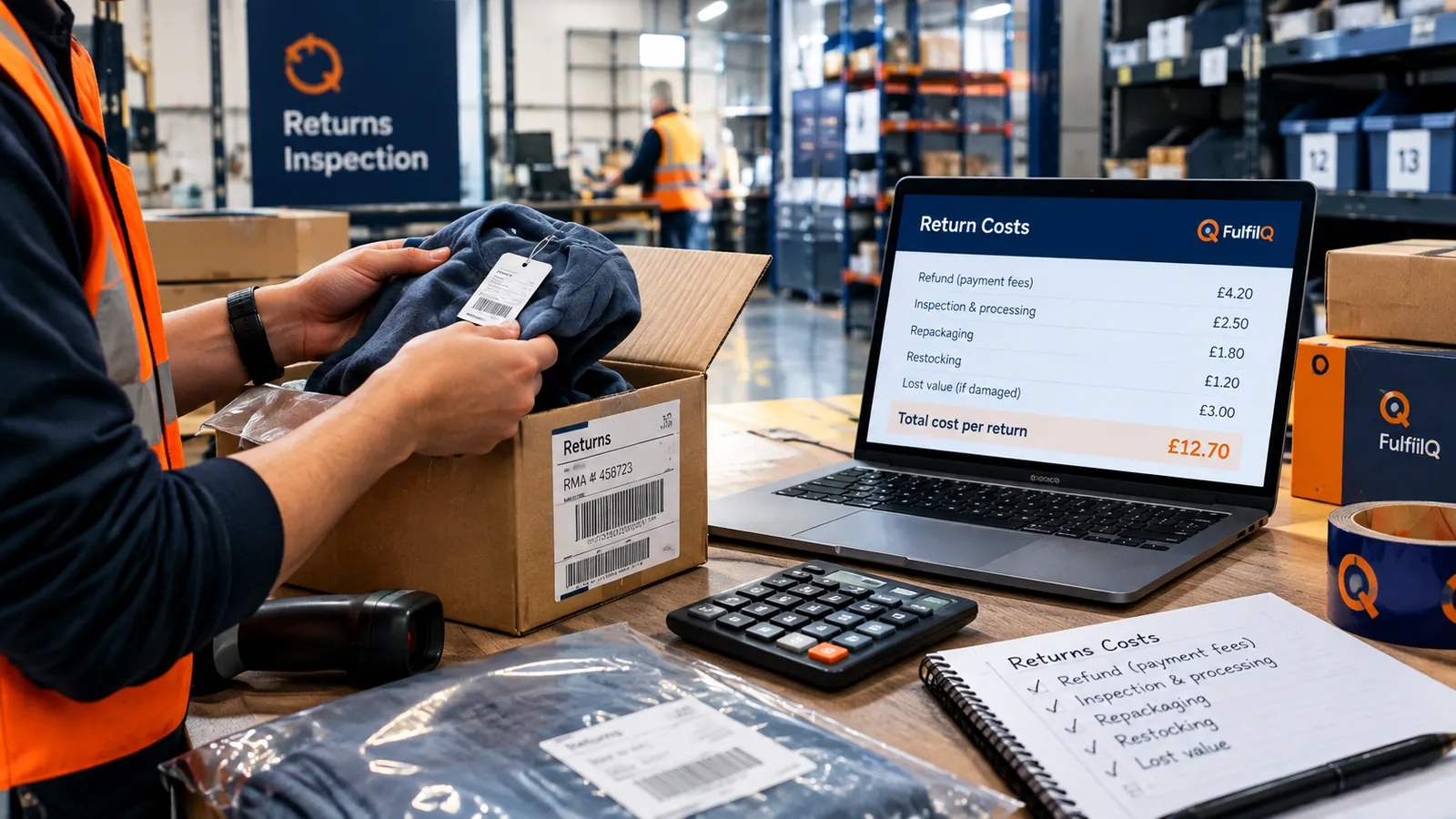
The platform fee is only one line in the business case. Model the cost per return from authorisation through to final disposition, including labels, carrier collection or drop-off, warehouse labour, packaging, customer service, refund fees, software, stock write-offs and any international handling.
Then model the value recovered. Exchanges may retain revenue that would otherwise be refunded. Faster inspection can return saleable stock to availability sooner. Better rules can reduce avoidable returns, especially where customers select the wrong product variation or are unclear about fit. But avoid counting projected improvements as guaranteed savings until you have a baseline.
A sensible pilot measures the difference in refund turnaround, contact rate, return-processing cost, exchange conversion, resale rate and discrepancy rate. Segment results by country, channel and product category. An average figure can conceal an expensive problem in one marketplace or a profitable improvement in a single high-return category.
Questions to settle before signing
Before you commit, make sure the supplier can answer four practical questions in writing: what is included in implementation, what happens when a carrier or integration fails, which workflow changes require paid development, and how you extract your data if you leave. You should also understand contract terms around minimum volumes, label mark-ups, user seats, API limits and support response times.
If you use a 3PL, involve them in final selection rather than treating them as an implementation resource after the decision. They can identify whether inspection codes map to their WMS, whether returns can be received against the authorisation and whether proposed service levels are achievable during peak. FulfilQ's operational-fit approach follows the same principle: the cheapest quote means very little if the operation behind it cannot support the way your business actually works.
The right platform is not necessarily the one with the most polished portal or the longest feature list. It is the one that turns your return policy into reliable warehouse actions, gives customers a clear route back, and leaves your team with cleaner stock and better decisions after each parcel is opened.
Need a logistics partner?
Tell Logan what you ship and where, and get a shortlist of partners that fit.
Submit an RFP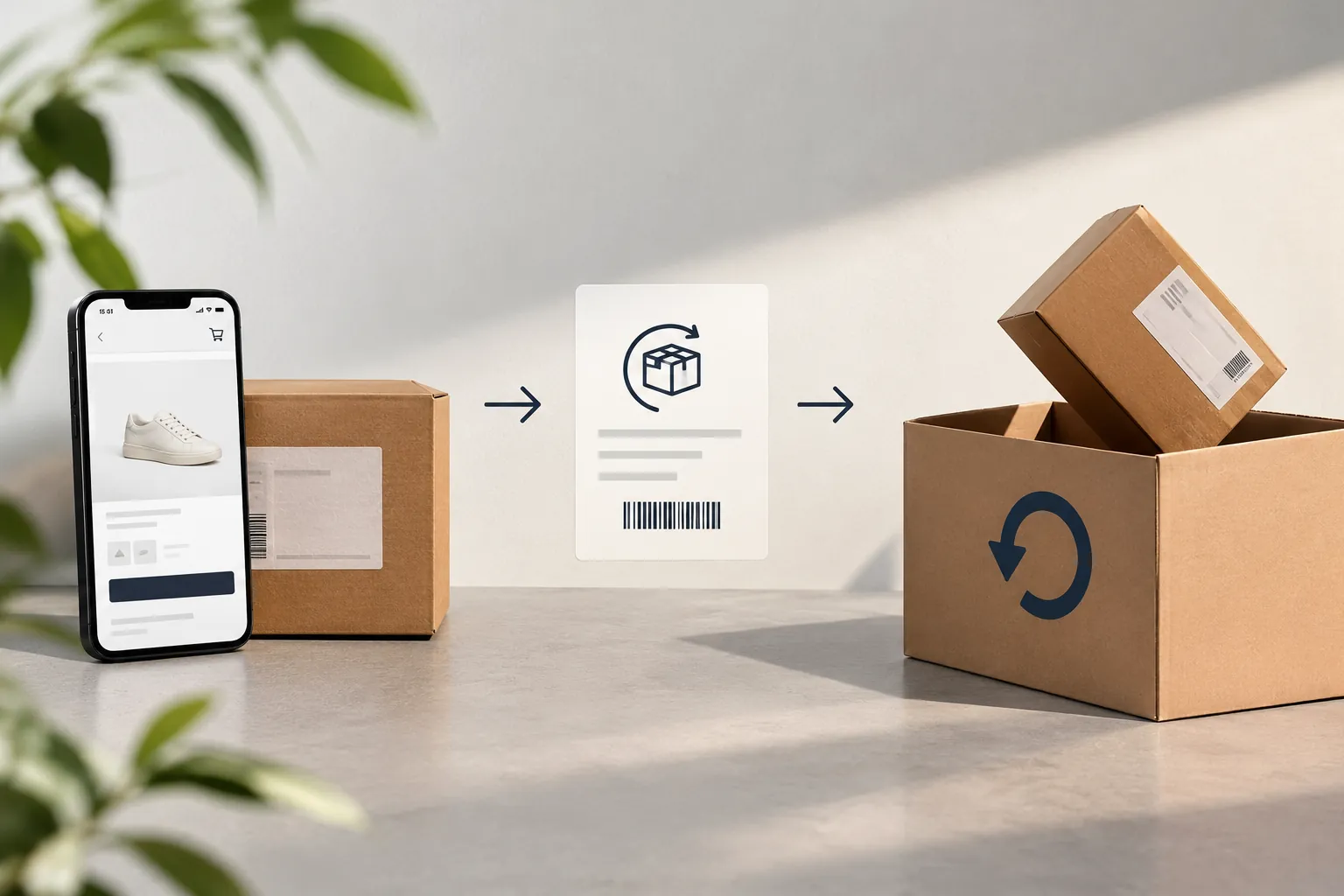


Comments
Share a question or insight about this article.