
The Most Expensive Word in Fulfilment Is “Yes”
Ask a fulfilment operator about the client relationship that went wrong and you will rarely hear about one catastrophic week. You will hear about drift.

Ask a fulfilment operator about the client relationship that went wrong and you will rarely hear about one catastrophic week. You will hear about drift.
A favour here. An exception there. A process bent slightly to suit one brand, then bent a little further the following month. No single decision looks unreasonable. Yet eighteen months later, both sides are carrying cost, risk and frustration that appear on no invoice and in no contract.
We see this pattern constantly across the brands and providers in the FulfilQ network. So when our partner EFM Fulfilment shared how they handled exactly this situation, and what it taught them about who they are built to serve, it struck us as one of the more honest pieces of thinking in our industry. It deserves a wider conversation.
Scope creep is a matching problem in disguise
The industry tends to treat scope creep as a service problem. Tighten the SLA, add a change request process, renegotiate the rate card. All sensible. None of it addresses the root cause.
In most cases, scope creep is the visible symptom of a fit problem that existed from day one. The brand needed something the provider was never designed to deliver, and neither side named it at the start. The relationship then spends months trying to close that gap through goodwill, which is the most expensive and least reliable currency in logistics.
Goodwill does not scale. It does not show up in a WMS. And when it runs out, it tends to run out on both sides at once.
How a clean pick and pack account became something else
EFM's relationship began as a standard ecommerce fulfilment account: pick, pack and dispatch. Over time, in the spirit of being accommodating, the team took on work well outside that model. They were filling and labelling the client's product by hand. They were working around a stock system they did not control. They were adapting their processes order by order to suit the brand, rather than onboarding the brand into a process built to perform.
None of it was a single decision, and none of it made it into the commercial terms.
The cracks appeared where you would expect. Picking and packing errors crept in. Parcels went out with the wrong item or quantity. Insurance cover fell behind the value of the goods being shipped. Underneath it all sat a stock discrepancy nobody could fully explain, because that product was managed on the client's platform rather than in EFM's own WMS. There was no independent record to reconcile against.
The brand was paying to fix customer orders and waiting on answers that could not be given quickly. EFM was burning hours investigating work it was neither set up, staffed nor paid to do. Two capable businesses, both underperforming, because the arrangement asked each of them to be something they were not.
The hidden ledger nobody invoices
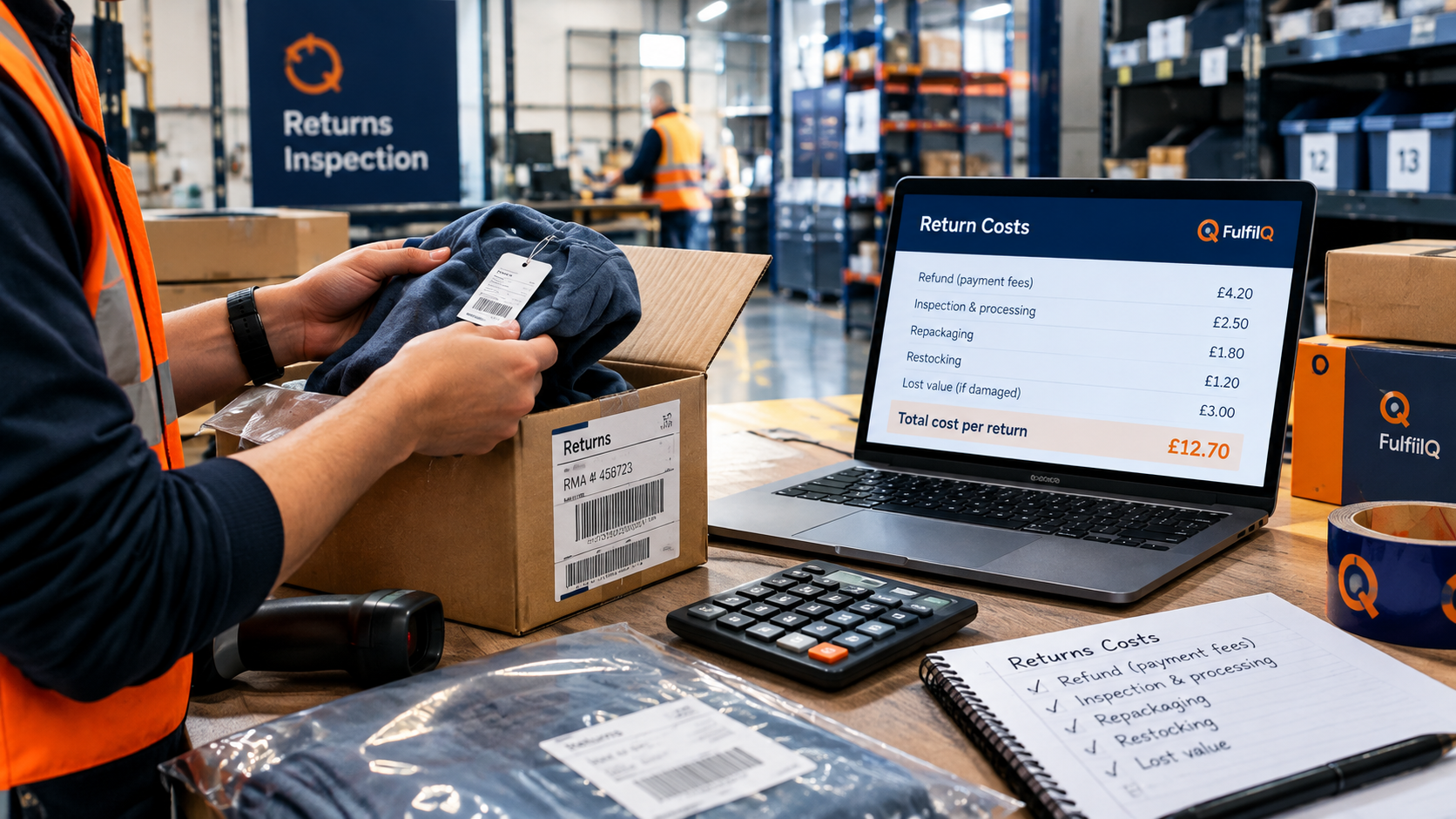
Every 3PL relationship runs two sets of books. The first is the one everyone sees: storage, picks, packaging, postage. The second is the hidden ledger: the cost of exceptions, manual workarounds, reconciliations, customer service recovery and management time spent firefighting.
When the fit is right, the hidden ledger stays small. When it is wrong, it quietly grows until it outweighs the margin on the visible one. By the time anyone notices, the brand believes it is overpaying for poor service and the provider believes it is being underpaid for unreasonable demands. Often, both are correct.
The uncomfortable truth is that brands rarely compare providers on the hidden ledger, because it is hard to see before you sign. That is precisely where most of the risk sits.
Why "no" was the start of a better conversation
EFM asked itself a blunt question: were they failing this client, or had the client's requirements simply outgrown their operating model? They concluded it was the latter.
So they said so. They told the brand plainly they did not believe they were the right long-term partner, set a notice period, and committed to resolving every open issue in writing before parting ways: the stock discrepancy, the disputed invoices, the insurance terms.
What happened next is the part worth studying. Once leaving was a genuine option, the conversation changed. With no arrangement left to protect, both sides could finally talk about what each of them actually needed.
The outcome was not an exit but a reset. EFM stepped back from hand filling and labelling and returned to pick, pack and dispatch, with the brand supplying stock ready to ship. A migration deadline was agreed. The client's stock would move into EFM's own WMS, on the same footing and the same process as every other brand they serve.
That outcome was only reachable because someone was willing to say the current arrangement could not continue. In our experience, this is the conversation most struggling 3PL relationships never have. They end in silence, or in a dispute, rather than in a redesign.
Operational fit is a strategy, not a limitation
The bigger win for EFM was not saving one account. It was clarity about their ideal client.
A pick and pack model, run on one consistent WMS process across every brand, is where they excel. Fewer touchpoints per order means fewer chances for error, and pricing reflects a standardised operation rather than a bespoke one. Brands that need product filled, labelled or managed outside the provider's system need a different kind of partner: perhaps a co-packer, perhaps an in-house team.
The pricing logic follows. Pick and pack only means more SKUs and more shelf storage than one bulk product, but it removes the cost and risk of hand filling, so each pick becomes simpler and cheaper to run. That is a trade a provider can quote for honestly. The previous arrangement was simply being absorbed as goodwill.
The best providers do not try to be everything to everyone. They know their operational sweet spot, and they price, staff and sell to it. Saying no to the wrong work is what protects the quality of the right work.
What brands and operators should take from this
If you are a brand choosing a 3PL, stop asking only "can you do this?". Almost every provider will say yes during a sales process. Ask instead:
Is this the work you do most of, every day, for brands like mine?
Will my stock and orders run through your own WMS, or around it?
What would you need to change about your normal process to accommodate us?
Who are you not the right fit for?
A provider that answers the last question clearly is a provider worth trusting.
If you run a fulfilment operation, the question is not only whether you can deliver something for a client. It is whether this is the work you want more of. Name scope changes when they happen, not six months later. Price exceptions rather than absorbing them. And be prepared to tell a good brand that you are the wrong partner, while there is still time to fix it.
Fit should be chosen, not hoped for
EFM's story ends well because two businesses were honest enough to redesign the relationship. Most do not get that far. The more reliable route is to get the match right before the contract is signed, so the conversation EFM had in month eighteen happens on day one.
That is the thinking behind FulfilQ. Every provider in our network is vetted, and every brand is matched on operational fit: order profile, product handling, systems, volumes and growth plans, not just location and price. If you are reviewing your fulfilment, Logan, our AI logistics assistant, can help you map what you actually need and show you which providers are genuinely built for it.
Because the most useful word in fulfilment is not yes. It is "this is what we do best".
People Also Ask
What is scope creep in a 3PL relationship?
It is the slow growth of work a provider does outside the agreed service, such as hand filling, labelling or working around stock held on the brand's own system. It usually starts as a favour and is rarely written into the commercial terms.
How do I know if a 3PL is the right fit for my products?
Ask whether the work you need is what they do most of, every day, for brands like yours, and whether your stock and orders will run through their own WMS. Ask who they are not the right fit for. A clear answer is a good sign.
Thinking about your first 3PL or switching from your current provider? Submit a Free RFP and get matched with vetted providers, like EFM Fulfilment, based on operational fit.


Comments
Share a question or insight about this article.