
Shipping zones explained: how zone distance drives US shipping costs
A New Jersey warehouse shipping to California pays for every one of those miles. How zones work, plus a 20-minute exercise to see what they cost you.
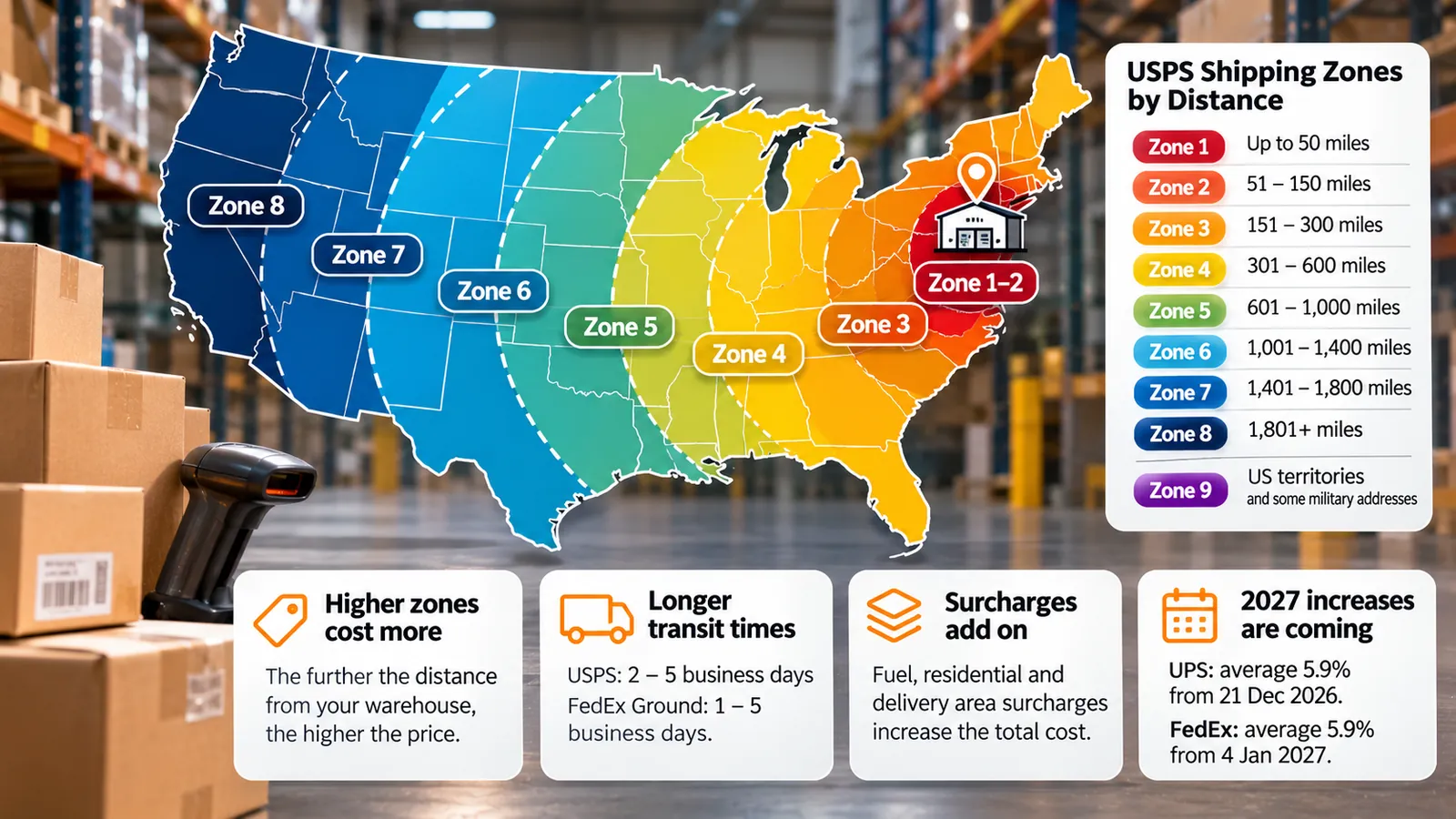
A shipping zone is a band of distance between the place a parcel ships from and the address it goes to. USPS uses Zones 1 to 9, measured from the origin ZIP code to the destination ZIP code. The higher the zone, the higher the price, and usually the longer the transit, which makes your warehouse location one of the biggest inputs to your shipping bill.
Most brands look at their rate card and see a price per pound. The zone column is where the real money sits. A brand shipping from one corner of the country can be paying Zone 7 and Zone 8 prices on nearly half its orders without anyone noticing, because the cost is spread across thousands of labels. With the 2027 rate increases arriving in December and January, this is a good month to check.
Last checked: 20 November 2026, against carrier announcements of their 2027 rate changes. Rates and zone charts change every year. Confirm yours with your carrier or 3PL.
How zones are set
USPS zones roughly follow distance bands. Zone 1 covers up to 50 miles, Zone 2 runs from 51 to 150 miles, Zone 3 from 151 to 300, Zone 4 from 301 to 600, Zone 5 from 601 to 1,000, Zone 6 from 1,001 to 1,400, Zone 7 from 1,401 to 1,800, and Zone 8 covers 1,801 miles and beyond. Zone 9 covers US territories and some military addresses.
The zone is set by the pair of ZIP codes, so the same customer can be Zone 8 from one warehouse and Zone 3 from another. UPS and FedEx price ground parcels the same way, with their own zone charts for each origin, and for the lower 48 states their ground zones generally run from 2 to 8. A customer in Los Angeles is a Zone 8 delivery from New Jersey and a Zone 2 or 3 delivery from a warehouse in Southern California.
Why the price climbs
A parcel going further passes through more sort centers and spends longer on trucks or planes, and carriers price that in. The zone also interacts with weight. Carriers charge on billable weight, which is the actual weight or the dimensional weight, whichever is higher, so a light but bulky box shipped to Zone 8 gets hit twice. Our guide to volumetric weight explains that half of the sum.
Open your own rate card and compare the price of the same 2 lb parcel to Zone 2 and to Zone 8. That gap is what distance costs you on every order, and on most rate cards it is larger than the gap between a 1 lb and a 3 lb parcel in the same zone.
Zones also set delivery speed
Ground services take longer to the far zones. USPS Ground Advantage runs from 2 to 5 business days, and FedEx says its Ground service takes 1 to 5 business days in the contiguous US, depending on distance. The long end of both ranges is mostly the high zones.
If you promise fast delivery nationwide from one coast, the far zones are where that promise breaks. Customers on the other side of the country wait longer, contact support more and leave more delivery complaints in reviews. Distance shows up in your service metrics as well as your shipping bill.
Zones and surcharges stack
The zone sets the base rate, and surcharges then sit on top. Some of them grow with the base. The fuel surcharge is a percentage of the transport charge, so a Zone 8 parcel pays more fuel in dollars than a Zone 2 parcel. Delivery area surcharges apply to listed ZIP codes, many of them rural, and are charged per parcel whatever the zone. Residential surcharges apply to deliveries to homes, which covers nearly every DTC order.
When you compare warehouse locations, compare the full cost per parcel with surcharges included. A location that looks cheaper on base rates can lose its advantage once the surcharges for your actual customer ZIP codes are added.
What's changing for 2027
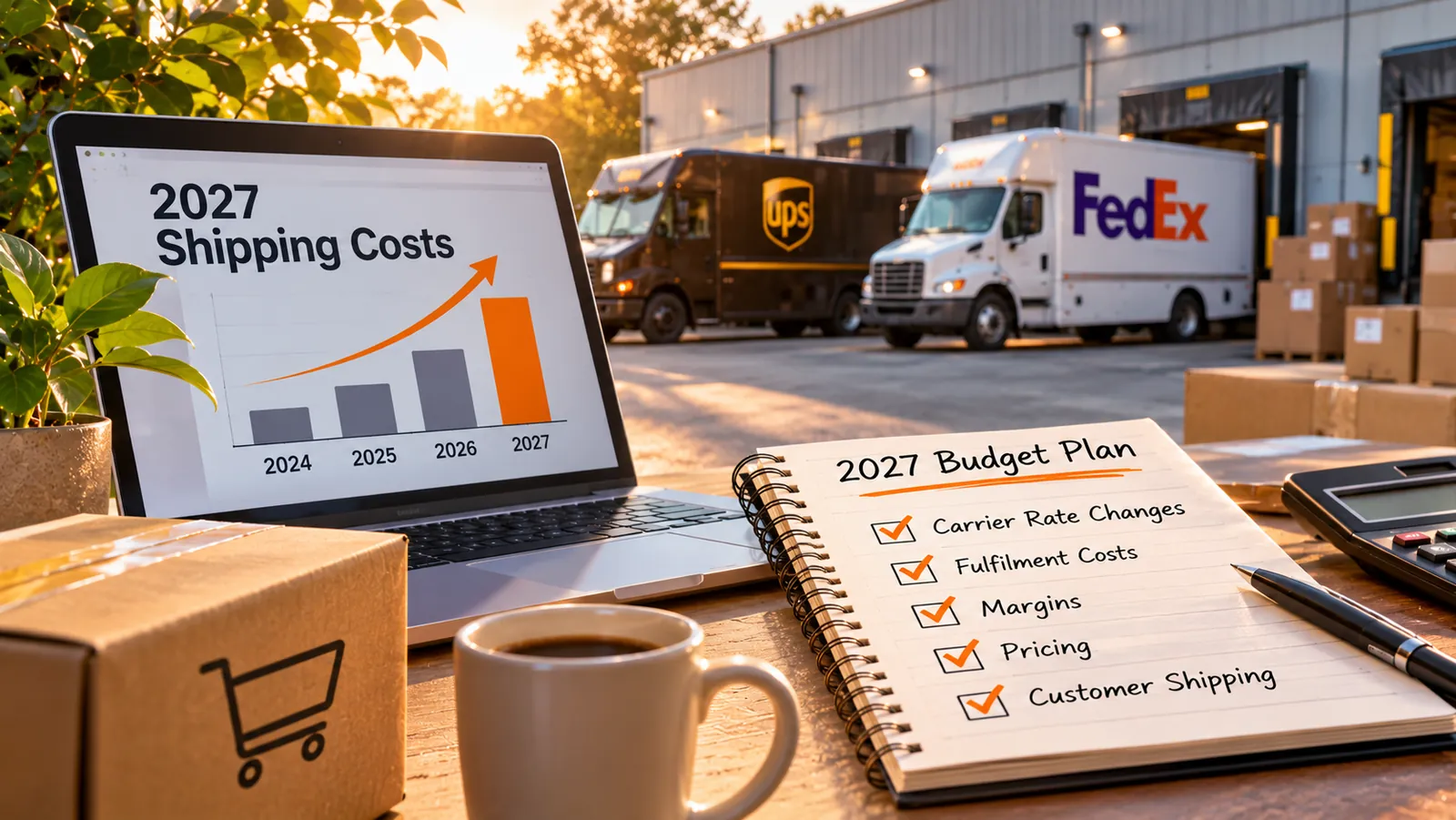
Both big ground carriers have announced their annual increases. UPS plans an average 5.9% increase from December 21, 2026. Some ZIP codes are moving into different zones, the list of ZIP codes that pay delivery area surcharges is changing, and some customers shipping Ground and Ground Saver from certain ZIP codes will pay a new per-package surcharge. FedEx plans an average 5.9% increase from January 4, 2027.
"Average" is the important word. Your own increase depends on your weights, zones and surcharges. Ask your 3PL or carrier rep to re-rate last quarter's actual shipments on the new tables, because a zone change on your busiest destination can matter more than the headline percentage.
A 20-minute check of your own zone mix
Export 90 days of orders with the ship-to ZIP code for each one.
Get the zone chart for your warehouse. USPS publishes charts by three-digit origin ZIP, and your 3PL can send you its UPS and FedEx charts.
Tag each order with its zone using a lookup in your spreadsheet.
Count the share of orders in Zones 6 to 8.
Multiply those orders by the difference between your average far-zone price and your average Zone 4 to 5 price.
Here's a made-up example. A brand ships 10,000 orders a month from New Jersey, and 45% go to Zones 7 and 8, mostly on the West Coast. If those parcels cost $4 more on average than mid-zone ones, distance is costing $18,000 a month, or $216,000 a year. A second warehouse in the West would move most of those orders into lower zones, and that saving gets weighed against the cost of splitting stock across two sites.
Four ways to cut zone costs
The first is to move the stock. A central warehouse shortens the longest trips, and a second warehouse on the other coast moves the far zones into the near ones. The second is to choose the carrier per zone. Rates differ by carrier and zone, and a 3PL that rate-shops each parcel picks the cheapest service that still meets your delivery promise.
The third is to shrink the box. Billable weight multiplies with zone, so a smaller box saves the most on the far zones. The fourth is to use regional carriers where they cover your busiest lanes, since they often beat national ground on price and speed within their own area.
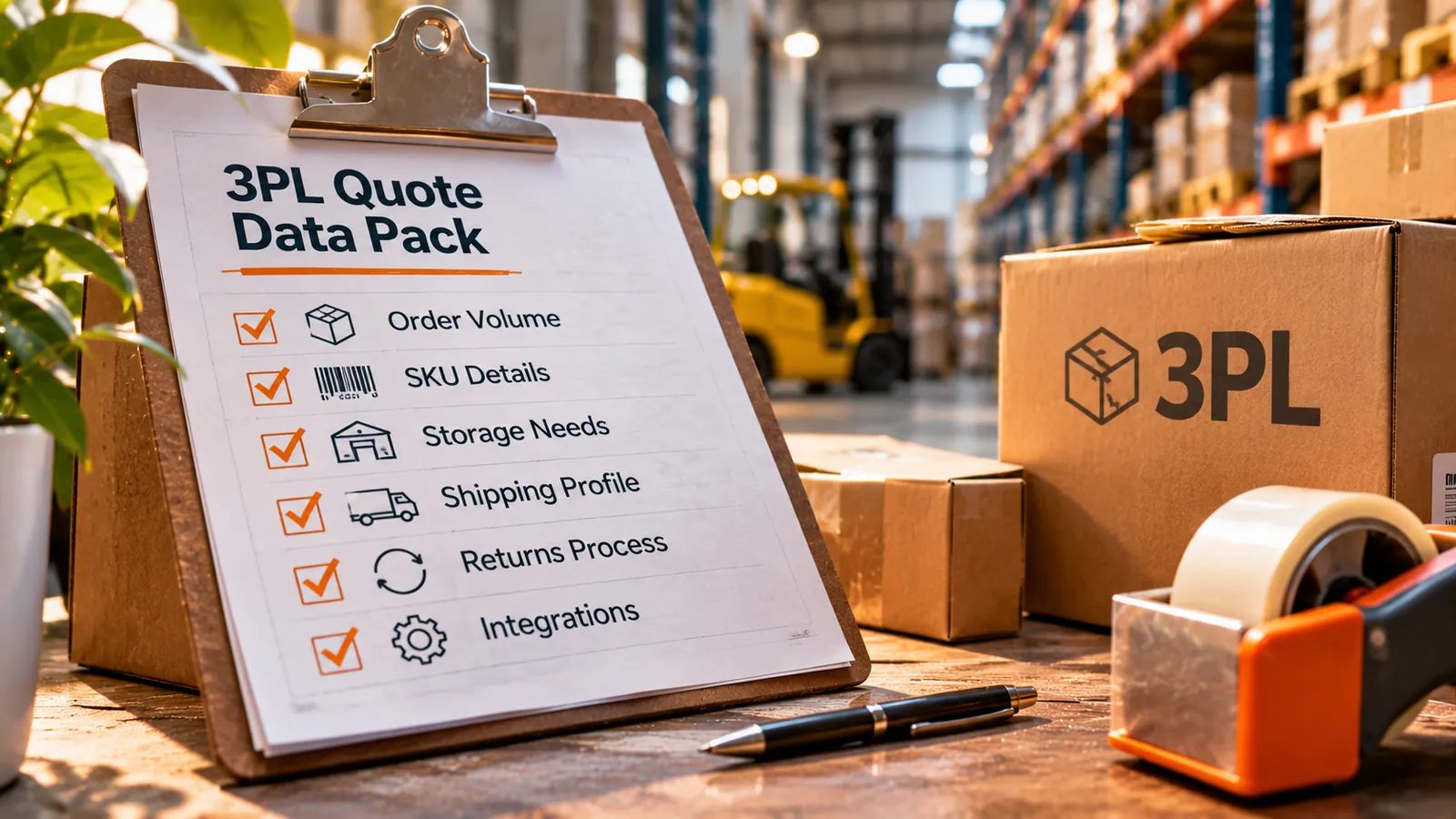
If under a fifth of your orders land in Zones 6 to 8, your zone mix is probably fine, and the savings sit in box sizes or carrier rates. If it's nearer half, location is the lever. You can compare US ecommerce fulfillment companies by location and ask each one to rate your last 90 days of orders from its own warehouses.
Need a logistics partner?
Tell Logan what you ship and where, and get a shortlist of partners that fit.
Submit an RFP

Comments
Share a question or insight about this article.