
How to Run a 3PL Tender: Compare Quotes Fairly
Learn how to run a 3PL tender: write one brief, ask providers the same questions and score quotes side by side so you can choose with confidence.
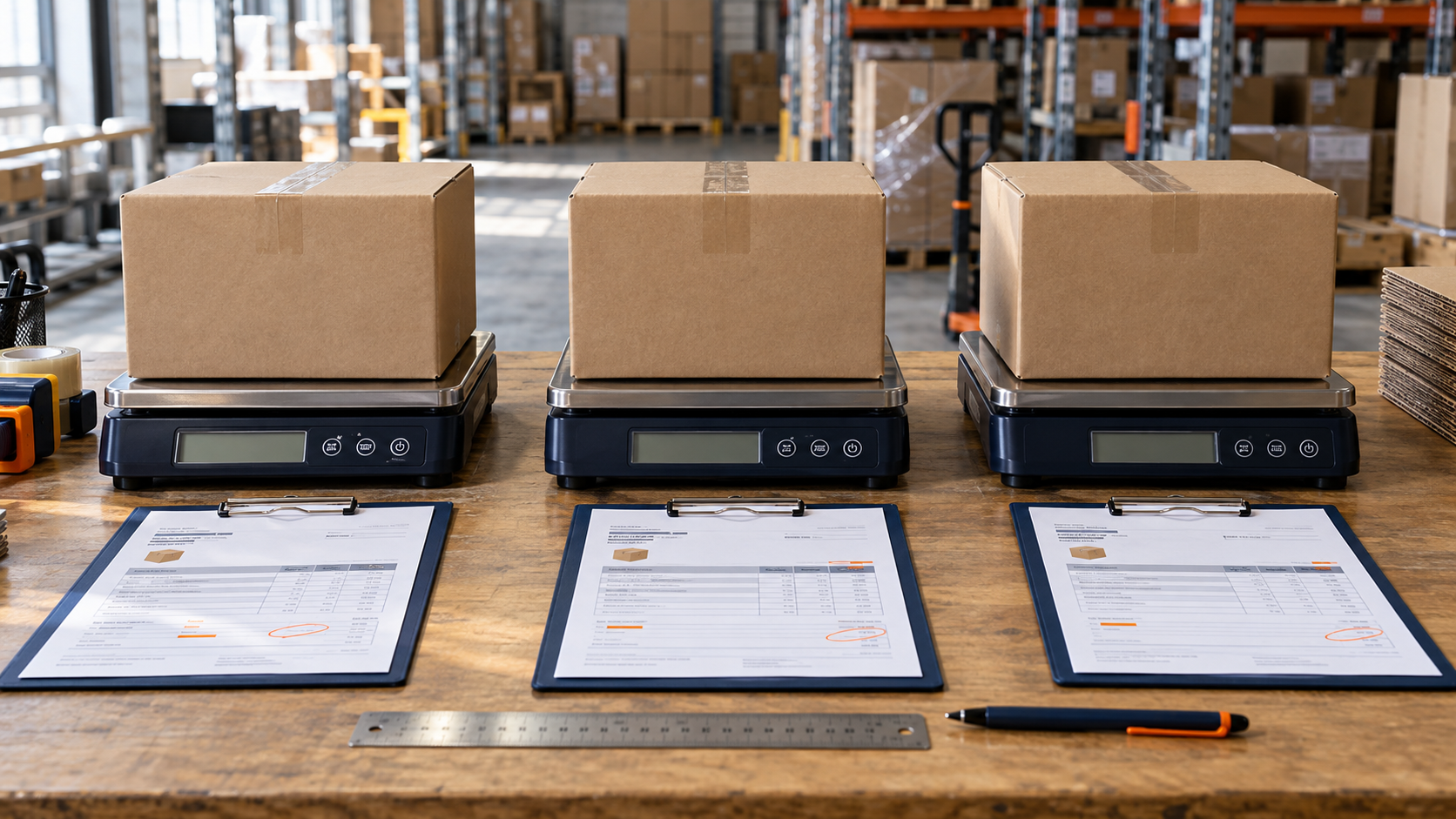
To run a 3PL tender, write one brief, send it to the same three to five providers, ask them to price the same sample month, and score every reply against criteria you set before the quotes arrive. That is the whole method. The rest of this guide shows how to do each step so the quotes you get back can be compared line by line.
This is the practical follow-on to our guide to choosing a 3PL. If you are still working out what to ask, read the 20 questions to ask a 3PL before you sign first.
Why 3PL quotes are so hard to compare
Two providers can quote for the same business and send back documents that look nothing alike. One gives a price per order. Another lists pick fees, packaging, storage and admin separately. A third includes a minimum monthly charge you only spot on page four.
The providers are not necessarily being unfair. They have been given different information, so they have made different assumptions. A tender fixes this by giving everyone the same brief and the same pricing template.
For a closer look at where costs hide, see our guides on 3PL costs in the UK, pick and pack pricing and what a good cost per order looks like.
Step 1: Write one brief
Put everything a provider needs to price your business in one document. Include:
What you sell, and how many SKUs
Average orders per month, and your busiest month
Average items per order and typical parcel size and weight
Where your orders ship from and to, split by region
Stock to be stored, in pallets or cartons, and how long it sits
Special handling: fragile, temperature, batches, expiry, bundles, kitting
Returns volume and how you want returns handled
Your store platform and any other systems to connect
Target start date
Use your own order data. A brief built on guesses produces quotes built on guesses.
Step 2: Set your criteria and weights before quotes arrive
Decide what matters and how much, before you see a single price. Otherwise the cheapest quote tends to win by default.
Here is an example of a weighting you could adapt. Change it to suit your business.
CriterionExample weightTotal cost for the sample month30%Fit with your product type and volume20%Systems and integration with your store15%Accuracy, service levels and reporting15%Onboarding plan and communication10%Contract terms and flexibility10%
These weights are an illustration, not a standard. A brand with fragile stock may weight accuracy higher. A brand with tight margins may weight cost higher.
Step 3: Shortlist three to five providers
Fewer than three gives you little to compare. More than five creates work without improving the decision. Shortlist on fit, not price: product type, order volume, region, and the systems they connect to.
A good shortlist often mixes provider sizes, so you can see the trade-off between the personal service of a smaller operator and the scale of a larger one.
Step 4: Send the same brief and a pricing template
Send the brief, your questions and a pricing template to every provider on the same day, with the same reply deadline. The template is what makes comparison possible. Ask each provider to fill in the same lines:
One-off set-up fees
Receiving charges, per pallet or per carton
Storage, per pallet or per bin, per week or month
Pick fee for the first item and for each extra item
Packaging materials and inserts
Carrier costs for your sample parcels
Returns handling
Account management, IT or integration fees
Minimum monthly charge, contract length and notice period
Then ask each provider to price the same sample month, using your real order mix. A sample month turns a list of rates into one total you can compare. Tell providers the quote is for comparison, so they do not leave out lines they would otherwise add later.
Step 5: Compare and score
When the replies are in, put every quote into one sheet with the same rows. Then:
Check each total by hand against the rates, and flag anything that does not add up
Mark every assumption a provider added, such as a minimum or an excluded fee
Score each criterion from 1 to 5 and apply your weights
Note unanswered questions rather than guessing the answer
Speak to references or existing clients if you can, and ask to see the warehouse. A tour often tells you more than the proposal.
Step 6: Negotiate and decide
Go back to your top two with specific questions, not a general request for a lower price. Ask what would change the rate: volume commitments, a longer term, flexible start dates. Ask about contract length, notice period and how price changes are handled.
Make the decision against your scorecard. If the winner is not the cheapest, you can now explain why, which helps if the choice is questioned later.
Mistakes to avoid
Sending different information to different providers
Choosing on headline price without a sample month
Setting weights after seeing the quotes
Asking too many providers, so you cannot assess them properly
Leaving contract terms until the end
Skipping the warehouse visit or reference call
After you pick a provider, our guide on what to expect in your first 30 days shows how to start well.
A faster way to tender with FulfilQ
If writing the brief and chasing replies sounds like a lot, FulfilQ's request for proposals does the sending for you. You describe your needs once, and matching verified providers can respond to the same brief. It is free for brands and carries no obligation to hire anyone. You still make the decision using the same scoring approach as above.
People Also Ask
What is a 3PL tender?
A 3PL tender is a structured process where a brand sends the same brief to several fulfilment providers, collects comparable quotes and chooses using agreed criteria. It is sometimes called a request for proposal, or RFP.
How many providers should I invite to tender?
Three to five is a sensible range. It gives you enough to compare without making the process unmanageable.
How long does it take to run a 3PL tender?
As a rough guide, plan for two to four weeks from sending the brief to making a decision. That covers a week or so for providers to reply, time to compare, and follow-up calls or visits. Complex catalogues can take longer.
Finding the right 3PL tender partner
FulfilQ's advisor, Logan, matches brands to verified providers by order volume, product type and region, so your shortlist starts with providers that fit. Tell Logan what you ship and where it goes at fulfilq.com, or browse the full provider directory.




Comments
Share a question or insight about this article.