
Assessing In House Versus Outsourced Logistics
A warehouse can look cheaper on a spreadsheet long before it becomes cheaper in practice. The rent is visible; the cost of missed dispatch cut-offs, inaccurate stock, temporary labour, carrier disputes and a founder spending Friday afternoons solving fulfilment issues is not.
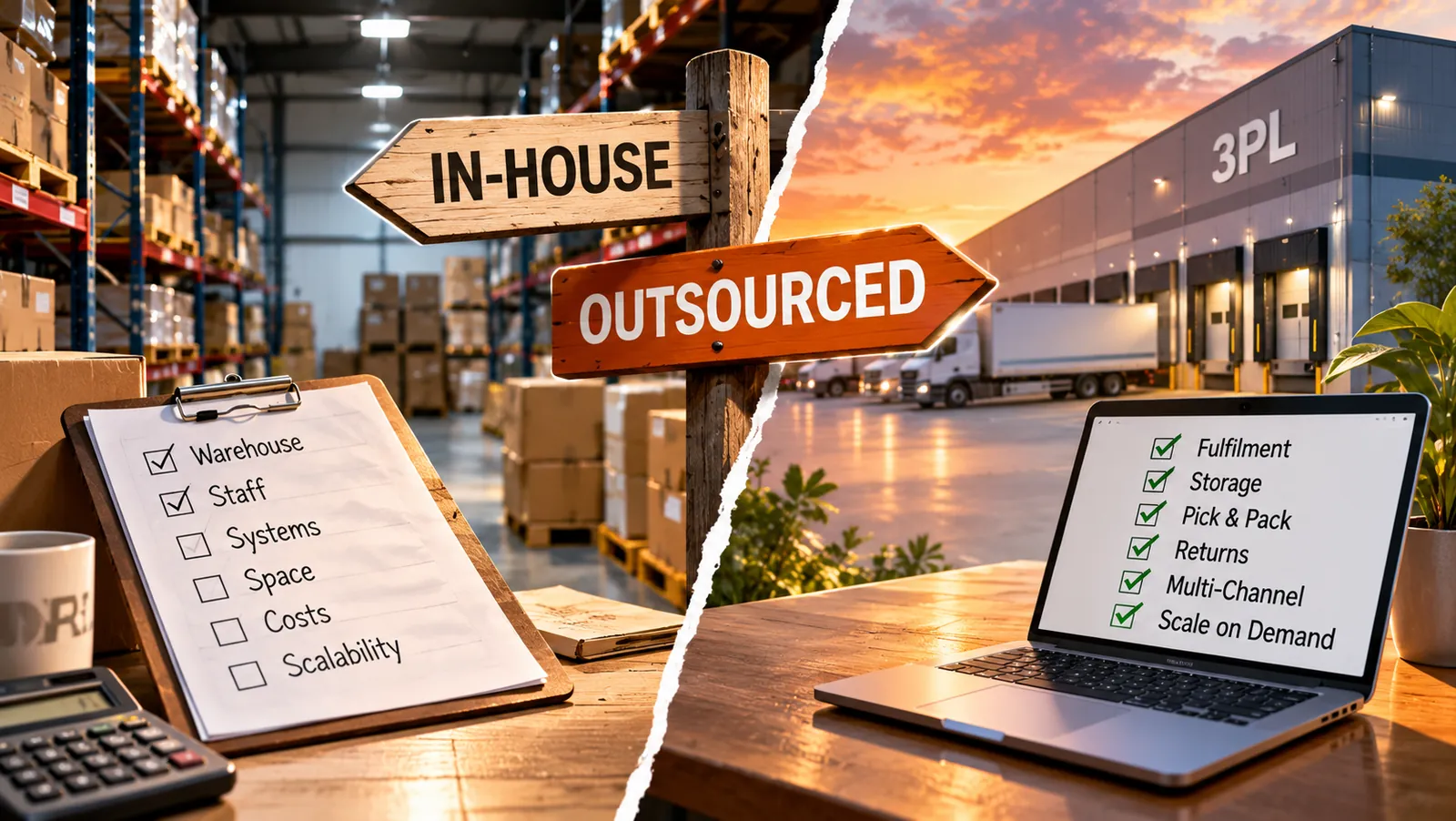
That is why the in house versus outsourced logistics decision should start with operational requirements, not a simple comparison of pick-and-pack rates.
For some brands, bringing fulfilment in house creates better control, faster learning and lower unit costs at scale. For others, it turns a growing ecommerce operation into a property, people and systems business just when management needs to focus on product, demand and channel growth. Neither model is automatically right. The better option is the one that supports the order profile, product complexity and next stage of the business without creating avoidable risk.
The central question is not whether a third-party logistics provider is cheaper than your own warehouse. It is whether your current and planned operation needs specialist infrastructure that you can realistically build, run and improve.
In-house fulfilment gives the business direct authority over people, processes and customer experience. If an urgent wholesale order needs a different label, a product bundle needs to be rebuilt, or a high-value customer requires a same-day replacement, the team can act without waiting for a provider's service desk or change-control process. This can be particularly valuable for early-stage brands with volatile launches, bespoke packaging or products that need judgement rather than standardised handling.
Outsourcing shifts much of that operating burden to a 3PL. The provider supplies warehouse space, warehouse management systems, trained labour, carrier relationships and established processes for receiving, picking, packing, dispatch and returns. A good provider can absorb peaks and support new sales channels more readily than a small internal team. A poor fit, however, can make every exception expensive and every change slow.
The distinction matters because an ecommerce operation is rarely static. A brand may begin with 2,000 direct-to-consumer orders a month, then add Amazon, retail replenishment and European shipping within a year. The warehouse model that works for the first stage can be a constraint in the second.
Compare Total Cost, Not Just Fulfilment Charges
An outsourced quote makes costs easier to see because charges are itemised: receiving, storage, picks, packaging, returns, account management and carrier services. It can also make the total look high compared with the wage bill of an internal warehouse team. That comparison is incomplete.
The genuine in-house cost includes property, utilities, racking, material-handling equipment, warehouse systems, devices, insurance, packaging, recruitment, training, management time, shrinkage and health and safety obligations. Add temporary labour during peak periods, sick cover, overtime and the capital tied up in stock and equipment. If the building is too large, you pay for unused space. If it is too small, you pay for rushed moves, overflow storage or lost capacity.
Outsourcing has its own cost traps. Minimum monthly fees can be painful at low volumes. Receiving charges may rise if inbound stock arrives poorly labelled or in mixed cartons. A low pick fee may exclude promotional inserts, kitting, serial-number capture, dangerous goods handling or marketplace labelling. Returns can become disproportionately expensive when the provider's process does not match the condition checks your products require.
Ask both options to model the same operating profile: monthly orders, average order lines, SKU count, pallet movements, return rate, packaging variations and peak-week volumes. Then test the economics at 70 per cent, 100 per cent and 150 per cent of expected demand. The right decision should still hold when sales are weaker than forecast and when a promotion performs better than planned.
Control Is Useful Only When You Can Exercise It
Many brands cite control as the reason to keep fulfilment in house. It is a valid concern, but control has two forms. Direct control means your own team can change a process immediately. Effective control means the process is measured, documented and consistently delivered, whether the warehouse is internal or external.
An in-house operation without cycle counts, clear location discipline, scan verification and daily exception reporting does not offer much meaningful control. It may simply put the consequences closer to the business. Likewise, a 3PL relationship without service-level agreements, reporting cadence and named escalation routes will feel remote even if the provider is technically capable.
For outsourced operations, define what must be controlled before selecting a partner. That may include same-day dispatch cut-offs, inventory accuracy, batch or expiry-date tracking, photo evidence for damaged returns, retailer routing-guide compliance and response times for customer service escalations. A provider that handles standard apparel well may not be suitable for cosmetics with batch controls, fragile products needing bespoke packing, or wholesale orders with strict booking-in rules.
Technology is often the deciding factor. Your warehouse management system and ecommerce platforms need to reflect stock accurately across every channel. If you sell through Shopify, Amazon, a wholesale portal and physical retail, ask how orders flow, how cancellations are handled and when stock updates are sent. Manual workarounds are tolerable for a small operation; they become a recurring source of oversells and late dispatches as volume grows.
Capacity, Geography and Complexity Change the Answer
Outsourcing tends to become more attractive when demand is seasonal, geography is expanding or fulfilment requirements are becoming specialised. A provider with sites in the right regions can offer later cut-offs, lower delivery zones and a practical route to split inventory across two locations. That can improve customer delivery experience without requiring the brand to lease and staff multiple warehouses.
It is not automatically sensible to distribute stock widely. Two-coast inventory splits in the US, for example, can reduce parcel transit times but increase stockholding complexity and replenishment costs. The same principle applies when serving the UK and Europe from separate facilities. The question is whether the improvement in delivery promise and carrier cost outweighs the extra inventory and operational coordination.
In-house fulfilment can be the better route when volume is high and predictable in one geography, products are operationally unusual, and the business has the management depth to run warehousing as a core competence. Consider a retailer with stable case-pick demand, dedicated property and established warehouse leadership. Its cost base may be lower internally than through a 3PL, particularly if it can keep labour and space well utilised.
A growing DTC brand with 800 SKUs, frequent bundles, influencer-led spikes and plans to launch into new marketplaces faces a different reality. It may benefit more from a partner that already has trained teams, carrier contracts and peak capacity, even if the per-order charge initially appears higher.
A Practical Decision Framework
Before choosing a model, build a requirement set that reflects how the operation actually works rather than how it is described in a headline forecast. Start with current order volumes and a 12- to 24-month view, but also document SKU count, product dimensions, pallet and carton profiles, storage conditions, average items per order and known seasonal peaks.
Then map the operational exceptions. These are usually where costs and service failures sit: subscription bundles, gift messages, quality checks, marketplace prep, B2B carton labelling, retailer compliance, serialisation, hazardous goods, repairs and returns grading. If these represent a material share of work, standard fulfilment pricing will not tell the full story.
Finally, identify the non-negotiables. You may need UK next-day coverage, delivery into mainland Europe, a specific ecommerce integration, batch traceability or the ability to onboard before a peak trading period. A provider with an attractive price but a six-month implementation queue is not a viable option if your current warehouse lease ends in eight weeks.
Use these requirements to compare options against four practical tests: total cost at realistic volumes, service capability, implementation risk and headroom for the next stage of growth. Weighting each test matters. A finance-led choice may favour fixed-cost reduction, while an operations-led choice may place greater value on stock accuracy and peak resilience. Both perspectives should be visible in the decision.
Outsourcing Is Not a Hand-Off
Selecting a 3PL does not remove the need for logistics management. It changes the work. Your team still needs to forecast inbound stock, approve packaging, monitor performance, manage product data and hold regular operational reviews. The best relationships are specific about responsibilities: who owns carrier claims, who investigates inventory discrepancies, who approves substitution rules and what happens when forecast volumes are exceeded.
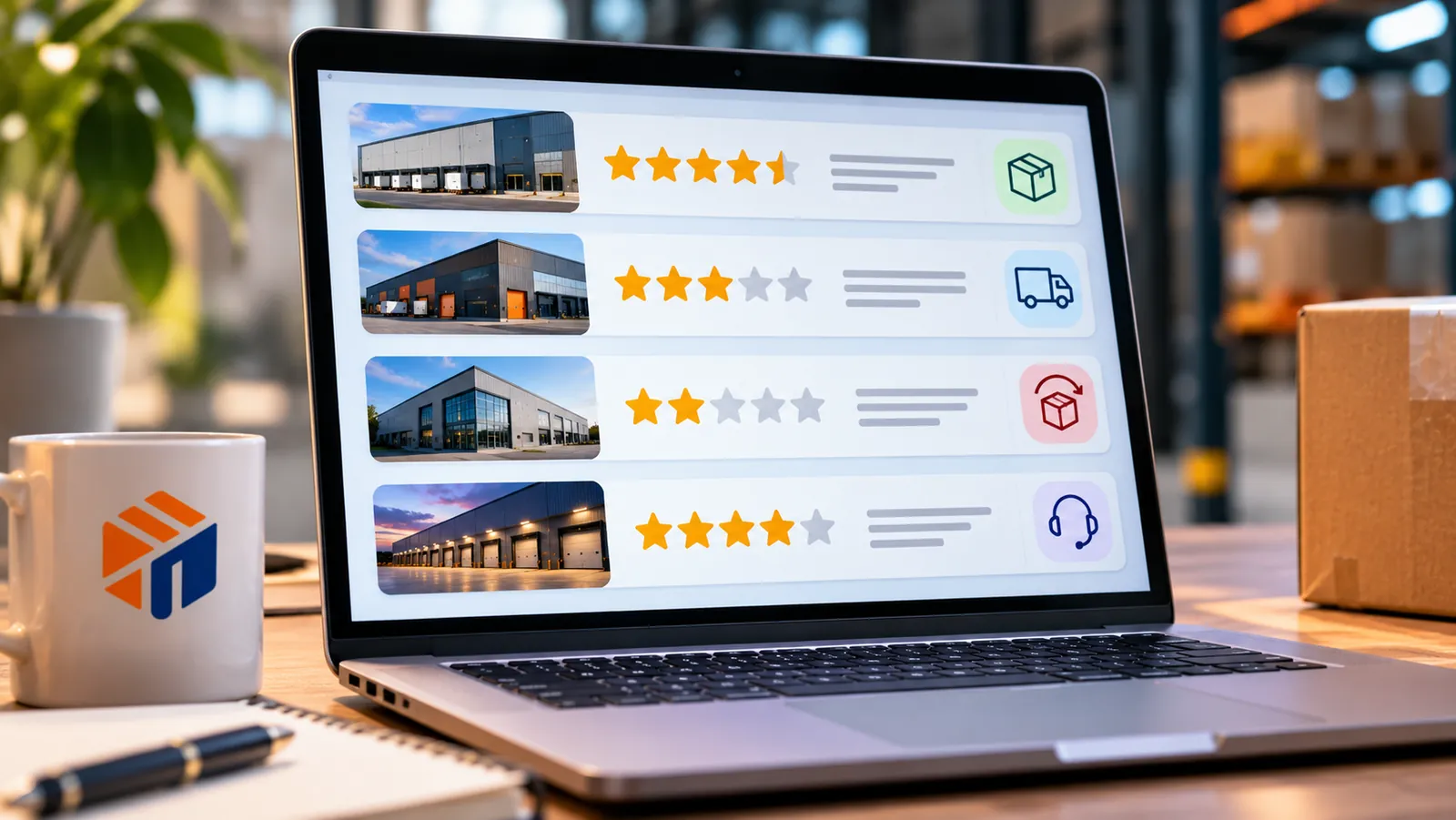
During provider selection, request practical evidence rather than broad assurances. Ask how the operation manages peak capacity, what onboarding data is needed, whether your integrations are live or custom, and how comparable products are handled. Review both the fit score and the watch points. A provider may be an excellent match overall but require a longer onboarding period for EDI, or have a regional delivery limitation that affects part of your customer base.
FulfilQ's operational-fit approach is built around this distinction. The cheapest quote means very little if the operation behind it cannot support your channels, handling needs or growth plan.
The strongest decision is rarely a permanent declaration that fulfilment must be internal or external. Review it as the business changes. When requirements are clear, the model becomes easier to choose - and much harder to regret.
Need a logistics partner?
Tell Logan what you ship and where, and get a shortlist of partners that fit.
Submit an RFP


Comments
Share a question or insight about this article.