
Low value imports UK: what ending the £135 customs duty relief means for ecommerce
The UK is ending customs duty relief on imports of £135 or less by October 2028. What changes, what is still undecided and how ecommerce brands should plan.
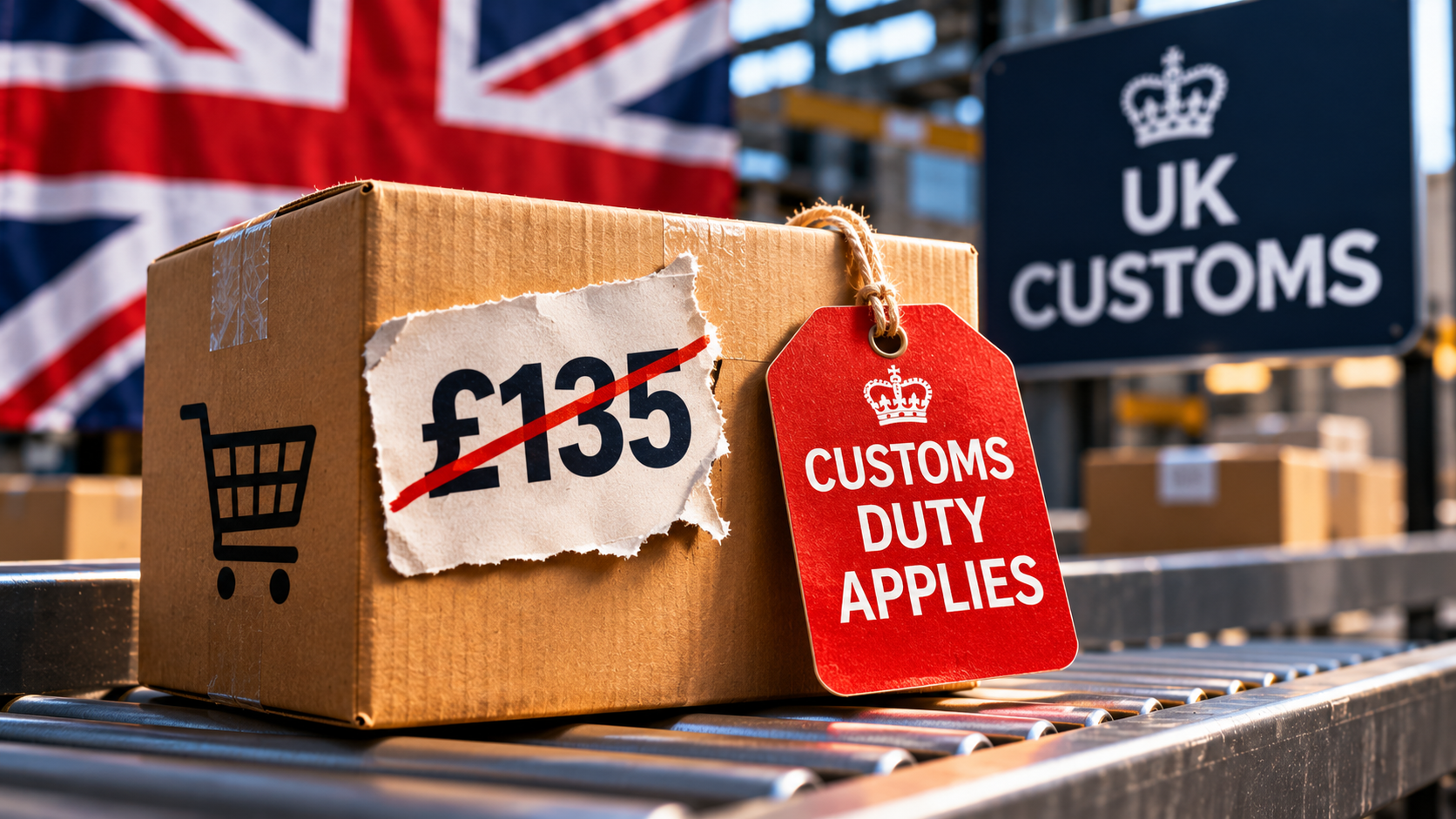
Low value imports into the UK are consignments worth £135 or less. Today they carry VAT, usually charged by the seller at checkout, but no customs duty unless they are excise goods. The government is removing that duty relief, and the HMRC policy paper says the start date must be set in regulations by October 2028 at the latest, six months earlier than the March 2029 date first announced.
This guide covers Great Britain, as Northern Ireland has its own rules. It is for UK brands competing with overseas sellers who post single parcels to UK shoppers, and for brands buying small consignments from overseas suppliers. Some detail is not final, and we say where.
The pain points
"A seller abroad lists the same product below my landed cost and posts it straight to my customer."
"Our supplier sends top-up stock in small parcels, so we never see a duty bill. I have no idea what happens to that in 2028."
"I read March 2029, then October 2028. Which date am I meant to plan around?"
"Nobody can tell me what the new fee is, so I can't put it in a price."
"We'd move to bulk shipments if the sums worked, but I've never priced a full shipment landed in a UK warehouse."
How low value imports are taxed today
For goods sent from abroad to Great Britain, gov.uk's guidance on tax and duty sets out the current position:
VAT on £135 or less: the seller has usually included VAT at checkout. An overseas seller selling direct to UK customers must charge and account for VAT at the point of sale. Sales through online marketplaces follow separate rules.
Customs duty on £135 or less: none on non-excise goods. Excise goods pay duty at any value.
Above £135: import VAT and customs duty are paid at the border, normally to the delivery company. Duty is charged on the price paid plus postage, packaging and insurance.
VAT at the point of sale has applied to these goods since the 2021 reforms, as the HM Treasury consultation notes. The duty relief is the part being removed.
What the government has decided
The Chancellor announced the removal at Autumn Budget 2025, with a date of March 2029 at the latest. HM Treasury consulted on the detail from 26 November 2025 to 6 March 2026. On 23 June 2026 the government brought delivery forward by six months to October 2028. The consultation response, published on 13 July 2026, confirmed the main design:
New customs arrangements will be mandatory for eligible consignments of £135 or less.
Duty will be charged at the normal UK Global Tariff rate. There will be no simplified or flat-rate tariff, so goods must be classified properly.
Sellers, or online marketplaces where they facilitate the sale, will be responsible for paying the duty.
Sellers and marketplaces with no UK presence must appoint a UK fiscal representative, which takes on joint and several liability for their customs debts.
An additional fee on low value imports will be introduced.
The £39 relief for genuine non-commercial consignments between private individuals stays.
Some goods stay under standard import arrangements, including excise goods, goods under import restrictions or trade defence measures, and any consignment where a customs relief, tariff suspension, quota or special procedure is claimed.
Draft primary legislation was published alongside the response. The working detail will follow in secondary legislation and guidance.
What is still not decided
As of 4 November 2026, these points are open:
The exact start date. October 2028 is the latest date. The Treasury sets the actual day in regulations, so it could come sooner.
The fee. The response says it will reflect the cost of the service and be set at an affordable level. The amount and design will follow.
VAT collection. The government is still weighing how VAT on these goods should be collected under the new arrangements.
Data. Sellers and marketplaces will send item-level data to HMRC, and the exact fields are still being finalised.
Brands importing for themselves. The consultation said the new route covers business-to-business and business-to-consumer supplies. Practical guidance for UK businesses receiving small consignments from their own suppliers has not been published yet.
Check with HMRC before you ship, and again when guidance appears.
If you compete with overseas sellers
The consultation put the number of low value consignments at roughly 600 million in 2024, around 1.6 million a day, based on HMRC sample data. Once the change starts, each parcel carries the tariff rate your bulk imports already pay, plus the new fee.
That narrows the price gap by the tariff rate and the fee. Some sellers will absorb part of the duty in their margin. Three things help:
Look up the duty rate for your best sellers on the UK Trade Tariff. It shows roughly how far a rival's price must rise to hold its margin.
Compete where parcels from abroad are weak: next-day delivery, simple UK returns and stock that is always in.
Hold your prices until the change starts and you see what rivals charge.
The UK is one of several markets closing duty-free parcel routes, a shift covered in FulfilQ's State of Ecommerce Fulfilment 2026 report.
If you import small consignments yourself
Many brands receive samples or top-up stock from overseas suppliers in parcels under £135. Today non-excise goods pay no duty, and if you give the seller your VAT registration number you account for VAT under the reverse charge. Once the relief ends, they pay duty at the normal tariff rate. That changes the comparison between two ways of buying:
Small parcels from the supplier: fast and flexible, and each one will carry duty and the new fee once the change starts.
Consolidated freight into UK stock: duty applies as it already does above £135, with one customs entry per shipment, lower freight cost per unit and stock held in a UK warehouse.
Our guides to import duty from China to the UK and importing from China for UK ecommerce cover classification, customs value and clearance for bulk shipments.
Plan stock location and landed cost
Landed cost is the full cost of one unit sitting in your UK stock: product, freight, insurance, duty, any VAT you cannot reclaim, clearance fees, inbound handling and storage. Work it out for both routes now. Calculate duty on the price paid plus postage, packaging and insurance, and keep a blank line for the new fee until HMRC publishes it. Our guide to landed cost in a 3PL quote lists the lines to ask for on the bulk route.
If bulk wins once duty is in, you need UK storage and someone to ship orders from it. Our guide on how to choose a 3PL for ecommerce in the UK covers the questions that matter.
What to ask a freight forwarder or customs broker
Which commodity codes and duty rates apply to our top 20 products, and how sure are you of each code?
What would one consolidated shipment a month cost door to door, including clearance and delivery to a UK warehouse?
How will you set customs value, including freight and insurance, on our entries?
Are you following the secondary legislation and HMRC guidance on low value imports, and will you tell us when the start date is set?
If a supplier keeps sending small parcels after the change, who acts as declarant, and who pays the duty and the fee?
Our recommendation: re-cost every small parcel import at full duty now
Pull 12 months of inbound shipments and flag every consignment of £135 or less.
Classify those products and record the duty rate from the UK Trade Tariff.
Work out what those parcels would have cost with duty on the full customs value.
Get a quote for consolidated freight into UK stock for the same volume.
Compare landed cost per unit for both routes and set a switch-over point, by volume or by date.
Put October 2028 in your plan as the latest date, and check each quarter for the regulations that set the actual day.
What waiting costs
The start date can arrive before October 2028. Brands that leave the work late will be booking forwarders and UK storage at the same time as everyone else, with supplier terms still built around duty-free parcels and margins that drop on the first day duty applies. A move to bulk takes months: supplier packing rules, a warehouse that receives pallets, and cash tied up in larger orders.
These figures are made up to show the method. A brand receives 40 parcels a month from a supplier, each holding £120 of goods. Courier cost is £18 a parcel, so £720 a month, with no duty today. Assume a 12% duty rate and, to keep the sums simple, apply it to the goods value only: £576 a month once the relief ends. Add a placeholder fee of £2 a parcel, £80, and the small-parcel route costs £1,376 a month. The bulk route is one consolidated shipment: £400 freight, £60 clearance, £50 inbound receiving and the same £576 duty, so £1,086. Today small parcels win by £366 a month. After the change, bulk wins by £290 a month, about £3,480 a year.
People Also Ask
When does the UK £135 customs duty relief end?
The government has committed to ending it by October 2028 at the latest. The exact day will be set in regulations, so it could come earlier. The Autumn Budget 2025 announcement said March 2029, and the date was brought forward in June 2026.
Will VAT change on imports of £135 or less?
VAT on these goods is already charged at the point of sale. The government is still considering how VAT should be collected under the new arrangements. Check HMRC guidance before you change pricing or checkout settings.
Will samples from overseas suppliers pay duty after the change?
Commercial consignments of £135 or less lose the duty relief, so samples sent by a business will normally pay duty at the UK Global Tariff rate. The £39 relief stays only for genuine non-commercial consignments between private individuals. If you plan to claim a customs relief on samples, the consultation response says that claim goes through standard import arrangements.
Finding the right freight forwarder partner
Logan, FulfilQ's advisor on the website, matches brands to verified providers by order volume, product type and region. Tell Logan where your suppliers are, how often you ship and roughly what each consignment is worth, and you get a shortlist to ask about consolidated freight, customs clearance and UK storage before the £135 relief ends. Start at fulfilq.com and Ask Logan, or Submit an RFP and verified providers come back to you. You can also browse the full provider directory.
Comments
Share a question or insight about this article.