
Import Duty from China to the UK: How Ecommerce Brands Work Out the Real Cost
How UK import duty and VAT on goods from China are worked out: customs value, commodity codes, postponed VAT, the £135 rule and its planned end, and fees.
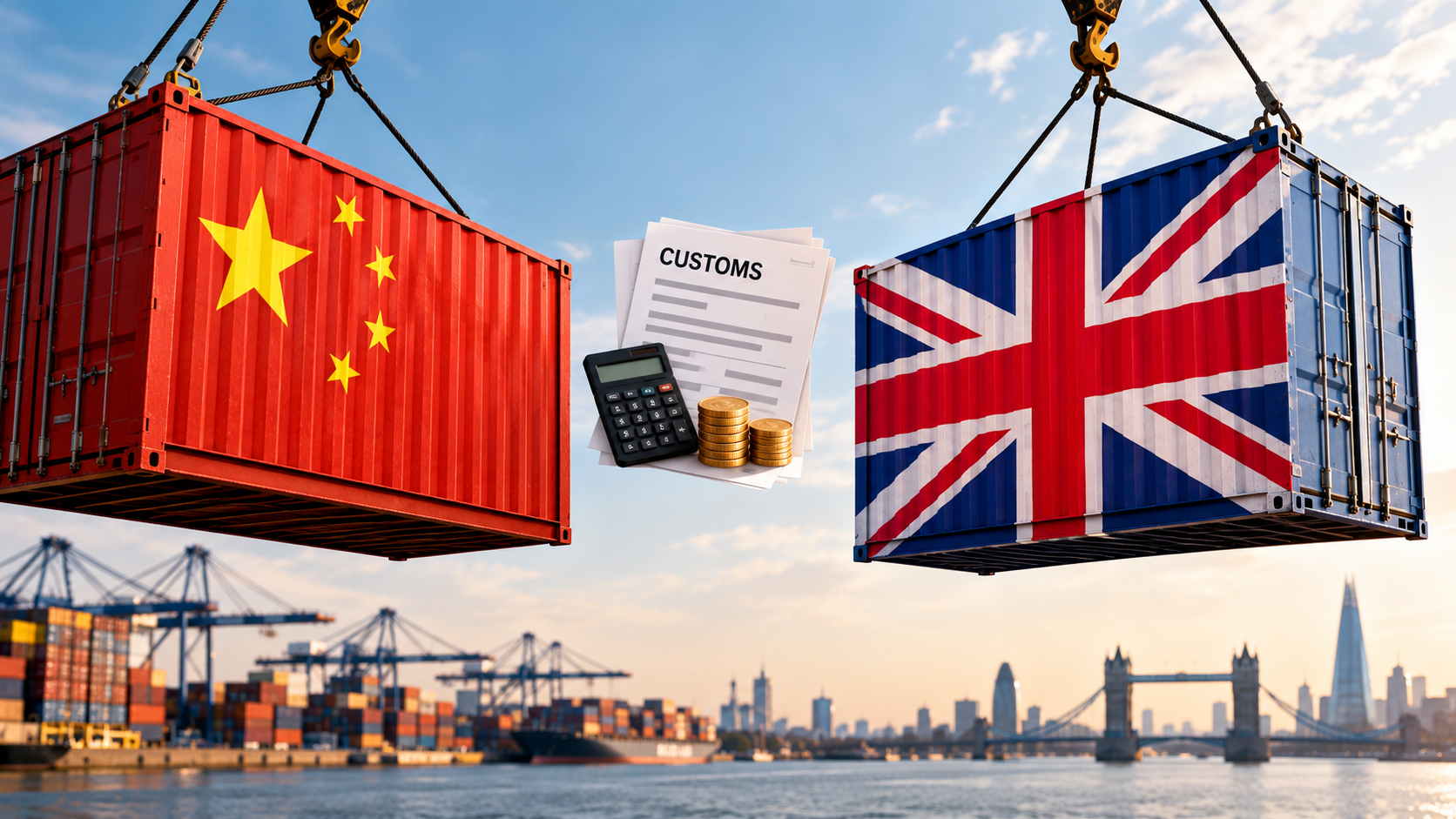
Import duty from China to the UK is a percentage of the customs value of your goods. The customs value is usually the price you paid plus freight and insurance to the UK border. The rate comes from the commodity code for each product in the UK Global Tariff. Import VAT, usually 20%, is then charged on the customs value plus the duty and the delivery costs to the first UK destination. A VAT-registered brand can account for that VAT on its VAT return through postponed VAT accounting, so it does not pay it at the border.
The pain points
Our landed cost came in well above the factory price and we couldn't see where it went.
The courier added a clearance fee we had never heard of.
We used the commodity code our supplier gave us and it turned out to be wrong.
We pay import VAT at the border and wait for the VAT return to get it back.
We ship small parcels straight from China and heard the £135 rule is ending.
Step one: find the right commodity code
Every product you import needs a commodity code. For imports it has 10 digits. Search for it in the UK's online Trade Tariff, which shows the duty rate, the VAT rate and any extra measures for goods from China. The UK has no trade agreement with China, so goods of Chinese origin pay the standard UK Global Tariff rate.
The importer is responsible for the code, even when the supplier suggests one. If a product is hard to classify, you can ask HMRC for an Advance Tariff Ruling, which gives you a legally binding decision on the code.
Step two: work out the customs value
Start with the invoice price, then add the costs of getting the goods to the UK border:
Transport costs up to the place where the goods enter the UK, including inland transport in China.
Carrier surcharges such as peak season, security and port congestion charges.
Insurance against loss or damage in transit up to the UK border.
You can leave out UK transport costs when they are charged separately and clearly shown. Your Incoterms decide what the invoice already covers. A free on board (FOB) price covers the goods to the port in China, so you add freight and insurance. An ex works price needs inland transport in China added too. Convert currency at HMRC's published exchange rates.
Step three: add import VAT and use postponed VAT accounting
Import VAT is charged on the customs value plus the duty, plus incidental costs to the first UK destination such as commission, packing, transport, insurance, handling, storage and customs clearance. The standard rate is 20%, and some goods carry a reduced or zero rate. The Trade Tariff shows which applies.
Here is the sum with made-up figures to show the method. Goods cost £10,000 FOB. Freight and insurance to the UK border add £1,500, so the customs value is £11,500. At an invented duty rate of 4%, duty is £460. UK delivery and clearance costs add £300. The VAT value is £11,500 plus £460 plus £300, which is £12,260, and import VAT at 20% is £2,452.
If your business is registered for VAT in the UK, postponed VAT accounting lets you declare and reclaim that £2,452 on the same VAT return. No approval is needed. The option is selected on the import declaration with your VAT number, and the import shows on your monthly postponed import VAT statement.
Small parcels: the £135 rule and its planned end
For consignments worth £135 or less, the seller or the online marketplace charges UK VAT at the point of sale, and non-excise goods pay no customs duty in Great Britain. Above £135, import VAT and duty are due at the border.
That duty relief is going. The government announced its removal at the Autumn Budget 2025. Its consultation response, published on 13 July 2026, says the new low value import arrangements will start by October 2028 at the latest, six months earlier than first planned. The Treasury will set the exact date by regulations. The consultation response on gov.uk sets out the model:
Sellers, or marketplaces that facilitate the sale, pay the duty, with quarterly payments.
Sellers without a UK presence must appoint a UK fiscal representative that shares liability.
Goods are classified and charged at standard UK Global Tariff rates. There will be no simplified tariff.
An extra fee on low value imports is planned, with the design still to be confirmed.
If you rely on direct parcels from China, plan for duty on every order and compare it with bulk stock in a UK 3PL.
Clearance fees, anti-dumping duty and who handles what
Express couriers and postal operators often charge a clearance or disbursement fee when they pay duty and VAT for you. Freight forwarders usually charge a customs entry fee per declaration, sometimes more for extra commodity lines. Ask for the rate card before you book.
Some goods from China also carry anti-dumping duty on top of normal duty. UK trade remedies notices issued in 2026 cover products such as tin mill steel and wire rod, and new measures are added over time. They show in the Trade Tariff as additional codes. Check before you agree a price with a new supplier.
A freight forwarder books the freight and usually handles the customs declaration. A 3PL receives the goods, stores them and ships your orders. Some providers do both. Our guide to 3PLs and freight forwarders explains where each one fits.
Our recommendation: build a landed cost sheet before you order
Confirm the commodity code for each product in the Trade Tariff, including any additional codes for anti-dumping duty. Ask HMRC for an Advance Tariff Ruling where the code is unclear.
Get freight and insurance quotes that match your Incoterms, then work out duty and import VAT per unit.
Make sure your forwarder uses postponed VAT accounting on every declaration.
Add clearance and entry fees, port charges, delivery to your warehouse and your 3PL's inbound fees. Our guide to the landed cost of a 3PL quote lists each line.
If you ship parcels direct from China, model the end of the £135 relief now.
Once the goods land, our guide to choosing a 3PL in the UK covers the next step.
What waiting costs
A wrong commodity code can leave you owing duty on past imports, with interest, and penalties can follow. Paying import VAT at the border without postponed VAT accounting ties up cash until your next VAT return. The low value relief ends by October 2028 at the latest, and changing suppliers, stock routes and prices takes months.
These figures are made up to show the method. A brand sends 3,000 direct parcels a month at £40 each. At an invented duty rate of 8%, that is £3.20 a parcel, or £9,600 a month, before any new fee. Knowing that early gives you time to reprice or move stock into a UK warehouse.
People Also Ask
How much is import duty from China to the UK?
It depends on the commodity code. Each code has its own rate in the UK Global Tariff, and some products are duty free. Duty is charged on the customs value, which includes freight and insurance to the UK border.
Do I pay VAT on imports from China?
Yes. Import VAT, usually 20%, is due on the customs value plus duty and delivery costs to the first UK destination. A VAT-registered business can use postponed VAT accounting to declare and reclaim it on the same VAT return.
Is there duty on parcels under £135 from China?
At present, non-excise goods in consignments of £135 or less pay no customs duty in Great Britain, and the seller charges VAT at checkout. The government plans to end that relief by October 2028 at the latest.
Finding the right import and fulfilment partner
Logan, FulfilQ's advisor on the website, matches brands to verified providers by order volume, product type and region. Tell Logan what you import, where it comes from and how often, and you get a shortlist to ask about customs clearance, container receiving and storage costs. Start at fulfilq.com and Ask Logan, or Submit an RFP and verified providers come back to you. You can also browse the full provider directory.




Comments
Share a question or insight about this article.