
Importer of Record: What UK Ecommerce Brands Need Before Selling Abroad
What an importer of record does, when a UK ecommerce brand needs one, how the EU, US, Canada and stricter markets differ, and what IOR fees are built from.
An importer of record (IOR) is the person or company legally responsible for goods entering a country. The IOR declares the goods to customs, pays or accounts for duty and import taxes, and answers for the goods meeting local product rules. If your brand has no company or registration in the destination country, someone else has to take that role as your IOR.
This guide covers when a UK brand needs one, how markets differ, how the IOR fits with your broker and forwarder, and what it costs.
The pain points
Our first pallet to an overseas warehouse sat at the port because nobody had named an importer.
A distributor asked who the importer of record would be and I had no answer.
I can't tell if our freight forwarder is the importer or just the company moving the boxes.
We were quoted an IOR fee and had no idea whether it was fair.
Every article about the US says something different.
Who does what: IOR, broker, forwarder and exporter
Canada's border agency defines the importer as the person or entity who causes the goods to be imported and is responsible for accounting for the goods. The IOR carries the liability, even when other firms do the paperwork.
Importer of record: owns the legal responsibility for the import. Duty, import VAT or sales tax, record keeping and product compliance sit with this party.
Customs broker: files the declaration for the IOR under a written authority. The broker acts for the importer, and HMRC's guidance notes you stay responsible for due diligence on your declarations.
Freight forwarder: books and manages the transport. Many also offer brokerage, which blurs the roles. Our guide to 3PLs and freight forwarders explains where each one starts and stops.
Exporter of record (EOR): the party responsible for the goods leaving the UK, usually your own business. It authorises the export declaration and keeps the evidence.
When a UK brand needs an IOR
Three situations trigger the need:
You sell into a country where you have no entity or registration. Customs wants a local or registered importer.
You ship to consumers on delivered duty paid (DDP) terms. If the customer pays nothing on delivery, someone on your side imports the parcel and pays the charges. A carrier's DDP service often fills this role, so check who it names as importer.
You send bulk stock into an overseas warehouse. No customer has bought the stock yet, so your brand, a local entity or a third-party IOR has to import it. Our guide to EU fulfilment for UK brands covers the warehouse side.
How the rules differ by market
Markets fall into three rough groups. These are examples, and rules change, so check each country before you ship.
Strict: you need a local registration that a foreign brand struggles to get
India: the trade directorate states that no import shall be made by any person without an Importer Exporter Code unless exempted, and applicants need an Indian PAN, a bank account in the firm's name and a valid address.
Mexico: importers register on the Padrón de Importadores, which requires an active Mexican tax ID (RFC), a verified tax address, an e.firma and a customs agent or representative.
Brazil: a company must be authorised to operate in Siscomex, the federal trade system, and its registered representatives need a Brazilian individual tax number (CPF).
Here UK brands usually set up locally or use a third-party IOR that holds the registrations.
Moderate: a foreign brand can import, with a local representative
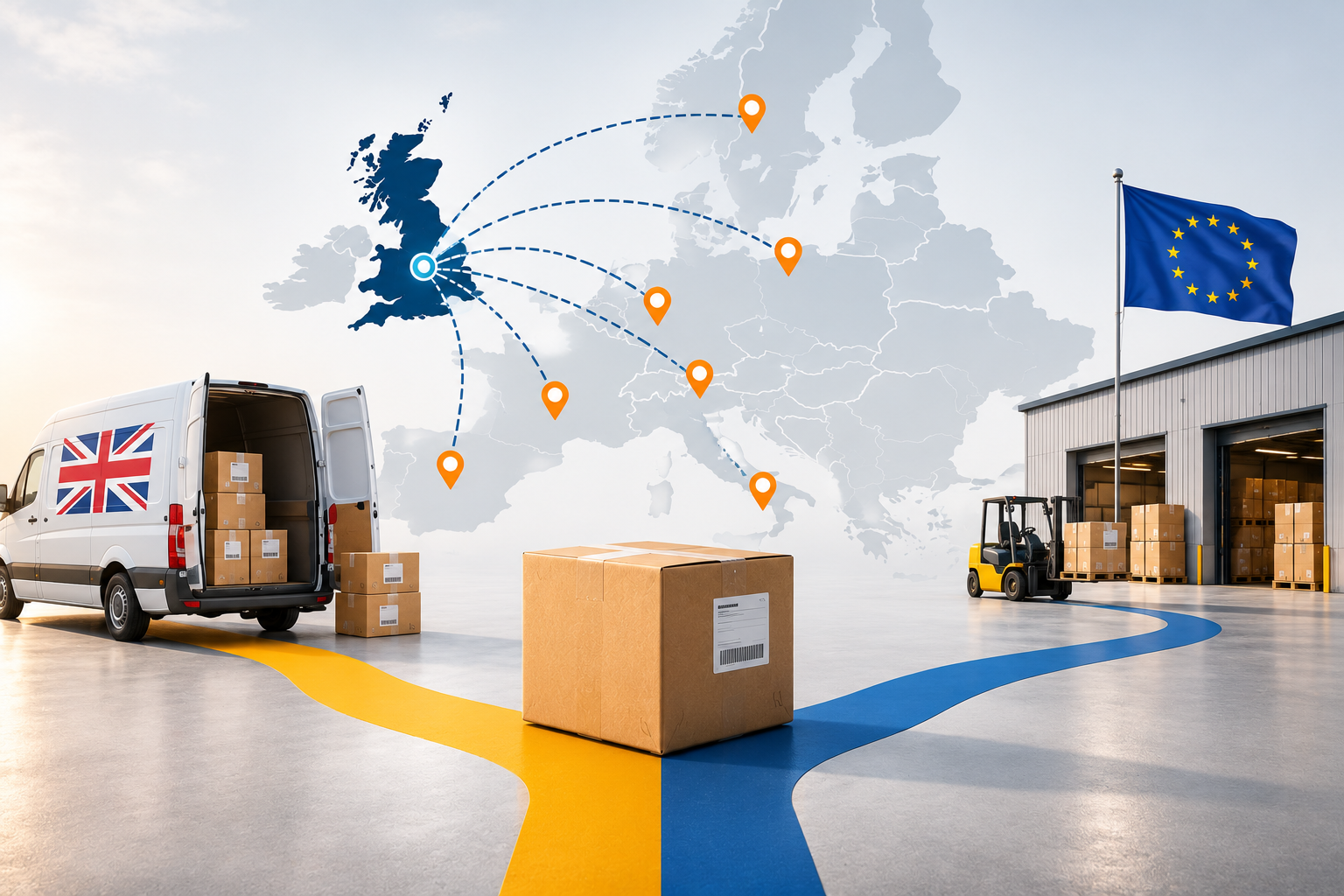
EU: a non-EU business can get an EU EORI number in the country of its first customs operation. German customs says the declarant must be established in the EU or represented by a person established there, with a narrow exception for occasional declarants. In practice that usually means an indirect customs representative, who is jointly responsible for the customs debt with you. VAT is a separate registration, and some countries add a fiscal representative: French customs requires one from non-EU businesses unless their country is on an approved mutual assistance list.
Japan: a non-resident must appoint a Customs Procedure Agent with an address in Japan, and use a licensed customs broker for the declarations if the agent is not one.
Lenient: a non-resident can import with little friction
UK: a business not established in the UK can get an EORI number for customs activity, and anyone dealing with customs for it must be established in the UK.
Canada: a company that does not reside in Canada can act as a non-resident importer, accounting for duties and taxes itself. GST/HST registration may be mandatory depending on what you do in Canada.
The US in 2026
The US lets foreign companies import in their own name. A non-resident corporation needs a resident agent in the state of the port of entry to accept legal papers. Duty-free de minimis treatment for all countries was suspended from 29 August 2025, which our guide to shipping to the US from the UK covers in full.
Executive Order 14411, signed on 3 June 2026, tightens the rules for foreign importers of record. It directs the Secretary of Homeland Security, who oversees CBP, to:
stop foreign IORs filing informal entries, the simpler route used for low-value shipments;
require importers of record to hold a minimum level of US assets, bonding or both;
stop foreign IORs relying on a continuous bond for formal entries, unless CBP permits it;
require foreign IORs to be CTPAT validated where eligible, or to file through a CTPAT-validated licensed broker.
The changes to entries were ordered promptly, and the revised importer eligibility rules are due within 180 days, which runs to 30 November 2026. Check the current CBP position with your broker before you ship.
What an IOR costs
Third-party IOR quotes are usually built from a mix of:
a percentage of the declared value of each shipment;
a flat fee per shipment or per customs entry;
a set-up or monthly account fee;
pass-through costs: duty, import VAT or sales tax, broker clearance fees and any bond or guarantee.
Product compliance work, such as certification checks or local labelling, is often priced separately. Rates vary by country, product and volume. Compare quotes on the same shipment profile and add the result to your landed cost.
What to ask an IOR provider
In which countries do you act as importer in your own name, and where do you use partners?
Who recovers the import VAT, and how does that money come back to us?
Which product rules do you check before accepting a shipment, and which stay with us?
How is your fee calculated: value, shipment, entry or account?
For the US, how are you preparing for the rules under Executive Order 14411?
Our recommendation: name your importer before the first shipment leaves
List every country you sell into or plan to stock, and mark where you have an entity or tax registration.
For each country without one, decide whether the customer, a carrier's DDP service, a local entity or a third-party IOR will import.
Check that country's importer rules on its customs authority's site, starting with the strict markets.
Get your forwarder and broker to confirm their roles in writing.
Collect two or three IOR quotes on the same shipment profile and add them to your landed cost.
Agree in writing who holds the import records and for how long.
Then use our pillar guide on how to choose a 3PL to match the import set-up to a warehouse.
What waiting costs
Goods with no importer don't clear. They sit in storage and collect charges until someone takes responsibility for them. In strict markets the fix can mean setting up a local registration or finding a third-party IOR while the goods wait. In the US, a brand that counts on informal entry may find that route closed once CBP acts on the executive order.
A worked example: a brand sends a £30,000 pallet to an overseas warehouse with no importer named. It sits at the port for 12 days while the brand finds an IOR. Storage at £120 a day comes to £1,440. The warehouse misses a two-week launch window, and forecast sales of £4,000 a week at a 35% margin means £2,800 of lost profit. The delay costs £4,240 before any IOR fee. These figures are made up to show the method.
People Also Ask
What is the difference between an importer of record and a customs broker?
The importer of record is legally responsible for the import, including duty, taxes and compliance. A customs broker files the declaration for the importer under a written authority. The liability stays with the importer.
Can a UK company be the importer of record in the US?
Yes. A non-resident corporation needs a resident agent in the state of the port of entry. Executive Order 14411 directs the US authorities to tighten the rules for foreign importers, including bonds and a ban on informal entry, so check the current position before you ship.
Do I need an importer of record for the EU?
Someone has to import the goods. A UK business can get an EU EORI number, but declarations generally go through an EU-established representative. Sales to consumers of €150 or less can use IOSS for the VAT.
Finding the right importer of record partner
Logan, FulfilQ's advisor on the website, matches brands to verified providers by order volume, product type and region. Tell Logan which countries you sell into, whether you ship parcels or bulk stock and what you sell, and you get a shortlist to ask about importer of record cover, customs brokerage and overseas warehousing. Start at fulfilq.com and Ask Logan, or Submit an RFP and verified providers come back to you. You can also browse the full provider directory.
Comments
Share a question or insight about this article.