
Shipping to the US From the UK After the End of De Minimis
The US $800 duty-free limit is gone. See how duty on UK parcels is worked out, why DDU parcels get refused, and when a US 3PL beats posting from the UK.
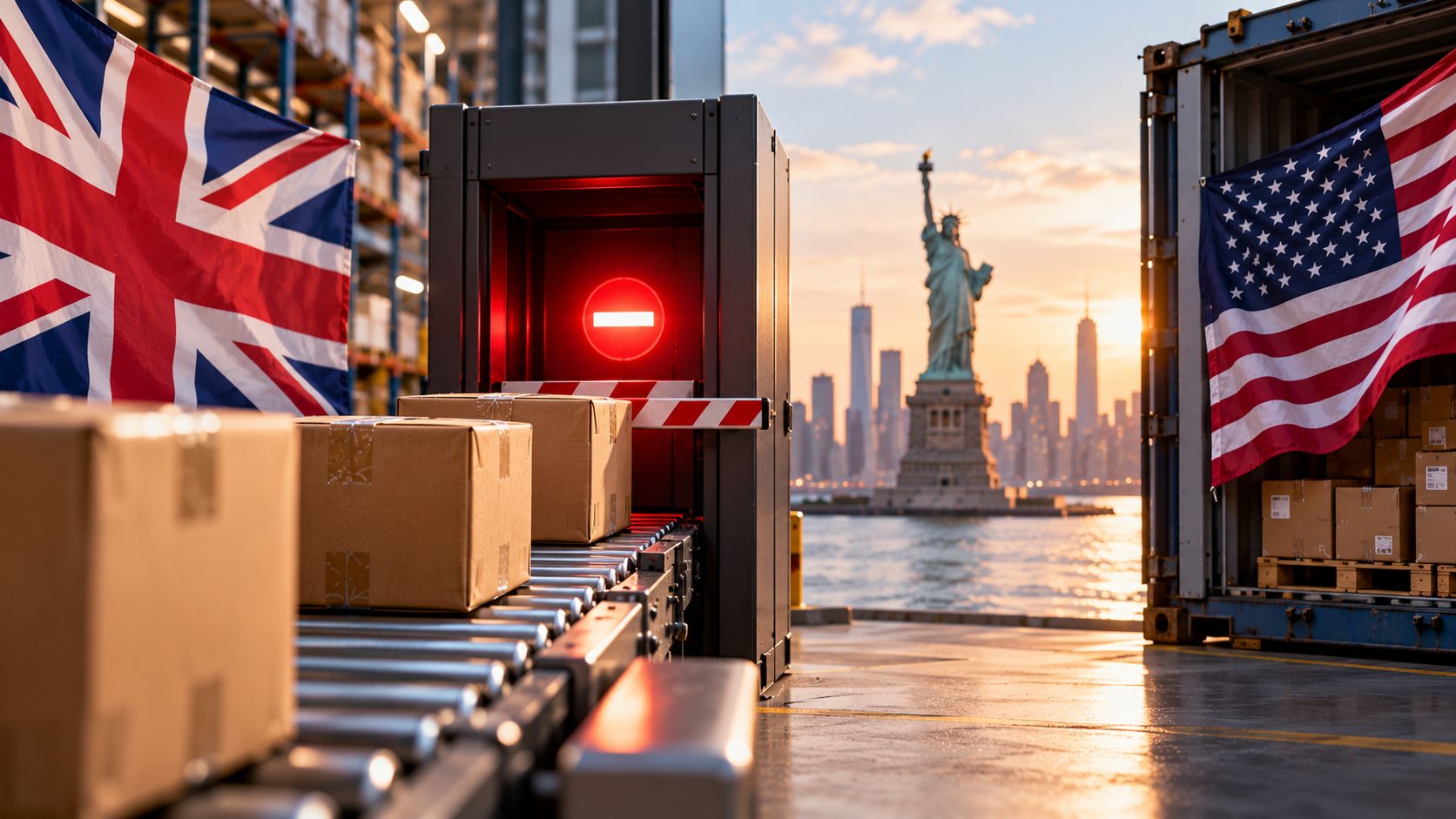
The US no longer lets low-value parcels in duty free. Since 29 August 2025, every commercial parcel a UK brand sends to a US customer is liable for duty, whatever its value, by post or by courier. The safest way to keep selling is to ship Delivered Duty Paid (DDP), so the duty is settled before the parcel reaches the customer's door.
This guide covers what changed, how duty is worked out, and the three routes UK brands now use. US rules changed several times this year, so check the current position before you set prices.
The pain points
US customers are refusing parcels because a duty bill turned up at the door.
The checkout showed one price, the customer paid more on delivery, and the review said so.
We only find out the duty on an order when the carrier invoice arrives.
Refused and abandoned US parcels are wiping out the margin on the whole market.
We can't decide whether to keep posting from the UK or put stock in a US warehouse.
What changed, and when
29 August 2025. Executive Order 14324 suspended duty-free de minimis treatment, which had let most shipments worth $800 or less in without duty, for all countries.
24 June 2026. US Customs and Border Protection (CBP) published interim final rules, including one that made the suspension for mail indefinite from 24 July 2026 and created a new postal informal entry process. It covers mail shipments worth up to $2,500. The owner, the purchaser or a licensed customs broker files the entry and pays the duty, and CBP states that duty will not be collected from the addressee on delivery.
1 July 2027. The One Big Beautiful Bill Act, enacted on 4 July 2025, ends the exemption in law from this date. Plan on duty applying to every US order from now on.
The tariff on UK goods. From 24 July 2026, UK-origin goods pay a 10% additional duty under Section 301 of the Trade Act 1974, on top of the normal Most Favoured Nation (MFN) rate for the product. Goods covered by Section 232 tariffs, such as steel, aluminium and cars, pay those rates, and some UK goods have their own exclusions. The UK government's guide to US de minimis and shipping costs points to the tools for checking your commodity code.
DDP and DDU, and why DDU parcels get refused
Under DDU (delivered duty unpaid), the customer pays the duty and the carrier's clearance fee before the parcel is handed over. Most shoppers never expected that bill, so many refuse the parcel. It is held, sent back at your cost or abandoned, and the customer still wants a refund.
Under DDP, you pay the duty and the customer pays what the checkout showed. Collect duty at checkout as a separate line, or build it into your US prices. For post, CBP now collects duty from the filer before delivery, so postal shipments run on a DDP basis.
How the duty on an order is worked out
US duty is charged on the customs value of the goods. For a normal sale this is the transaction value: the price the customer actually paid for the goods. International shipping and insurance are generally left out when they are shown separately on the invoice. Three details set the bill:
The commodity code. The US uses a 10-digit code from its Harmonized Tariff Schedule. The code sets the MFN rate.
The country of origin. This is where the goods were made. A product made in China and posted from Leeds pays the duty for Chinese-origin goods.
The declared value and description. These must match the sale. Royal Mail states that goods sold to a customer cannot be declared as gifts through the postal channel.
With figures made up to show the method: a UK-made jumper sells for $60. Say its MFN rate is 12% (an invented rate; look up your own code). Add the 10% UK tariff and the total rate is 22%, so the duty is $13.20. Carrier or handling fees come on top.
Your three routes to US customers
1. Postal DDP through Royal Mail. Royal Mail offers US PDDP on its Tracked and Standard services. It pays the duty to the US and invoices you for the duty and handling fees it has paid. From 24 July 2026, the PDDP value limit rose from $800 to $2,500. The recipient's email and mobile number are mandatory, and regulated goods carry a 50p fee per item. It suits light, lower-value orders.
2. Courier with duty billed to you. Express carriers can bill duty and taxes to your account and deliver fast with full tracking. Parcel prices are higher, and each carrier charges its own fee for paying duty for you, so ask for the full charge list.
3. Bulk freight into a US 3PL. You send cartons or pallets by air or sea, a customs broker clears them as one formal entry, and the duty is paid once on the value of the stock as imported. A US 3PL then ships each order domestically with USPS or UPS, so customers get domestic delivery times and no customs step at their door. You take on freight, broker and bond costs, US storage and stock split across two countries. Our guide to 3PLs and freight forwarders explains who does what in that chain.
When a US 3PL makes sense
A US warehouse starts to pay when US orders are steady week to week, when parcels are heavy, when customers expect delivery in a few days, or when you sell on Amazon US or to US retailers. Compare the full cost per order both ways, using a landed cost that includes freight, duty, broker fees, storage and domestic postage.
Our recommendation: ship DDP and test the numbers
List your top 20 US sellers with their US commodity code, country of origin and sale price.
Look up each MFN rate and add the tariff for the origin country, 10% for UK-made goods.
Show duty at checkout or build it into US prices, and stop sending DDU.
Route light, lower-value orders by postal DDP and urgent or high-value orders by courier with duty billed to you.
Take 90 days of US orders and price them two ways: posted from the UK, and shipped from a US 3PL after bulk import.
If the US 3PL wins, compare providers with our questions to ask a 3PL. Recheck duty rules monthly.
What waiting costs
Each refused DDU parcel costs you the postage, the goods or the return, the refund and support time. Take an invented example: 300 US orders a month, 1 in 10 refused, and £25 lost on each. That is £750 a month gone, before the reviews. The rules keep moving too: the tariff basis changed on 24 July 2026, Royal Mail says extra US checks on regulated goods are still to come, and the exemption ends in law on 1 July 2027.
People Also Ask
Is there still a de minimis limit for the US?
No. Duty-free de minimis treatment has been suspended for all countries since 29 August 2025, and US law ends it from 1 July 2027. Separate exemptions for genuine gifts and personal goods exist, and they cannot be used for sales.
What tariff do UK goods pay in the US?
From 24 July 2026, UK-origin goods pay the normal MFN rate for their commodity code plus a 10% additional duty under Section 301. Goods covered by Section 232 tariffs and some listed UK exclusions are treated differently, so check your own codes.
Should I ship DDP or DDU to the US?
Ship DDP. The customer pays what the checkout showed and gets no bill at the door, the main reason US parcels are refused.
Finding the right US fulfilment partner
Logan, FulfilQ's advisor on the website, matches brands to verified providers by order volume, product type and region. Tell Logan what you ship to the US and how many orders a month, and you get a shortlist to ask about DDP shipping, freight into the US and US warehousing. Start at fulfilq.com and Ask Logan, or Submit an RFP and verified providers come back to you. You can also browse the full provider directory. For the wider picture, read our guide to choosing a 3PL for ecommerce in the UK.




Comments
Share a question or insight about this article.