
DDP vs DAP: Which Terms UK Ecommerce Brands Should Use for Parcels Abroad
DDP vs DAP explained for UK ecommerce parcels: who pays duty and VAT, why DAP parcels get refused, EU IOSS and the €3 duty, carrier DDP and checkout display.
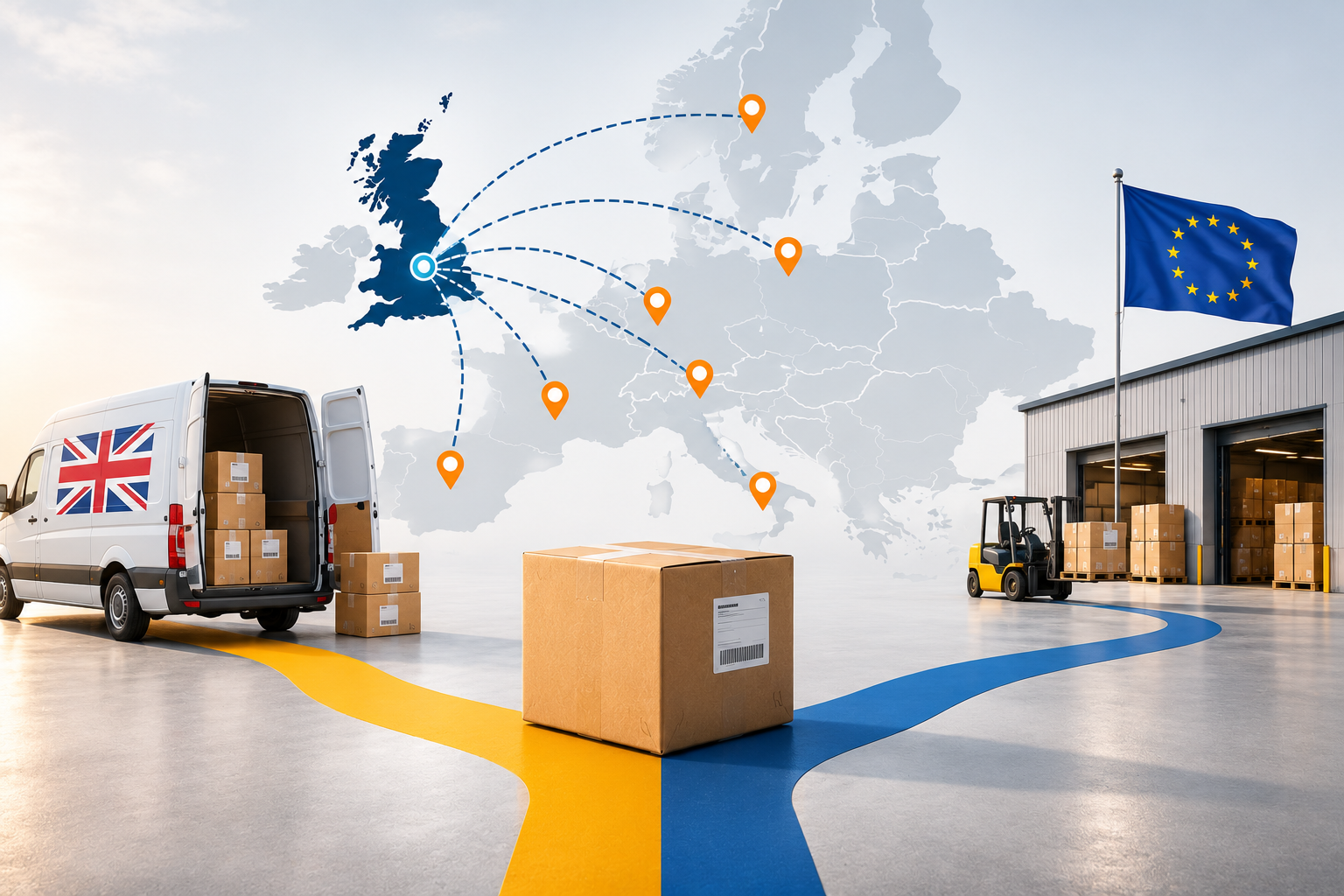
DDP vs DAP comes down to who pays the import duty and taxes. Under DDP (Delivered Duty Paid) the seller clears the goods into the destination country and pays duty and import VAT. Under DAP (Delivered at Place) the seller pays to get the goods there, and the buyer clears them and pays the import charges.
For a UK brand selling to consumers abroad, that choice decides whether the customer pays once at checkout or gets a second bill at the door. This guide covers the definitions, the EU and US rules that apply now, carrier DDP services and when DAP still fits.
The pain points
Customers in Germany got a customs bill on delivery and refused the parcel.
We pay shipping twice: once out, then again when the parcel comes back unclaimed.
Our support team spends hours explaining charges we never showed at checkout.
I don't know if IOSS covers the new EU duty or just the VAT.
Since the US change I can't tell who pays what on American orders.
What DDP, DAP and DDU mean
Incoterms are the International Chamber of Commerce rules for who does what in a sale of goods. The ICC Academy sets out the two rules side by side in Incoterms 2020: DAP or DDP:
DAP: the seller delivers when the goods reach the agreed place, ready for unloading. The buyer handles and pays for all import clearance.
DDP: the seller delivers to the same point but also carries out and pays for import clearance, including duties and taxes.
DDU (Delivered Duty Unpaid): an Incoterms 2000 rule that FedEx notes was replaced by DAP in Incoterms 2010. Carriers still use "DDU" on parcel services to mean the receiver pays.
Strictly, Incoterms govern contracts between businesses. Parcel carriers borrow the labels, so on a consumer order "DDP" means you pay the import charges and "DAP" or "DDU" means your customer does.
Why DAP parcels get refused
Royal Mail's guidance is plain. When a parcel goes duties unpaid, the recipient may have to pay import VAT, customs duty and a handling fee in the receiving country, and some refuse, which leads to returns and delays. Parcelforce's delivery terms guide says that when the charges are not clear at purchase, parcels will often be returned.
The customer sees a price at checkout, then a second demand days later from a carrier they did not choose. Some treat it as a surprise charge and walk away. You lose the sale, pay for the outbound label, may pay again to get the parcel back, and the customer may not order again.
How DDP works by destination
EU
VAT on parcels of €150 or less: IOSS lets you charge EU VAT at checkout and declare it through a single EU registration. Royal Mail notes UK businesses can register directly or through an EU intermediary.
Duty on parcels of €150 or less: since 1 July 2026 the EU applies a temporary customs duty of €3 per item on B2C consignments with an intrinsic value of €150 or less, whatever VAT route you use. An item is goods in the consignment sharing the same tariff classification, description and origin. The duty runs to 1 July 2028 unless extended.
UK-origin goods: Finnish Customs notes that where low-value goods are granted preferential treatment, duty is based on the commodity code. Ask your broker how this applies to goods that qualify under the UK-EU trade agreement.
Parcels over €150: IOSS does not apply, so a DDP parcel needs a standard import declaration, with duty and VAT paid by your side through the carrier or a representative.
So IOSS covers the VAT and nothing else. A DDP set-up for the EU now has to collect and pay the duty as well. Our guide to selling to the EU after Brexit covers the option of holding stock inside the EU.
US
The US suspended duty-free de minimis treatment for all countries from 29 August 2025, so every parcel now carries duty exposure. Our guide to shipping to the US from the UK covers what that means in detail. One newer point: if your DDP set-up makes your UK business the importer of record, Executive Order 14411 of June 2026 directs the US authorities to stop foreign importers of record filing informal entries. Ask your carrier who acts as importer on its DDP service, and check with CBP before you ship.
Carrier DDP services
Each carrier names and prices its service differently. Three examples from their own published pages:
Royal Mail Postal Delivered Duties Paid: you collect duty, VAT and the handling fee at checkout, and Royal Mail bills you the VAT and duties plus a handling fee. It lists a set of EU countries, Norway, Switzerland and the USA, with handling fees from 50p to £8 depending on destination. Items without full electronic customs data may go duties unpaid or come back to the UK.
Parcelforce Delivered Taxes Paid: available on its Europriority service, with duties and taxes invoiced to you plus a €5 clearance fee.
DHL Express Duties and Taxes Paid: account holders can have duties and taxes billed to their account for a small administration fee.
Show duties at checkout
DDP only works if the checkout collects the right amount. Shopify's help centre explains how to collect duties and import taxes at checkout:
Every product needs an HS code and a country of origin, because duty is calculated from both.
If you buy shipping labels, your carrier must support DDP labels.
You can show duties as a separate line item, or choose "duties included in price" and absorb them.
Shopify charges a transaction fee on orders where it calculates duties. Check the current rate on that page.
Folding duties into the price keeps checkout simple but cuts your margin on high-duty products. Model both in your landed cost before you choose.
When DAP still makes sense
B2B buyers with their own import set-up. A retailer or distributor with an EORI number and a broker often prefers to clear the goods, control the classification and handle its own import VAT.
Destinations your carrier can't serve on DDP. Tell the customer clearly at checkout that duty and taxes are due on delivery, and roughly how much.
Large freight orders to business buyers. The terms sit in the sales contract, and the buyer's own broker often clears the goods at their end.
What to ask a 3PL
Which carriers and DDP services can you book from our account?
Do you store HS codes and country of origin per SKU and send them on every label?
Can you pass our IOSS number in the electronic customs data for EU parcels?
How do you handle refused or returned international parcels, and what do you charge?
Who does your DDP service name as importer for US parcels?
Our recommendation: ship consumer parcels DDP
Pull 90 days of international orders and count refused or returned parcels by country.
Add HS codes and country of origin to every product.
Register for IOSS directly or through an intermediary if you sell to EU consumers.
Choose a carrier DDP service for each main destination and confirm who acts as importer.
Switch on duty collection at checkout, either as a line item or included in price.
Keep DAP for B2B buyers who clear goods themselves, and say so in their terms.
Review refusal rates after 60 days.
Our pillar guide on how to choose a 3PL covers the rest of the warehouse decision.
What waiting costs
Every DAP parcel to a consumer is a chance of a doorstep bill. Each refusal costs the outbound label, a possible return charge, the product margin and the customer. Since July 2026, EU parcels that used to clear without duty now carry the €3 per item charge, so more of your customers are getting that bill.
A worked example: a brand sends 600 DAP parcels a month to EU consumers and 6% are refused. That is 36 parcels. At £9 outbound, £12 to return and £15 of lost margin per order, each refusal costs £36, or £1,296 a month. Over a year that is £15,552, before counting customers who never order again. These figures are made up to show the method.
People Also Ask
Who pays import duty under DAP?
The buyer. Under DAP the seller pays to deliver the goods to the agreed place, and the buyer handles import clearance and pays duty and taxes. For a consumer parcel, that means your customer pays on delivery.
Is DDU the same as DAP?
Close enough in practice. DDU was an Incoterms 2000 rule replaced by DAP in Incoterms 2010. Carriers still use "DDU" to mean the receiver pays the import charges.
Does IOSS mean my EU parcels are DDP?
Not on its own. IOSS covers VAT on parcels of €150 or less. Since 1 July 2026 the EU also charges a €3 per item duty on those parcels, so a full DDP set-up has to cover duty too.
Finding the right cross-border fulfilment partner
Logan, FulfilQ's advisor on the website, matches brands to verified providers by order volume, product type and region. Tell Logan which countries you ship to, how many parcels a month and whether you sell to consumers or businesses, and you get a shortlist to ask about DDP carrier services, IOSS data on labels and handling refused parcels. Start at fulfilq.com and Ask Logan, or Submit an RFP and verified providers come back to you. You can also browse the full provider directory.
Comments
Share a question or insight about this article.