
3PL, Freight Forwarder, or Fulfilment Centre: Which One Does Your Ecommerce Brand Actually Need?
The difference between a 3PL, a freight forwarder and a fulfilment centre explained clearly, with a guide to working out which one your ecommerce brand needs.
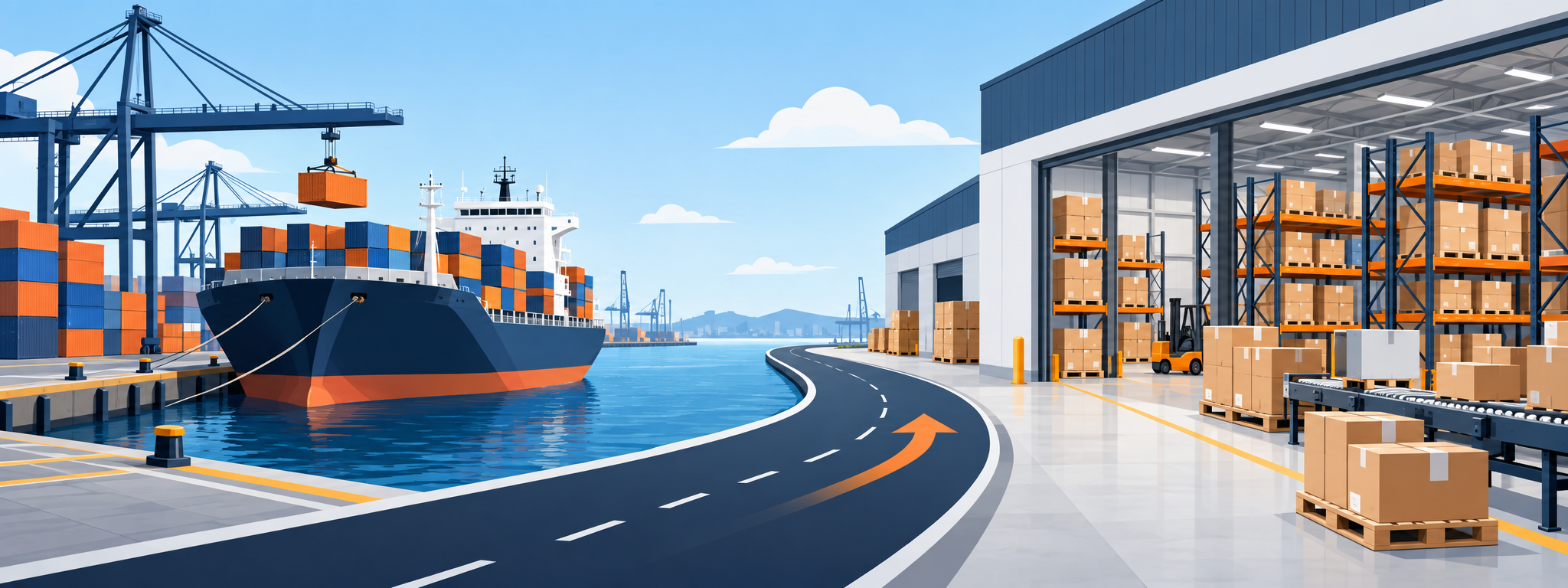
One of the most common mistakes ecommerce brands make when they start looking for logistics help is asking the wrong question. They search for "3PL UK" or "fulfilment centre" when what they actually need might be a freight forwarder, or a combination of both, or neither.
The terminology gets used interchangeably online, which makes it harder than it should be. This guide explains the difference clearly, with no jargon, so you can work out what your brand actually needs before you start talking to anyone.
What a 3PL actually does
3PL stands for third-party logistics. In practice, for most ecommerce brands, it means one thing: a warehouse that stores your stock and ships your orders for you.
You send your products to the 3PL. They receive them, store them, and when an order comes in through your Shopify or Amazon store, they pick the items, pack them, and send them out to your customer. You never touch the stock again.
A good 3PL integrates directly with your sales channels, so orders flow in automatically and tracking information flows back out. Your customer gets their order. You get on with building the brand.
This is what most growing ecommerce brands need when they outgrow self-fulfilment. If you are shipping more than a few hundred orders a month from a spare room or a small unit, a 3PL is probably the conversation to be having.
What a freight forwarder does
A freight forwarder is not a warehouse. A freight forwarder moves goods from one place to another, typically across borders or continents.
If you manufacture in China or source from a supplier overseas, a freight forwarder handles getting that stock from the factory to the UK. They book container space, manage customs documentation, coordinate port handling, and arrange delivery to wherever the stock needs to go, whether that is your own warehouse, a 3PL, or an Amazon fulfilment centre.
A freight forwarder does not store your stock long-term. They do not pick and pack individual customer orders. Their job is the journey, not the storage.
If you are buying stock from overseas and it is arriving at a UK port, you probably need a freight forwarder. If you already have stock in the UK and you need someone to ship it to customers, you probably need a 3PL.
What a fulfilment centre is
Fulfilment centre and 3PL are often used to mean the same thing, and in most cases they do. A fulfilment centre is a warehouse set up specifically to handle ecommerce orders, usually with systems built for high-volume, fast-turnaround picking and packing.
The difference, where one exists, is usually scale and specialisation. Amazon's fulfilment centres are the extreme end of this, built purely for speed and volume. A smaller specialist fulfilment centre might focus on a particular type of product, premium unboxing experiences, subscription boxes, or specific industries like beauty or food.
When someone says fulfilment centre, they almost always mean a 3PL. Do not get too hung up on the terminology.
Which one do you need?
You are manufacturing or sourcing overseas and stock is arriving in the UK
You need a freight forwarder to get it here, and then a 3PL to store it and ship orders. These are two separate relationships, though some providers do both.
You have UK stock and you need to ship orders to customers
You need a 3PL. This is the most common situation for growing ecommerce brands.
You sell on Amazon and want to use FBA
Amazon handles the fulfilment, but you still need to get stock into Amazon's network. Depending on where your stock comes from, you may need a freight forwarder, a prep centre, or both.
You sell across multiple channels, Amazon plus your own site
A 3PL that integrates with both is usually the answer. Some 3PLs also handle Amazon FBA prep as part of their service.
You are not sure what you need
That is more common than you would think, and it is usually because the brand is at an in-between stage. The honest answer is to talk to a few providers and describe what your operation looks like today and where you want it to be in twelve months. A good provider will tell you whether they are the right fit.
Online Fulfilment Centre is a verified FulfilQ partner offering 3PL and ecommerce fulfilment services across the UK. View their profile to learn more about their capabilities.
Finding the right provider for your operation
Logan is FulfilQ's AI logistics advisor. You describe your operation, your order volumes, where your stock comes from, and where your customers are, and Logan works out which type of provider you need and matches you with verified partners in the FulfilQ network.
If you are still working out what your brand needs, start a conversation with Logan at fulfilq.com. It takes a few minutes and you will come away with a clearer picture of what to look for, whether or not you end up using FulfilQ.

Comments
Share a question or insight about this article.