
What manual picking looks like in practice
A warehouse can process the same number of orders with very different economics depending on how stock is picked. Manual versus automated picking is not simply a labour-cost comparison.
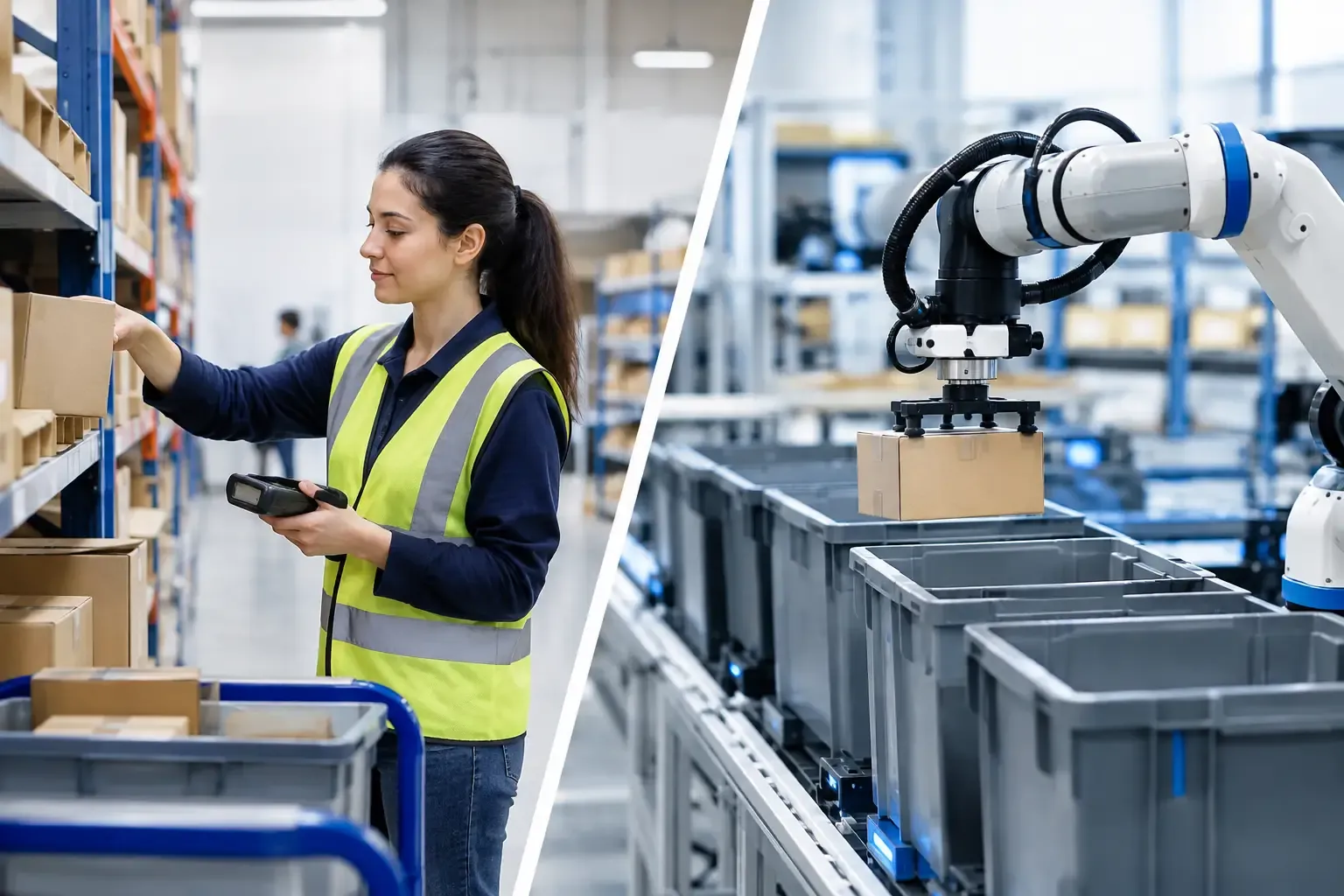
It affects order cut-off times, stock accuracy, peak resilience, warehouse layout, onboarding lead times and, ultimately, whether a fulfilment operation can support the channels you plan to add next.
For a brand shipping 800 varied orders a month, experienced warehouse staff with well-designed pick paths may be the sensible answer. For a retailer releasing thousands of near-identical marketplace orders each day, a goods-to-person system may protect service levels and reduce avoidable error. The right choice depends on the operating profile, not the appeal of the technology.
Manual picking means a warehouse operative travels to the stock location, picks items against a paper list, handheld scanner or mobile device, and takes them to a packing station. The process can be supported by barcode verification, batch picking, zone picking and sensible slotting, but people remain responsible for moving through the warehouse and handling the product.
That flexibility is its main advantage. A manual operation can accommodate an unusually shaped product, a new gift bundle, a late wholesale request or an unexpected SKU launch without re-engineering a system. It is also usually easier to start with. A 3PL can add trained pickers, change locations and adapt packing instructions without the capital investment and integration work required for warehouse automation.
Manual does not have to mean informal. A capable manual fulfilment operation will use location control, scan validation, replenishment rules and cycle counts. It should know which orders require serial-number capture, which customers need branded inserts, and which retailer orders must follow a specific routing guide. If those controls are absent, the problem is operational discipline, not the fact that people are picking.
The limitation appears as volumes, travel distances and SKU complexity rise. Walking time becomes expensive. Performance may vary by shift or season. Recruiting enough capable temporary labour ahead of Black Friday can be difficult, especially where local warehouse labour is tight. A low per-order quote can look attractive until missed dispatch cut-offs, mis-picks and overtime start to appear.
Manual versus automated picking: the real trade-offs
Automated picking covers a broad range of systems. It may mean conveyors and put walls, pick-to-light, voice-directed picking, autonomous mobile robots, vertical lift modules, shuttle systems or a goods-to-person solution that brings totes to an operative. These are not interchangeable investments, and a provider saying it is automated is not enough information to assess operational fit.
Automation generally performs best where demand is repeatable enough for the system to be configured around it. High order volumes, stable fast-moving SKUs, dense small-item storage and demanding dispatch windows are common signals. In the right setting, it reduces picker travel, creates a more consistent process and can improve accuracy through scanning and system-directed handling.
It also changes the cost base. Manual picking is more variable: labour rises and falls broadly with order volume. Automation can lower the labour required per order once utilisation is high, but it brings fixed costs, maintenance, software dependencies and implementation risk. If order volumes remain below the system’s economic threshold, the operation may be paying for unused capacity.
This is why the question should not be, “Is automation cheaper?” It should be, “At our current and forecast order profile, what is the cost and service impact of each model?” A brand with volatile demand may value the flexibility of manual labour. A business with predictable daily volume and a narrow range of small consumer products may value the consistency of automation more highly.
Product characteristics can rule out the obvious answer
A picking method that works for cosmetics, supplements or phone accessories may be unsuitable for furniture, fragile homeware or temperature-sensitive goods. Product dimensions, weight, storage conditions and handling requirements matter as much as volume.
Consider a subscription brand sending three lightweight, repeatable items in most orders. Automated tote handling and pick-to-light may suit the profile well. Contrast that with a skincare brand that combines glass bottles, gift wrapping, personalised notes and batches that must be captured at order level. It may still use automated storage or transport, but manual quality checks and specialist packing are likely to remain central.
The same applies to regulated products. Lot control, expiry management, FEFO picking and serialisation requirements need to work across the warehouse management system, picking process and customer channels. Automation can strengthen compliance when properly configured. It can also make a poor process harder to change if those requirements were not captured during implementation.
Accuracy depends on controls, not machinery alone
Automation can reduce manual touches and direct the picker to the correct item or location. That often improves accuracy, particularly in high-volume operations. But a conveyor cannot correct inaccurate inbound stock, ambiguous product labelling or a catalogue where near-identical variants share confusing names.
Ask how a provider verifies goods at each stage: receiving, putaway, replenishment, pick, pack and despatch. Barcode scanning at pick and pack, exception workflows, routine cycle counts and clear accountability are more meaningful than a generic accuracy claim. For brands selling across Shopify, Amazon, TikTok Shop, wholesale and their own B2B portal, inventory updates and order-priority rules must be equally reliable.
Peak capacity needs a different test
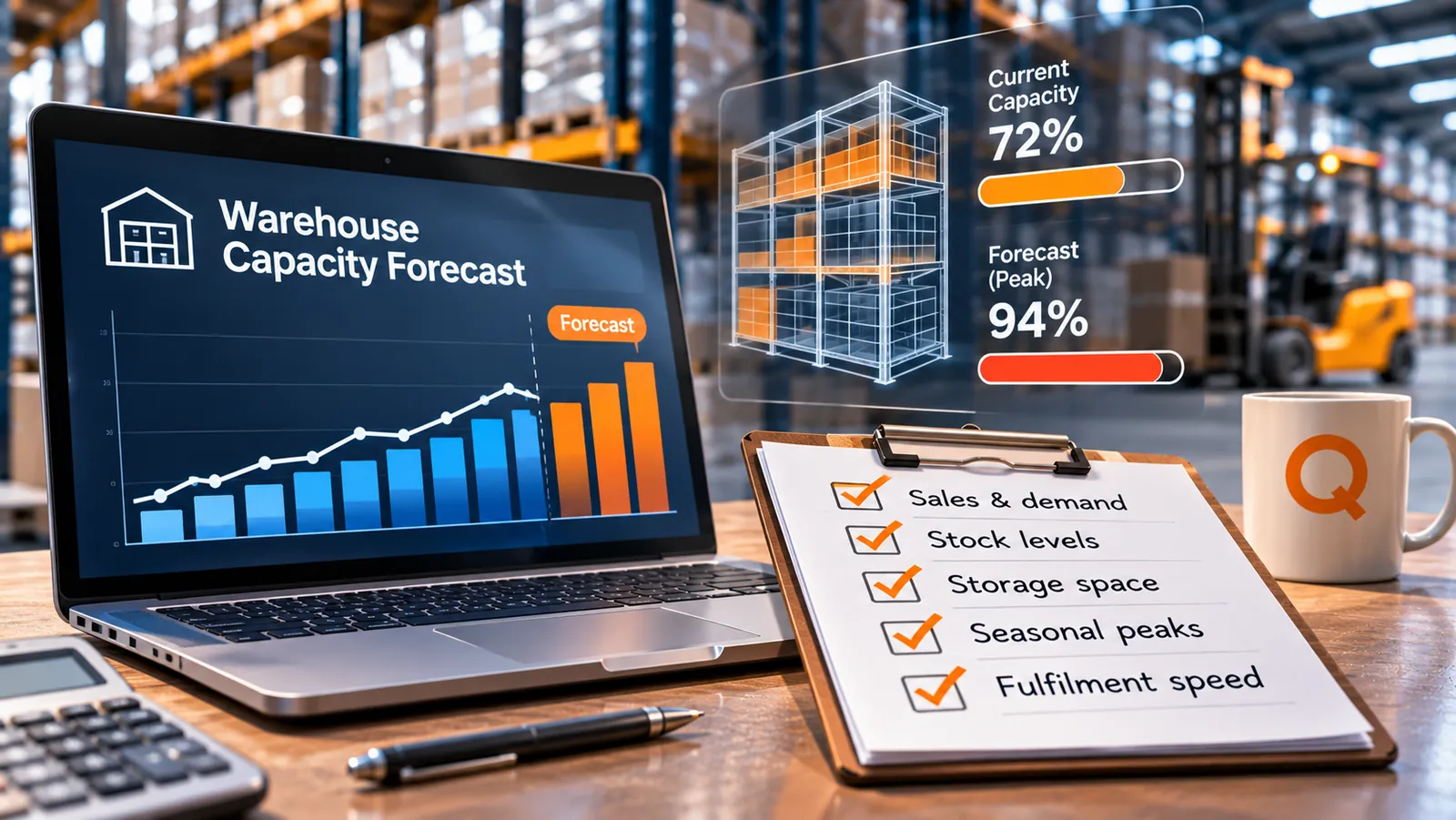
A provider may have enough automated capacity for an average Tuesday but not for your November promotion. Equally, a manual warehouse may promise flexible labour but have no credible plan for recruitment, training and supervisory cover at peak.
The practical questions are specific. What is the sustained daily throughput? What can the site achieve during peak, and for how many consecutive days? Are temporary staff trained on your account’s packaging, exclusions and retailer compliance rules? Is automated capacity shared between clients, and what happens when several clients run promotions at the same time?
Build the decision around your order profile
Before comparing 3PLs or approving a warehouse project, define the operating data that will shape the answer. Monthly order volume is useful, but daily order pattern matters more. A business processing 30,000 orders evenly through a month has a different requirement from one processing 30,000 orders in four campaign days.
Assess these factors together:
daily and peak orders, including cut-off times and forecast seasonality;
SKU count, order lines per order, product dimensions and fast-mover concentration;
required services such as kitting, personalisation, batch capture, returns grading and wholesale preparation;
sales channels, integrations, delivery regions and retailer routing-guide obligations; and
expected changes over the next 12 to 24 months, including new territories, product categories and inventory splits.
These inputs reveal where automation may genuinely add value. A high SKU count alone is not a reason to automate. If only 80 SKUs account for 75% of order lines, a provider may automate or optimise those fast movers while manually picking the long tail. That hybrid model often offers a better commercial result than forcing every product through one process.
Questions to put to a prospective 3PL
When reviewing a fulfilment provider, ask them to map your actual workflow rather than describe their facility in broad terms. Which orders will be manually picked, which will flow through automated equipment, and where will exceptions be handled? Ask to see how the process copes with split shipments, substitutions, damaged stock, marketplace priority orders and returns that need resale, quarantine or disposal decisions.
Commercial clarity matters too. Establish whether the pricing separates storage, pick fees, packaging, inbound handling, technology, peak surcharges and value-added services. An automated site may have a higher minimum monthly charge but a lower marginal pick cost at scale. A manual site may be more economical now but require a repricing or operational change once volume reaches a stated threshold.
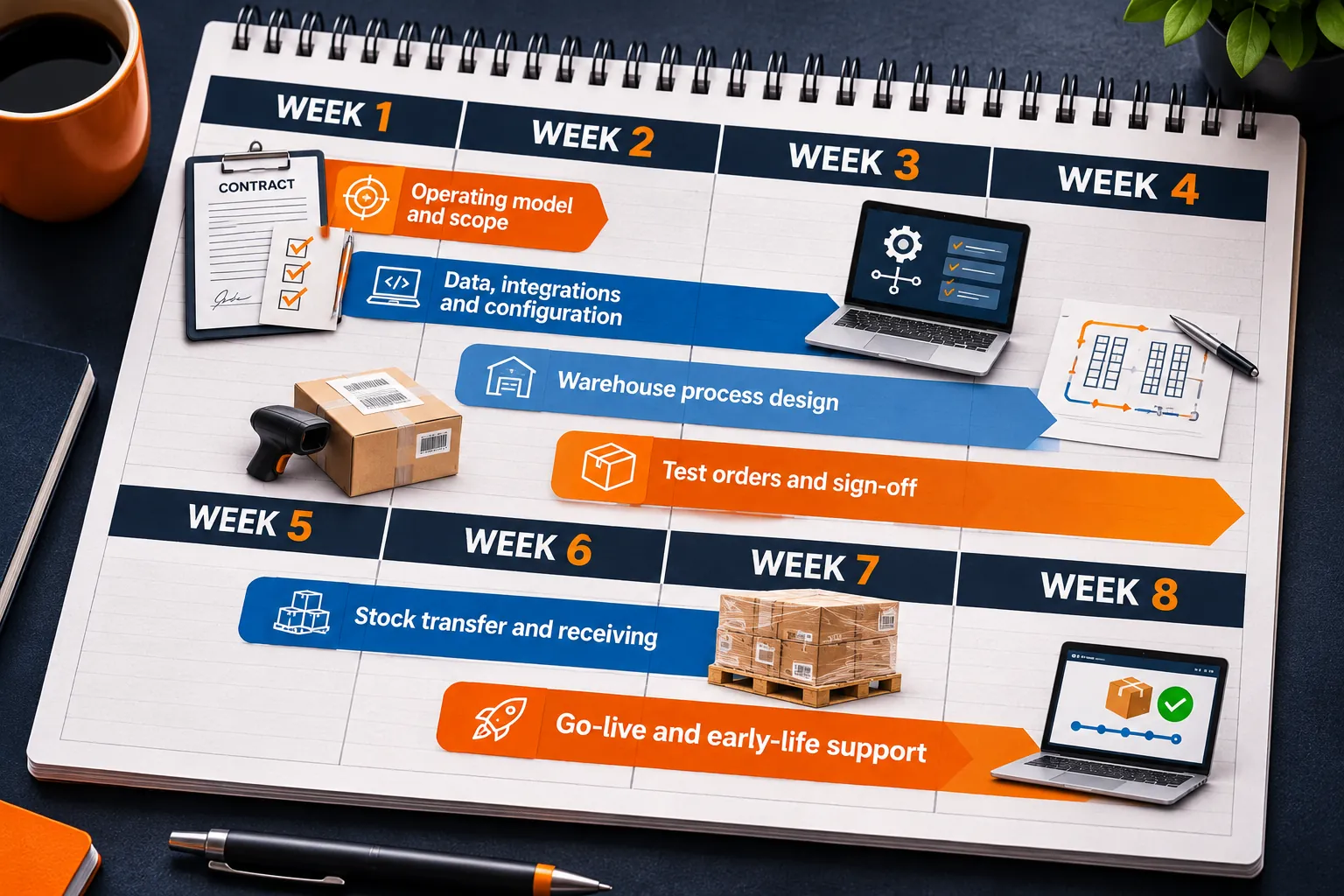
The implementation plan deserves the same scrutiny. Migration from an incumbent warehouse, stock reconciliation, integration testing and staff training can create more risk than the picking method itself. If you have a fixed launch date or an imminent peak, a sophisticated solution with a long onboarding period may be the wrong operational choice.
FulfilQ's operational-fit approach is designed for this distinction: matching a brand’s volumes, product handling, channels and growth plans to providers that can support them, rather than treating automation as a universal marker of quality.
Choose the model that protects the next stage of growth
Manual picking is often the stronger choice when flexibility, varied product handling and a lower fixed-cost commitment matter most. Automation can be the better choice when throughput, repeatability and consistent service levels justify the investment. Hybrid operations are frequently the practical middle ground, particularly for brands with a mix of fast-moving consumer orders, wholesale requirements and promotional bundles.
The useful decision is rarely manual or automated in isolation. It is whether the provider’s people, systems, capacity and commercial model can handle the order you have today and the one your business will ask them to fulfil next year.


Comments
Share a question or insight about this article.