
Amazon FBA Fees in the UK: Every Charge on the Bill and How It Compares With a 3PL
Referral, fulfilment, storage, aged stock, low inventory and peak fees on Amazon UK, the 2026 changes, and a worked FBA vs 3PL cost per order example.

Amazon FBA fees in the UK start with a referral fee on every sale, a fulfilment fee per unit set by size tier and weight, and a monthly storage fee that rises from October to December. On top of those sit charges for ageing stock, low stock, returns, removals and peak season. For 2026, Amazon cut some referral and parcel fees and added a festive peak fulfilment fee that runs from 15 October 2026 to 14 January 2027.
Amazon changes its rate card at least once a year, so check live figures in the Revenue Calculator and the FBA fee preview report in Seller Central before you price a product.
The pain points
My payout is lower than the calculator said, and I can't see which fee took the difference.
Storage jumped in the fourth quarter and wiped out the margin on my slow lines.
I sent in less stock to keep storage down, then got charged a low-inventory fee.
One product measured a few millimetres over a size tier and the fulfilment fee went up on every unit.
I don't know if moving some orders to a 3PL would save money or cost me the Prime badge.
The fees on every sale
Selling plan. Amazon's UK seller pages list the Professional plan at £25 a month excluding VAT, plus selling fees.
Referral fee. A percentage of the total sale price, set by category. It applies whether you use FBA or ship the order yourself. Amazon's announcement of its 2026 European fee update lists these UK cuts:
From 15 December 2025, Clothing and Accessories fell from 8% to 5% for items up to £15, and from 15% to 10% for items between £15 and £20.
From 5 January 2026, a new Home Products category fell from 15% to 8% for items up to £20.
From 5 January 2026, Pet Clothing and Food fell from 15% to 5% for items up to £10, and Grocery and Gourmet plus Vitamins, Minerals and Supplements fell from 8% to 5% for items up to £10.
FBA fulfilment fee. A per-unit charge that covers picking, packing, delivery and customer service. The rate depends on the size tier (envelopes, parcels and oversize bands) and the shipping weight. Amazon cut UK parcel fees by an average of £0.26 a unit from 15 December 2025, and extended Low-Price FBA rates to most categories for products priced at or below £20.
Festive peak fulfilment fee. Amazon's peak season 2026 announcement adds an average of £0.12 per parcel item and £0.07 per large or extra-large envelope item on UK orders from 15 October 2026 to 14 January 2027. Oversize and Low-Price FBA items are excluded. Amazon says a 1.5% fuel and logistics surcharge applies on top of the peak fee.
The fees on stock in the warehouse
Monthly storage fee. Charged per cubic foot of your average daily stock volume, with separate rates for standard and oversize items. Rates are higher from October to December. Amazon announced selective storage increases for 2026 without listing UK figures, so take the current rate from Seller Central.
Aged inventory surcharge. An extra monthly charge on units that have sat in a fulfilment centre past set age thresholds. It rises as stock gets older. The Inventory Age report shows which units are close to the next band. Our guide to dead stock storage costs covers what to do with them.
Low-inventory-level fee. Amazon announced a low-inventory cost coverage fee on its European seller forum from April 2024. At launch it applied to products shipped with fewer than 28 days of historical supply, measured over 30 or 90 days. Check in Seller Central whether it applies to your UK listings today, and the current trigger.
Inbound placement fee. This charge for inbound shipment placement launched in the US in 2024, and Amazon told UK sellers on its forum that the service was for US sellers only. Check the send-to-Amazon workflow for any placement charge before you confirm a UK shipment.
The fees when stock comes back or leaves
Returns processing fee: charged in categories where Amazon gives customers free returns, such as clothing and shoes.
Return-to-seller, removal, disposal and liquidation fees: per unit, by size and weight. Amazon listed selective increases to return-to-seller and liquidation fees for 2026.
Unplanned service fees: charged when stock arrives without the right labels or prep. Our guide to Amazon FBA prep services in the UK explains how to avoid them.
FBA vs a 3PL: total cost per order
The referral fee is the same either way, so compare fulfilment costs only. These figures are made up to show the method.
Take a £20 product in a 350 g standard parcel, selling 600 units a month.
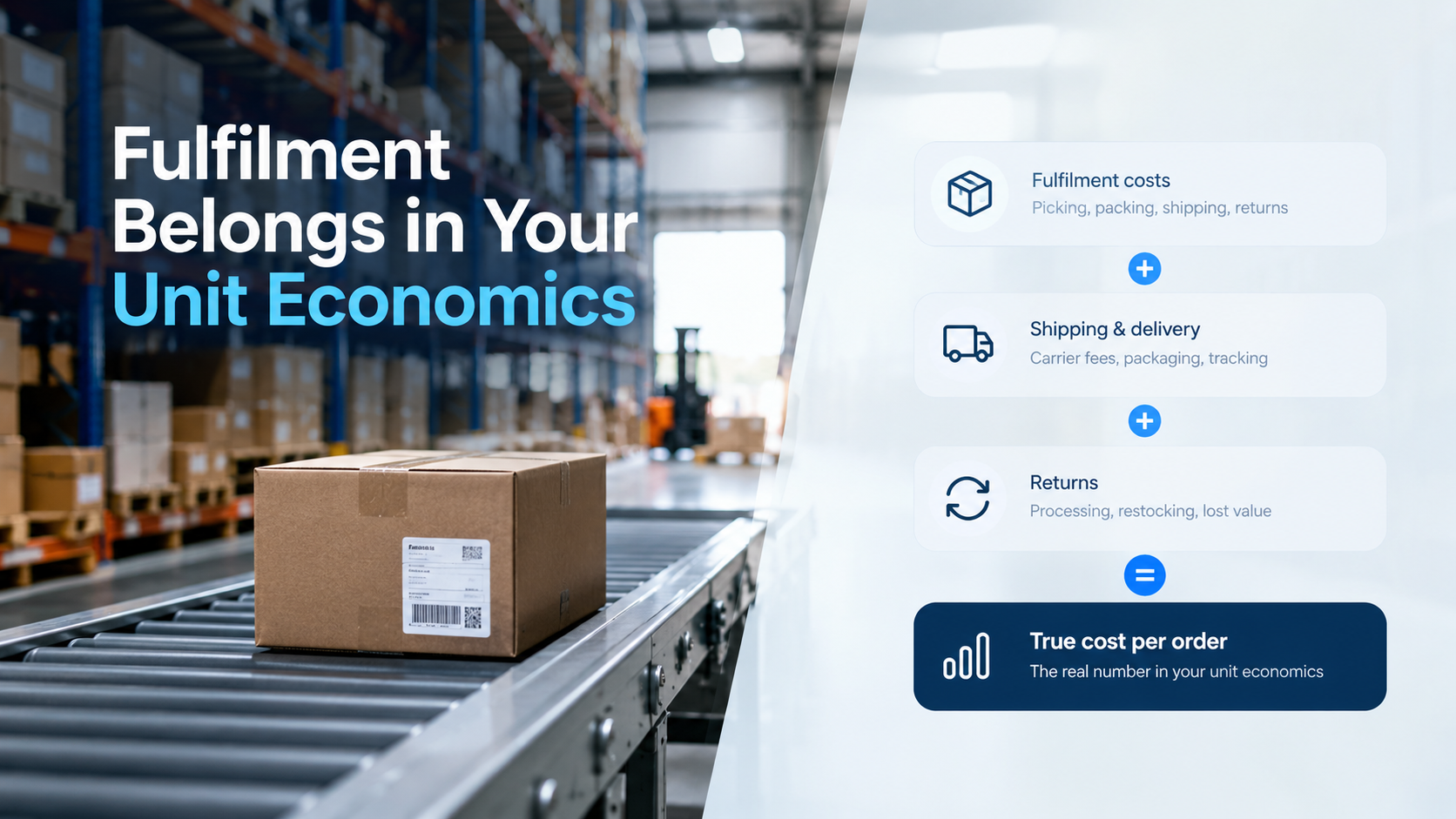
FBA, per order: fulfilment fee £2.90, storage share £0.12, inbound freight to Amazon £0.35, prep and labelling £0.45. Total £3.82.
3PL shipping the Amazon order itself, per order: pick and pack £1.40, packaging £0.25, tracked 48-hour postage £3.10, storage share £0.10. Total £4.85.
On these numbers FBA is about £1 cheaper per Amazon order outside peak. The gap narrows from October to January, when peak fees and peak storage apply. It can reverse for bulky items, slow sellers that pick up aged stock surcharges, and orders from your own site. Many brands keep bulk stock at a 3PL and send FBA a few weeks of cover at a time. Our guide to what a 3PL costs in the UK lists the lines to expect on that quote.
Our recommendation: price every SKU on its full FBA cost
Download the FBA fee preview report and check the size tier Amazon has given each product. Re-measure anything close to a tier boundary.
Add storage at the October to December rate for peak months, plus the aged surcharge for any line that sells slowly.
Check days of supply on fast sellers against the low-inventory trigger.
Ask two or three 3PLs to quote the same SKUs for orders they ship and for bulk storage with FBA top-ups. Our guide to choosing a 3PL shows what to compare.
Compare cost per order and cost per month, SKU by SKU, and split the range where the numbers say so.
Re-run the sums each time Amazon announces fee changes, usually in its year-end update and its summer peak notice.
What waiting costs
The peak fulfilment fee started on 15 October 2026 and runs to 14 January 2027. Amazon's date for UK stock to arrive in time for Prime-badge eligibility during Black Friday Week is 28 October 2026, and Amazon says inbound slots are limited at year end.
Take an invented example. A brand holds 400 units of a slow line in FBA through peak. Peak storage plus an aged surcharge in January adds £0.60 a unit, or £240 on one SKU before any sale. Holding most of that stock at a 3PL and sending FBA a month of cover would have cut the bill. Run the check before the next storage charge lands.
People Also Ask
How much does Amazon FBA cost per item in the UK?
It depends on the item's size tier, weight, category and time in storage. Add the referral fee, the fulfilment fee and a share of storage, then check the total in Amazon's Revenue Calculator. Add the peak fee for orders shipped from 15 October 2026 to 14 January 2027.
Is FBA cheaper than a 3PL in the UK?
For small, fast-selling items on Amazon, FBA is often cheaper per order. For bulky items, slow sellers and orders from other channels, a 3PL can cost less. Compare both on your own SKUs and order volumes.
When are Amazon storage fees higher?
Monthly storage rates are higher from October to December. Aged inventory surcharges also apply to units past set age thresholds at any time of year, so check the Inventory Age report each month.
Finding the right Amazon fulfilment partner
Logan, FulfilQ's advisor on the website, matches brands to verified providers by order volume, product type and region. Tell Logan what you sell on Amazon and where else you sell, and you get a shortlist to ask about bulk storage, FBA top-ups and cost per order. Start at fulfilq.com and Ask Logan, or Submit an RFP and verified providers come back to you. You can also browse the full provider directory.


Comments
Share a question or insight about this article.