
When Should You Outsource Fulfilment? 9 Signs It’s Time
There is a stage in almost every ecommerce business where fulfilment starts to feel different. What was once manageable becomes distracting. What used to take an hour now consumes half a day. Instead of focusing on growth, product development or customer acquisition, founders find themselves dealing with stock counts, courier collections and delivery issues. The irony is that many businesses experience this shift long before they recognise it.
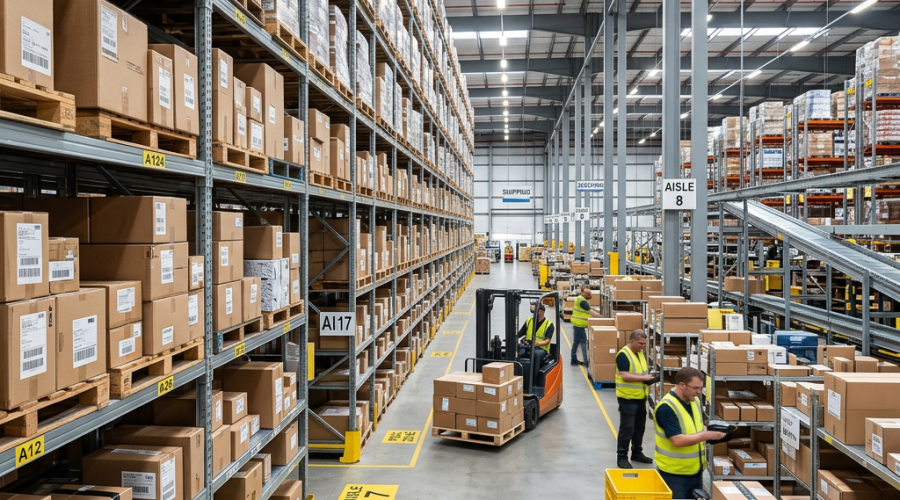
There is a stage in almost every ecommerce business where fulfilment starts to feel different.
What was once manageable becomes distracting.
What used to take an hour now consumes half a day.
Instead of focusing on growth, product development or customer acquisition, founders
find themselves dealing with stock counts, courier collections and delivery issues.
The irony is that many businesses experience this shift long before they recognise it.
Consequently, they continue operating exactly as they did before, even though the
business has outgrown the process.
The question is not whether fulfilment matters.
The question is:
When should you outsource fulfilment?
There is no universal answer.
However, there are clear signals that indicate the time may be right.
Why Businesses Delay Outsourcing
Before looking at those signals, it helps to understand why businesses often wait too
long.
Many founders believe:
- outsourcing is only for large brands
- external fulfilment is expensive
- they will lose control
- fulfilment is not yet a problem
While these concerns are understandable, they often prevent businesses from
evaluating fulfilment objectively.
As a result, operational inefficiencies continue to grow unnoticed.
What Does It Mean to Outsource Fulfilment?
To outsource fulfilment means using a third-party logistics provider (3PL) to manage
some or all fulfilment activities.
This typically includes:
- inventory storage
- order processing
- picking and packing
- shipping
- returns handling
Instead of running fulfilment internally, businesses rely on specialist providers that
already have the systems, infrastructure and operational expertise in place.
Sign 1: You Are Spending More Time Packing Than Growing
One of the earliest warning signs is where your time goes.
Founders often start by fulfilling orders themselves.
Initially, this makes sense.
It keeps costs low and creates visibility into customer demand.
However, if fulfilment begins consuming hours that could be spent on:
- marketing
- partnerships
- product development
- customer acquisition
then the opportunity cost becomes significant.
Growth activities generate revenue.
Packing boxes does not.
Sign 2: Your Order Volume Is Becoming Unpredictable
Growth is rarely linear.
One successful campaign.
One influencer mention.
One viral product.
Suddenly, order volume spikes.
The challenge is that internal fulfilment operations are often designed for average
demand rather than peak demand.
Therefore, businesses frequently struggle when order volumes fluctuate.
A scalable fulfilment partner can help absorb these fluctuations more effectively.
A Market Statistic Worth Considering
According to Shopify, online shopping continues to grow globally, creating increasing
pressure on fulfilment operations and delivery expectations.
Source:
https://www.shopify.com/enterprise/global-ecommerce-statistics
As ecommerce expands, operational scalability becomes increasingly important.
Sign 3: Delivery Performance Is Starting to Slip
Customers are generally forgiving of occasional issues.
They are far less forgiving of repeated problems.
Common warning signs include:
delayed dispatch
missed delivery windows
inaccurate tracking
increasing customer complaints
Although these issues may appear operational, they directly affect customer experience.
Consequently, fulfilment performance should be monitored as closely as marketing performance.
Sign 4: Storage Space Is Becoming a Problem
Many ecommerce brands begin fulfilment from:
- spare rooms
- garages
- offices
- small storage units
Eventually, inventory starts taking over.
Shelves become crowded.
Organisation becomes difficult.
Stock visibility decreases.
At that point, fulfilment space begins limiting growth.
Outsourcing fulfilment can remove this constraint entirely.
Sign 5: Returns Are Becoming Difficult to Manage
Returns are often underestimated.
Yet for many businesses, returns create almost as much operational work as outbound
shipping.
Managing returns effectively requires:
- inspection processes
- inventory updates
- customer communication
- refund workflows
As return volumes increase, internal processes often struggle to keep pace.
Sign 6: You Lack Fulfilment Visibility
Growth requires information.
However, many internal fulfilment operations rely on spreadsheets, manual processes
and fragmented systems.
Without accurate visibility, businesses struggle to answer simple questions:
- How much stock do we have?
- Which products are moving fastest?
- Where are operational bottlenecks?
Therefore, improving visibility often becomes a key reason businesses explore fulfilment
outsourcing.
Sign 7: International Expansion Is Becoming a Priority
Shipping locally is one challenge.
Shipping globally is another.
International growth introduces:
- customs requirements
- cross-border shipping costs
- regional delivery expectations
- returns complexity
Consequently, businesses expanding into new markets often find fulfilment outsourcing
attractive.
Experienced providers frequently have infrastructure and processes already established.
Sign 8: Fulfilment Costs Are Becoming Harder to Control
Many founders assume internal fulfilment is always cheaper.
Sometimes it is.
However, as businesses grow, costs become more complex.
These may include:
- storage
- labour
- packaging
- software
- equipment
- shipping
When analysed properly, the total cost is often higher than expected.
As a result, businesses should evaluate the complete operational picture rather than
Sign 9: You Are Planning for the Next Stage of Growth
Perhaps the most important reason to outsource fulfilment is not current pain.
It is future ambition.
Businesses often make fulfilment decisions based on current requirements.
The better approach is to think ahead.
Questions worth asking include:
- Where will the business be in 12 months?
- What order volume are we targeting?
- What operational capabilities will be required?
Planning for growth is often easier than reacting to growth.
The Benefits of Outsourcing Fulfilment
When done correctly, fulfilment outsourcing can create several advantages.
These include:
More Time for Strategic Work
Founders can focus on growth rather than operations.
Greater Scalability
Providers are designed to handle volume fluctuations.
Improved Customer Experience
Better processes often lead to more reliable fulfilment.
Access to Expertise
Specialist providers spend every day optimising logistics operations.
Stronger Operational Visibility
Modern fulfilment systems often provide better reporting and inventory management.
Common Concerns About Outsourcing
Even when outsourcing makes sense, concerns remain.
“Will I Lose Control?”
You lose direct control.
However, strong systems and reporting often increase visibility.
“Will Customers Notice?”
Customers notice fulfilment quality.
They rarely care who fulfils the order.
“Is It Only for Large Brands?”
No.
Many ecommerce businesses outsource fulfilment far earlier than people expect.
The Decision Is Not All or Nothing
An important point often gets overlooked.
Outsourcing fulfilment does not always require a complete transition.
Some businesses:
- outsource specific products
- use hybrid fulfilment models
- test new markets through external partners
Therefore, the decision can be phased rather than immediate.
Another Statistic to Consider
Research from Deloitte highlights that organisations with more mature supply chain
operations often achieve stronger operational performance and customer outcomes
than their peers.
Source:
https://www2.deloitte.com/us/en/pages/operations/articles/supply-chain-
While fulfilment is only one part of the supply chain, it is often the most visible to
customers.
Looking Beyond Today
Many businesses ask:
“Should we outsource fulfilment now?”
A better question may be:
“What happens if we do not?”
The answer often reveals whether fulfilment has become a growth constraint.
Final Thoughts
Deciding when to outsource fulfilment is rarely about reaching a specific order volume.
Instead, it is about recognising when fulfilment starts consuming resources that could be
used more effectively elsewhere.
For some businesses, that point arrives at 50 orders per week.
For others, it arrives at 500.
The important thing is recognising the signs early.
Because in many cases, the greatest cost is not outsourcing too soon.
It is waiting too long.
FAQs
At what order volume should I outsource fulfilment?
There is no universal number. The right time depends on complexity, growth rate and
operational capacity.
Does outsourcing fulfilment reduce costs?
Not always directly. However, it can improve efficiency, scalability and resource
allocation.
Can small ecommerce businesses outsource fulfilment?
Yes. Many providers work with early-stage and growing brands.
Will outsourcing improve delivery speed?
It can, particularly if your current operation struggles with volume or geographic reach.
Do I need to outsource everything?
No. Many businesses start with hybrid models before moving fully to outsourced
fulfilment.



Comments
Share a question or insight about this article.