
What Do Ecommerce Fulfilment Services Include? A Complete Guide for Brands
Ecommerce fulfilment services encompass logistics activities like inventory management, warehousing, and shipping, crucial for efficient order processing. As customer expectations rise, brands must choose the right fulfilment partner to ensure speed, accuracy, and scalability, impacting growth directly. Missteps in selection can lead to operational challenges and customer dissatisfaction.
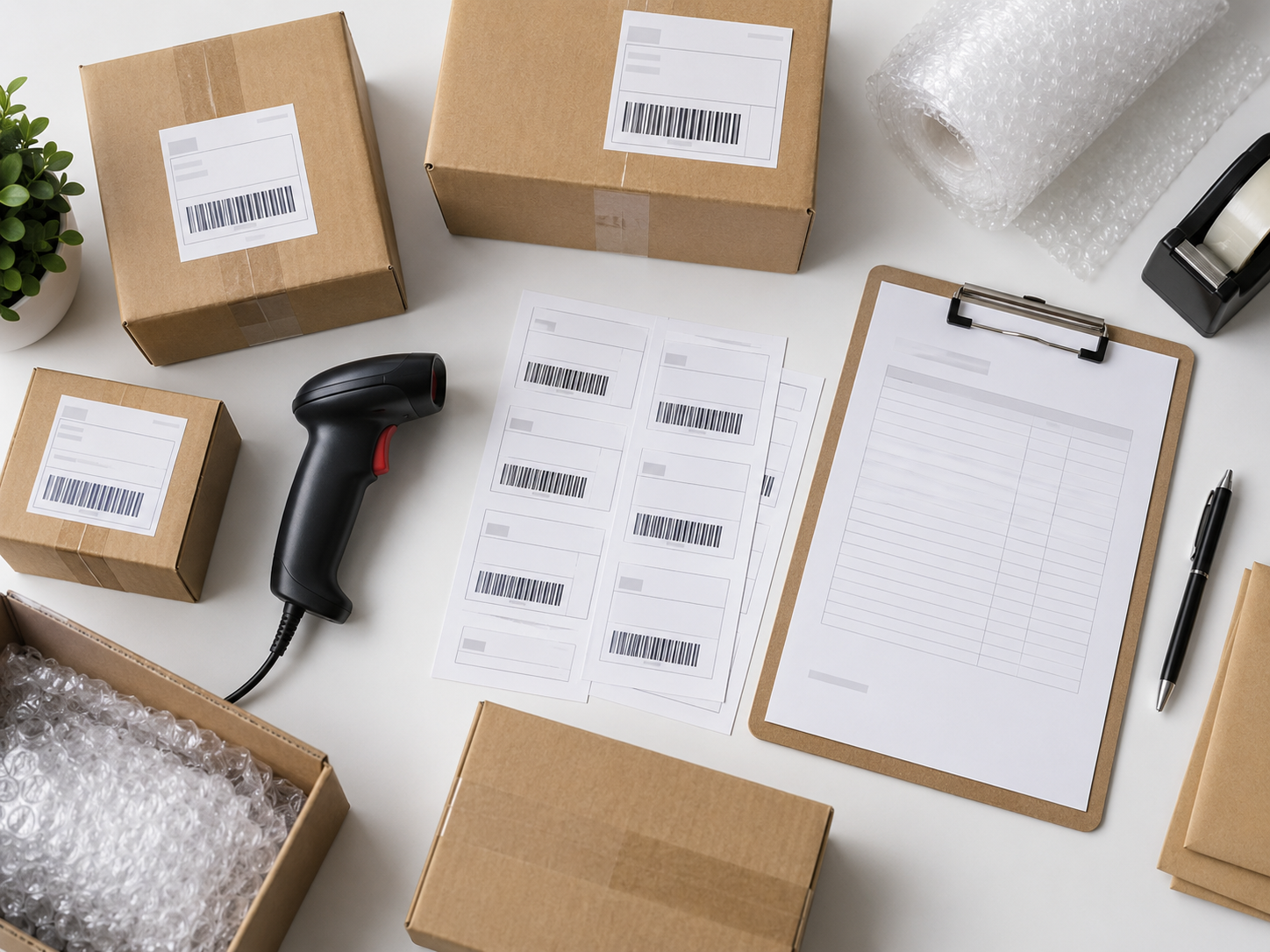
Most ecommerce brands reach a point where fulfilment starts to feel heavier than expected.
At first, it is manageable. Orders come in, stock is organised, parcels go out. However, as volume increases, fulfilment becomes less about packing boxes and more about running an operation.
That shift is where many founders start exploring ecommerce fulfilment services.
Yet, there is often confusion around what these services actually include. On the surface, providers say similar things. Warehousing, picking, packing, shipping. It all sounds straightforward.
In reality, the difference between providers sits beneath those headline services.
Understanding what sits inside ecommerce fulfilment services is what allows you to choose the right partner and avoid costly mistakes.
What Are Ecommerce Fulfilment Services?
Ecommerce fulfilment services refer to the complete set of logistics activities required to store, process and deliver orders to customers.
This typically includes:
- Receiving stock from suppliers
- Storing inventory in a warehouse
- Picking and packing orders
- Shipping parcels via courier networks
- Handling returns and exchanges
- Providing inventory and order tracking
While that definition sounds simple, the execution varies significantly between providers.
Why Fulfilment Services Matter More Than Ever
Customer expectations are rising. Fast delivery, accurate orders and smooth returns are no longer differentiators. They are expected.
According to a report by PwC, 32% of customers would stop doing business with a brand they love after just one bad experience.
Source: https://www.pwc.com/gx/en/services/consulting/consumer-markets/consumer-insights-survey.html
Fulfilment sits directly inside that experience.
If your logistics operation fails, the customer does not blame your warehouse. They blame your brand.
The Core Components of Ecommerce Fulfilment Services
To understand ecommerce fulfilment services, it helps to break them down into their core functions.
1. Inventory Receiving and Management
Everything starts with stock arriving at the warehouse.
This process includes:
- checking deliveries
- logging inventory into systems
- allocating storage locations
- managing stock accuracy
Accurate inventory is critical. Without it, overselling and stockouts become common.
2. Warehousing and Storage
Once received, products are stored.
Storage can include:
- pallet storage
- shelf or bin storage
- bulk storage
- temperature-controlled environments
The structure of storage directly impacts picking speed and accuracy.
3. Order Processing
When an order is placed, it enters the fulfilment workflow.
Modern ecommerce fulfilment services integrate directly with platforms such as Shopify, WooCommerce and marketplaces.
This allows orders to flow automatically into the warehouse system.
4. Picking and Packing
This is the operational core.
Products are picked from storage and packed into parcels ready for dispatch.
Efficiency at this stage determines:
- speed
- accuracy
- cost per order
If you want to understand how this affects cost, it is worth reviewing how pick and pack pricing works in detail.
5. Shipping and Delivery
Once packed, orders are shipped via courier networks.
Strong fulfilment providers offer:
- multi-carrier options
- domestic and international shipping
- tracked delivery services
- optimised carrier selection
Shipping performance is one of the most visible parts of fulfilment.
6. Returns Management
Returns are often overlooked but highly important.
Effective returns handling includes:
- receiving returned items
- inspecting products
- restocking where possible
- processing refunds or exchanges
For certain sectors, especially fashion, returns are a major operational factor.
7. Technology and Integration
This is where fulfilment providers begin to differentiate.
Advanced ecommerce fulfilment services include:
- real-time inventory tracking
- API integrations
- automated order processing
- reporting dashboards
Better systems reduce manual work and improve visibility.
Not All Fulfilment Services Are Equal
Many providers offer the same core services.
However, the difference sits in how those services are delivered.
For example, some providers focus on:
- high-volume automation
- low-cost operations
- standardised workflows
Others prioritise:
- flexibility
- communication
- tailored processes
- support for scaling brands
That difference matters more than the service list itself.
A Real-World Example of Service Variation
Consider a fast-growing DTC brand.
They may require:
- flexible order volumes
- fast onboarding
- custom packaging
- responsive communication
In this scenario, rigid fulfilment providers can create friction.
On the other hand, some providers are designed to support exactly this type of growth.
For example, providers like Evolve Fulfilment focus on removing traditional barriers such as minimum volume requirements, while offering flexible, scalable fulfilment support for growing ecommerce brands.
This type of approach can make a noticeable difference for brands still finding their operational rhythm.
How Fulfilment Services Impact Growth
It is easy to view fulfilment as a backend function.
In reality, it has a direct impact on growth.
Strong ecommerce fulfilment services can:
- improve delivery speed
- reduce errors
- support marketing campaigns
- handle peak demand
- enable international expansion
Weak fulfilment does the opposite.
A Second Data Point
According to McKinsey, companies that optimise their supply chain operations can reduce logistics costs by up to 15% while improving service levels. Source: https://www.mckinsey.com/capabilities/operations/our-insights
That improvement often comes from better fulfilment execution.
When Ecommerce Brands Typically Need Fulfilment Services
Not every brand needs to outsource immediately.
However, there are clear signals:
- order volume is increasing
- fulfilment is taking too much time
- errors are becoming more frequent
- storage space is limited
- customer expectations are rising
At this point, outsourcing fulfilment becomes less about convenience and more about growth.
Common Mistakes When Choosing Fulfilment Services
Choosing Based on Price Alone
Low-cost providers can introduce hidden inefficiencies.
Ignoring Technology
Poor systems create long-term operational issues.
Overlooking Returns
Returns can significantly impact cost and customer experience.
Not Thinking About Scale
A provider that works today may not work in 12 months.
How to Evaluate Ecommerce Fulfilment Services
Instead of focusing on surface-level comparisons, evaluate providers based on:
- operational reliability
- communication quality
- technology capability
- flexibility
- sector experience
- ability to scale
This approach leads to better long-term decisions.
Where FulfilQ Fits In
Finding the right fulfilment partner is often the hardest part of the process.
Many providers appear similar, yet the differences in service quality, flexibility and scalability can be significant.
FulfilQ helps ecommerce brands navigate that complexity by making it easier to discover and compare fulfilment partners based on real operational needs rather than generic descriptions.
Final Thoughts
Ecommerce fulfilment services are not just a list of logistics tasks.
They are the system that connects your business to your customer.
As your business grows, the quality of that system becomes increasingly important.
The right fulfilment setup supports growth, improves customer experience and reduces operational stress.
The wrong one does the opposite.
Understanding what sits inside fulfilment services is the first step towards making better decisions.
FAQs
What are ecommerce fulfilment services?
They include warehousing, order processing, picking, packing, shipping and returns management.
Do all fulfilment providers offer the same services?
No. While core services are similar, execution, flexibility and technology vary significantly.
Can small ecommerce brands use fulfilment services?
Yes. Many providers support early-stage and scaling brands.
What is the most important part of fulfilment services?
Accuracy and reliability, as they directly affect customer experience.
How do fulfilment services help growth?
They free up time, improve operations and allow brands to scale more efficiently.




Comments
Share a question or insight about this article.