
What parcel consolidation actually means
A customer placing three orders in five days should not automatically receive three separate parcels. Nor should a brand delay every order in pursuit of a cheaper carrier invoice.
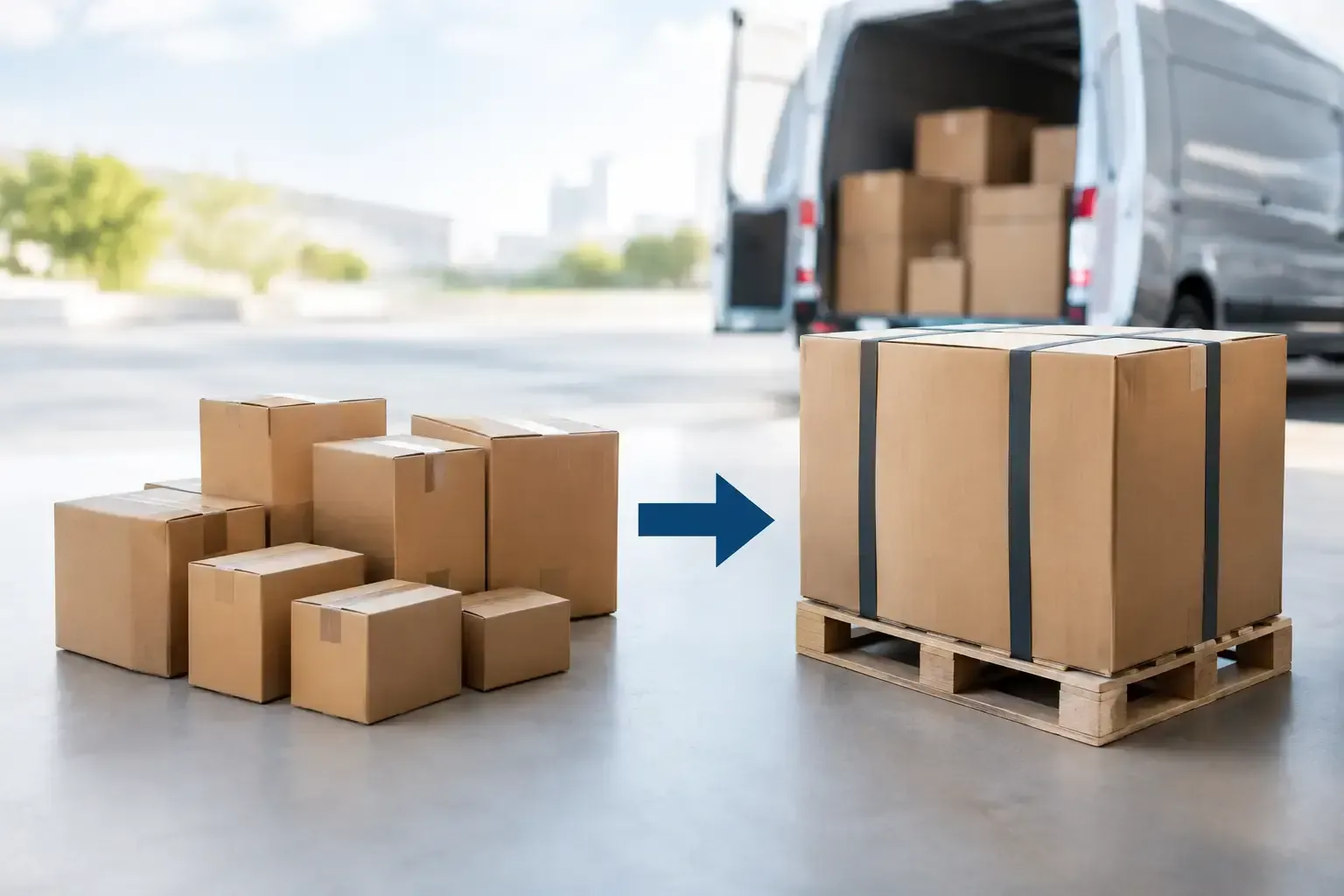
Parcel consolidation sits in that operational middle ground: combining multiple shipments, orders or items into fewer parcels where the saving outweighs the added handling, delay and complexity.
For ecommerce businesses, it can lower outbound cost, reduce packaging consumption and make international delivery more manageable. It can also create avoidable exceptions if stock is split across sites, customer promises are vague, or the fulfilment partner’s warehouse management system cannot apply the right rules. The commercial case is real, but it depends on operational fit rather than a blanket instruction to send fewer boxes.
Parcel consolidation is the process of grouping goods that would otherwise travel separately into one shipment or parcel. It can happen at several points in the supply chain, and those distinctions matter.
At fulfilment level, it often means combining multiple items from one customer order into one parcel. That is standard practice, but it becomes more involved when an order has been split by stock location, preorder status or different dispatch dates. A second model is order consolidation, where a brand holds a later order briefly so it can ship with an earlier unfulfilled order to the same recipient.
There is also carrier or freight consolidation. A 3PL may combine many brands’ parcels into a linehaul movement before injecting them into a destination carrier network. For international orders, this can mean sending one consolidated consignment through customs before parcels are inducted for final-mile delivery.
Each model has different economics. Combining two items picked from the same bin area is not comparable with holding stock for 48 hours, moving it between warehouses and changing the customer’s delivery expectation.
Where parcel consolidation creates value
The most obvious benefit is lower spend on labels, packaging and handling. If two orders become one parcel, a brand may avoid a second pick-and-pack fee, carton and delivery charge. The gain is particularly meaningful for low-value replenishment orders, subscriptions and repeat-purchase categories such as beauty, supplements and consumables.
It can improve the customer experience too. One well-packed delivery is often preferable to a stream of parcels arriving on different days. Fewer deliveries can mean fewer missed-doorstep events, fewer address-related failures and less confusion for customer service teams responding to “where is the rest of my order?” tickets.
For international shipping, consolidation can reduce per-parcel administration and make customs clearance more efficient. A brand shipping from the UK into Europe or the United States may be able to create a more sensible linehaul and injection model than paying for every small parcel to travel independently. That said, duty, tax and importer-of-record arrangements still need to be correct. Consolidation does not remove compliance obligations.
The sustainability benefit is credible but should be described carefully. Fewer cartons and delivery attempts can reduce material use and transport activity. Yet a larger parcel may move into a more expensive volumetric band, require additional void fill or be handled less efficiently. The better measure is not parcels avoided in isolation, but total packaging, transport and exception rates per delivered order.
The trade-off: savings versus service promises
Consolidation becomes risky when it is treated as a finance rule rather than a service-design decision. Holding a second order for a customer may save £4 on a label, but it can cost far more if that customer paid for next-day delivery, needed a replacement urgently or contacts support twice because the communication was unclear.
The key question is not “can these parcels be combined?” It is “should they be combined under this order, channel and delivery promise?” A sensible policy will differ by product, customer and destination.
A few situations usually justify caution. Do not routinely consolidate where one item is a preorder, one line is backordered, or products need separate handling because of their size, temperature sensitivity or regulated status. The same applies when a marketplace or wholesale retailer specifies a routing guide, carton label format or delivery window. Missing a retailer booking or sending a non-compliant shipment can quickly erase any postage saving.
Parcel size is another constraint. Two individually efficient parcels may become one shipment that attracts a dimensional-weight surcharge, exceeds a carrier’s limits or suffers more damage in transit. Fragile products, bulky homeware and mixed baskets with liquids are common examples. Your 3PL should be able to model the packing logic, not simply force every order into the fewest possible boxes.
Set rules your fulfilment operation can execute
A consolidation strategy only works when its rules are unambiguous in the warehouse management system and understandable to customer service. Start with the operational inputs: order volume, average items per order, SKU dimensions, split-shipment rate, carrier service mix, destination profile and promised dispatch times. These reveal where the opportunity actually sits.
Then define a narrow initial use case. For example, a skincare brand might consolidate a second standard-delivery order placed within 24 hours of an open order, provided both orders are held at the same fulfilment centre, the customer has not selected an express service and the combined parcel remains below the agreed weight and volume threshold.
That rule gives the operation something it can execute. It also identifies the exceptions: separate orders for gift messages, subscriptions with fixed dispatch dates, temperature-controlled lines or orders already manifested to a carrier.
Customer consent and communication deserve equal attention. Some brands present consolidation as an opt-in at checkout or in the account area. Others apply it automatically only when it does not change the stated delivery date. If an order will be held, say so clearly and show the revised expected delivery date. A customer who understands that one delivery is due tomorrow is less likely to interpret the pause as a fulfilment failure.
Measure the result beyond postage
A pilot should run long enough to capture normal trading patterns, then be judged against a baseline. Start with cost per delivered order rather than cost per parcel. A falling parcel count is not a success if packing time, compensation claims or customer contacts rise at the same time.
Track dispatch-on-time performance, first-attempt delivery rate, split-shipment frequency, packaging use, average parcel dimensions, carrier surcharges and returns. Also review customer service contact reasons. If “missing item” contacts increase after consolidation, the problem may be packing verification rather than the underlying policy.
For brands with multiple fulfilment centres, report by site and destination. A two-coast inventory split in the US may reduce transit time, but it can also increase split orders if replenishment and stock allocation are not controlled. In the UK, a single national stockholding may make consolidation straightforward, while European expansion introduces customs flows, local delivery expectations and different carrier capabilities.
Peak planning matters as well. During Black Friday or a major product launch, holding orders even briefly can create a queue that affects cut-off performance. Some brands suspend consolidation during peak periods; others apply it only to slow-moving standard services. Neither choice is automatically right. The better option depends on warehouse capacity, carrier collections and the value placed on fast dispatch.
Questions to ask a 3PL before switching it on
A provider should be able to explain how its system identifies eligible orders, how long it can hold them and who approves exceptions. Ask whether consolidation rules can vary by channel, carrier service, destination and customer type. A DTC order, a TikTok Shop order and a retail replenishment order should not necessarily follow the same logic.
You also need clarity on commercial treatment. Does the 3PL charge for order holds, rework, additional pick activity or changes after an order is released? How are packaging savings shared or recorded? Can it provide before-and-after reporting at order level? A low headline pick fee means little if manual interventions become routine.
Finally, test the integration path. Order status, fulfilment holds, tracking data and customer notifications must stay aligned across the ecommerce platform, helpdesk and warehouse system. If the technology cannot reliably link eligible orders to the same customer and address, the process will create more exceptions than savings.
Parcel consolidation works best as a targeted operating rule, not a universal cost-cutting measure. When the policy reflects stock location, service level, product handling and carrier constraints, it can improve unit economics without making delivery less predictable. Before asking a provider to consolidate, be precise about the orders you are willing to hold, the promises you will protect and the exceptions your operation cannot afford to get wrong.




Comments
Share a question or insight about this article.