
Fulfilment Centre vs Warehouse: What’s the Difference?
Fulfilment centres and warehouses, while similar in storing products, serve different purposes in ecommerce. Warehouses focus on long-term inventory storage, suited for B2B and bulk shipments. In contrast, fulfilment centres prioritize rapid order processing and direct shipping to customers. Choosing the right model impacts operational efficiency and business growth.
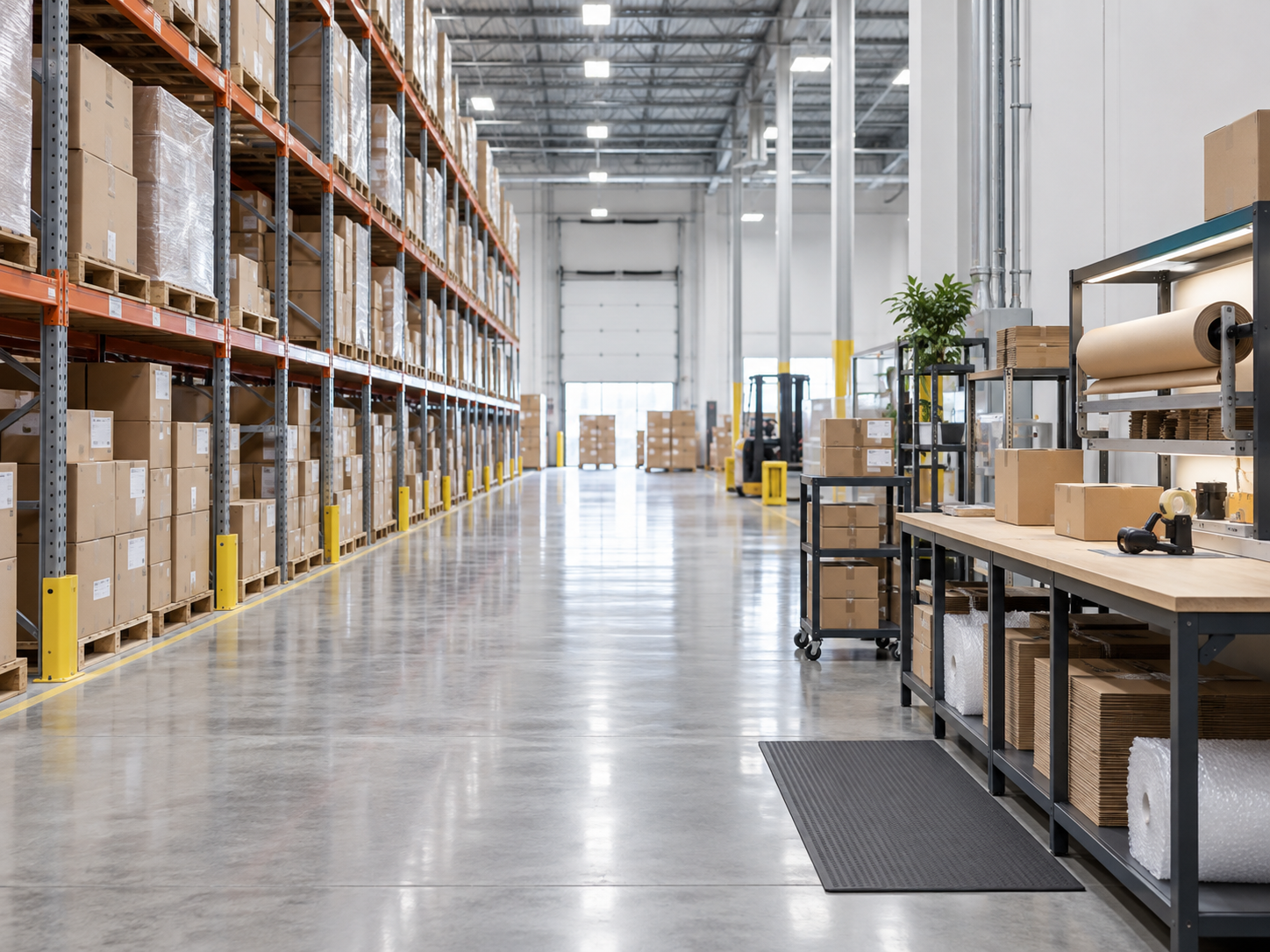
The terms fulfilment centre and warehouse are often used interchangeably.
At a glance, they appear similar. Both store products. Both sit behind ecommerce operations. Both play a role in getting goods to customers.
However, when you look more closely, the difference between a fulfilment centre vs warehouse becomes clear.
More importantly, choosing the wrong model can slow growth, increase costs and create operational friction.
This guide explains the difference properly, without jargon, so you can understand which approach fits your business.
What Is a Warehouse?
A warehouse is primarily designed for storage.
Its main purpose is to hold inventory until it is needed.
Warehouses are typically used for:
- bulk storage
- long-term inventory holding
- B2B distribution
- manufacturing supply chains
- pallet-based logistics
In a warehouse environment, products may sit for weeks or months before moving.
The focus is on space, organisation and inventory management.
What Is a Fulfilment Centre?
A fulfilment centre is designed for movement rather than storage.
It handles the process of:
- receiving inventory
- processing orders
- picking products
- packing parcels
- shipping directly to customers
- managing returns
In simple terms, a fulfilment centre is built for order fulfilment in ecommerce, not just storage.
Products move in and out quickly.
Fulfilment Centre vs Warehouse: The Core Difference
The key difference is this:
- A warehouse stores goods
- A fulfilment centre moves goods
That distinction may seem small, but it has significant operational impact.
Why the Difference Matters for Ecommerce Brands
As ecommerce businesses grow, operational demands change.
Storage alone is not enough.
Brands need:
- fast dispatch
- accurate picking
- reliable shipping
- smooth returns
This is where the fulfilment centre vs warehouse decision becomes critical.
A Useful Data Point
According to Statista, global ecommerce sales are projected to exceed $6 trillion, driven largely by customer demand for fast delivery and seamless fulfilment.
Source: https://www.statista.com/topics/871/online-shopping/
As volume increases, fulfilment speed and efficiency become key differentiators.
How Warehouses Operate
A warehouse is typically structured around:
- pallet storage systems
- bulk inventory
- scheduled outbound shipments
- lower daily order volume
For example:
A retailer might send large quantities of goods from a warehouse to stores or distribution hubs.
Orders are planned and predictable.
How Fulfilment Centres Operate
A fulfilment centre operates very differently.
It is designed for:
- high order frequency
- smaller parcel shipments
- rapid picking and packing
- direct-to-consumer delivery
Orders are processed continuously rather than in batches.
This makes fulfilment centres more dynamic and operationally intensive.
Fulfilment Centre vs Warehouse: Key Differences
1. Speed
Fulfilment centres are built for speed.
Warehouses prioritise storage efficiency.
2. Order Type
Fulfilment centres handle individual customer orders.
Warehouses typically handle bulk shipments.
3. Inventory Movement
Fulfilment centres move stock quickly.
Warehouses hold stock for longer periods.
4. Complexity
Fulfilment centres manage:
- multiple SKUs
- returns
- packaging
- customer orders
Warehouses are usually simpler in structure.
5. Technology
Fulfilment centres rely heavily on systems and automation.
Warehouses may use simpler inventory tracking depending on use case.
When a Warehouse Makes Sense
A warehouse is often the right choice when:
- you are storing large volumes of stock
- you operate B2B distribution
- orders are predictable and bulk-based
- fulfilment is not time-sensitive
- you manage your own logistics
Manufacturers and wholesalers often rely on warehouses.
When a Fulfilment Centre Makes Sense
A fulfilment centre becomes more relevant when:
- you run an ecommerce business
- orders are frequent and varied
- customers expect fast delivery
- returns need to be handled efficiently
- operational scale is increasing
This is why many ecommerce brands move towards fulfilment centres as they grow.
The Cost Perspective
Cost structures differ between the two models.
Warehouse Costs
Typically include:
- storage fees
- pallet handling
- inbound and outbound logistics
Costs are often lower per unit stored.
Fulfilment Centre Costs
Typically include:
- pick and pack fees
- shipping costs
- returns processing
- storage
Costs are tied more closely to order volume.
Which Is More Cost Effective?
It depends on your business model.
For bulk storage, warehouses are often more efficient.
For ecommerce operations, fulfilment centres provide better value through operational efficiency.
Fulfilment Centre vs Warehouse in Practice
Consider two scenarios.
Scenario 1: Wholesale Business
- ships pallets to retailers
- low order frequency
- high volume shipments
A warehouse is the natural fit.
Scenario 2: Ecommerce Brand
- ships individual orders daily
- handles returns
- runs promotions and campaigns
A fulfilment centre is the better fit.
A Second Data Point
Research from McKinsey highlights that companies improving supply chain efficiency can increase service levels while reducing costs by up to 15%.
Source: https://www.mckinsey.com/capabilities/operations/our-insights
This often comes from moving towards more efficient fulfilment models.
Common Misconceptions
“A Warehouse Can Do Fulfilment”
Some can, but not all are designed for it.
“Fulfilment Centres Are Just Expensive Warehouses”
They are operationally different and often provide more value for ecommerce businesses.
“It Doesn’t Matter Which One We Use”
Choosing the wrong model can create long-term inefficiencies.
How to Decide What You Need
Start by asking:
- How often do we ship orders?
- Are we B2B or DTC?
- Do we need fast delivery?
- How complex are our orders?
- Do we handle returns frequently?
Your answers will point towards the right model.
Where FulfilQ Fits In
Understanding the difference between a fulfilment centre vs warehouse is the first step.
The next step is choosing the right provider.
FulfilQ helps ecommerce brands navigate that decision by making it easier to compare fulfilment partners based on how they actually operate, not just how they describe themselves.
Final Thoughts
The difference between a fulfilment centre and a warehouse is not just terminology.
It reflects how your business operates.
Warehouses store.
Fulfilment centres move.
As ecommerce continues to grow, businesses that prioritise efficient fulfilment tend to scale more effectively.
Understanding this distinction helps you build a logistics setup that supports growth rather than slowing it down.
FAQs
What is the difference between a fulfilment centre and a warehouse?
A warehouse focuses on storage, while a fulfilment centre manages order processing and shipping.
Can a warehouse be used for ecommerce fulfilment?
Some can, but they are not always optimised for high-frequency order processing.
Are fulfilment centres more expensive?
They can be per order, but often provide better efficiency for ecommerce businesses.
Which is better for ecommerce?
Most ecommerce brands benefit from using a fulfilment centre rather than a traditional warehouse.



Comments
Share a question or insight about this article.