
Cold chain fulfilment UK: a guide for chilled and frozen food brands
Cold chain fulfilment in the UK: legal temperatures, food registration, BRCGS, parcel packaging, dry ice rules and what to ask a chilled or frozen 3PL.
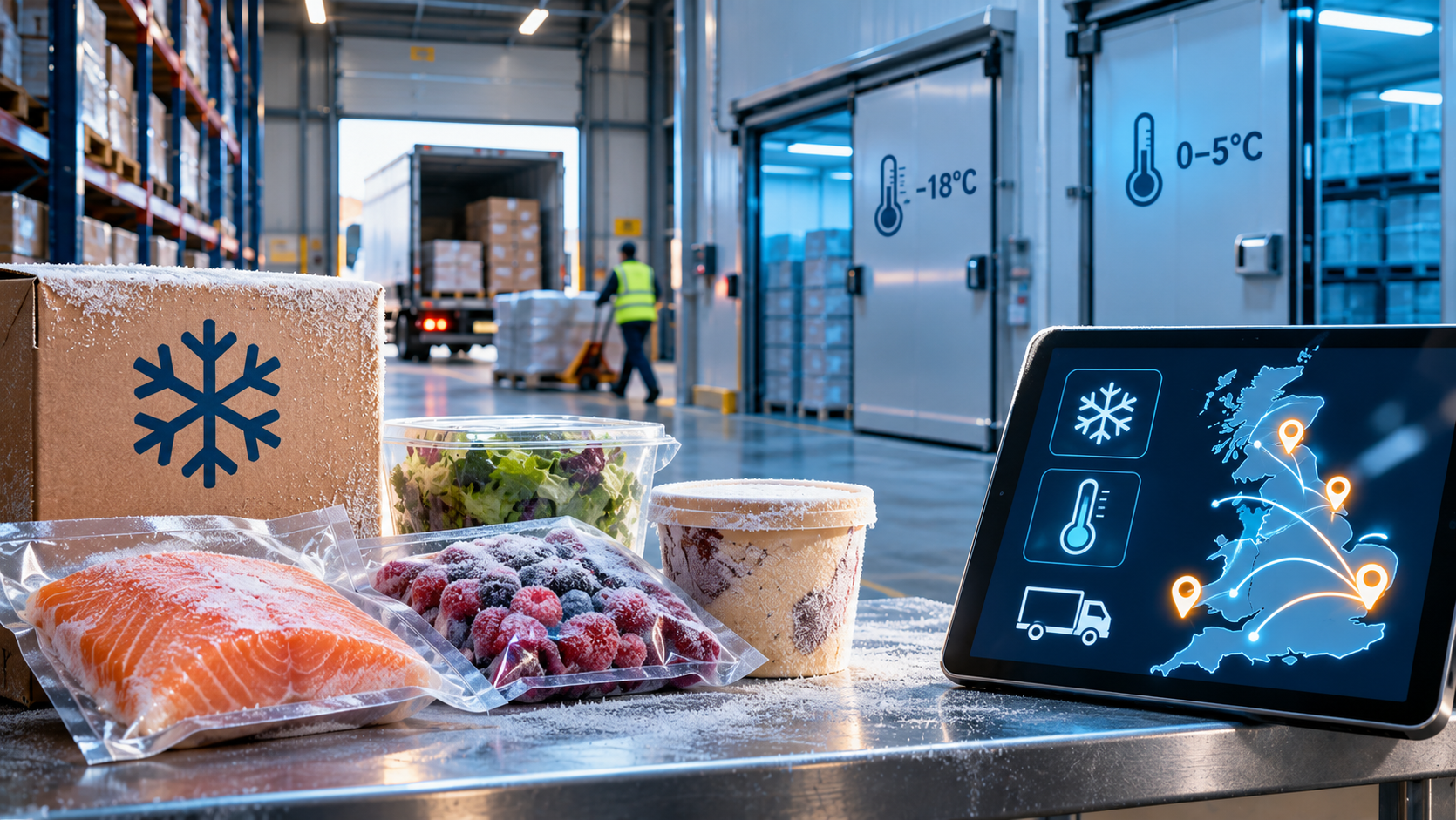
Cold chain fulfilment in the UK means a 3PL stores, picks and ships your food inside a controlled temperature range from goods-in to the customer's door. Chilled food must be kept at 8°C or below, a legal requirement in England, Wales and Northern Ireland, and quick-frozen food must be held at -18°C or colder. The right partner proves both with temperature records, tested packaging and a food safety certificate.
This guide is for ecommerce brands selling chilled or frozen food direct to consumers, and covers what to check before you sign.
The pain points
"Our ambient 3PL said they could probably fit a fridge in. I don't want my cheese relying on probably."
"Customers in the Highlands get their box on day two and the ice packs are water by then."
"I have no idea who is meant to register with the council, us or the warehouse."
"We binned a pallet of short-dated stock because nobody picked the oldest batch first."
"One courier quoted for dry ice and another refused it outright. I don't know which one is right."
What temperature-controlled storage means
Two ranges matter for most food brands. Chilled storage keeps food at 8°C or below. The government's food hygiene guidance for businesses says this is the law in England, Wales and Northern Ireland and recommended in Scotland. The same guidance recommends setting fridges to 5°C or below, which gives you a margin before the legal line. Ask for the set point and alarm threshold.
Frozen storage for quick-frozen food means -18°C or colder. Under the Quick-frozen Foodstuffs (England) Regulations 2007, the food may only rise above -18°C for brief periods during transport and local distribution, and never above -15°C. Ask how the freezer, the marshalling area and the packing bench keep to that.
Many food brands need chilled, frozen and ambient space at once, for sauces, dry goods and packaging. A site with all three zones saves you splitting stock across partners.
Register your business and check the warehouse's paperwork
If you sell food, including online through a website or social media, you must register with your local authority at least 28 days before you start trading. The government's starting a food business guidance says registration is free, can't be refused, and applies to all food and drink businesses wherever they operate from. That includes brands whose stock sits in a 3PL.
You also need a food safety management system based on HACCP principles, with records of your checks and how you put problems right. Once a 3PL holds your stock, its procedures cover the warehouse steps of your plan. Ask to see them, and agree who records what.
The certificate to look for is BRCGS Storage and Distribution. BRCGS says the Global Standard for Storage and Distribution is designed for logistics operations handling food, packaging and consumer products, at any point from primary production to retail. Issue 4, published in October 2020, extended the standard to businesses that sell direct to end consumers and added an optional e-commerce module. Sites can certify a narrow scope, such as storage only, so check the certificate's scope, grade and modules match the work they will do for you.
Packaging and last-mile delivery
The parcel has to keep food safe for the whole journey. That means an insulated box or liner, a coolant and a pack-out tested for your longest likely transit. Ask the 3PL or its packaging supplier for test results showing how many hours the pack holds temperature, and at what outside temperature. Summer is where weak pack-outs fail.
Coolant choice depends on the carrier:
Royal Mail does not allow dry ice or frozen water in parcels and recommends frozen gel packs. Perishable parcels must be labelled "PERISHABLE", packed in a strong corrugated box or purpose-made polystyrene pack, and able to withstand a journey of up to 48 hours. Royal Mail does not carry perishables abroad.
Parcelforce's guidance for business customers also prohibits dry ice and frozen water, and says perishables should only go to postcodes with a transit time of no more than the next day.
Dry ice is a dangerous good, UN1845, Class 9. A carrier that accepts it will have its own dangerous goods terms on quantity, marking and venting. Get them in writing, and check with the carrier before you ship, because these terms change.
Speed matters as much as packaging. Next-day services with a guaranteed window, such as Royal Mail Special Delivery Guaranteed by 1pm, cut the hours a box spends in transit. Specialist chilled couriers with refrigerated vans are another option for local and regional routes. Ask your 3PL which carriers it already uses for chilled and frozen parcels, the cut-off times, and whether it holds Friday dispatches to avoid boxes sitting in a depot over the weekend.
Monitoring, FEFO and returns
Temperature records are your evidence. The FSA's Safer Food, Better Business pack for retailers says to check fridge temperatures at least once a day and to check regularly that displays are accurate. A cold chain warehouse should log continuously, with alarms that reach a named person out of hours.
Short shelf life makes stock rotation your biggest cost lever. First-expired, first-out (FEFO) picking ships the batch with the nearest date first, and our guide to batch expiry tracking and FEFO explains the set-up. Set a minimum remaining shelf life for dispatch so customers have time to eat what they buy. Food with a use-by date may not be sold after that date, so anything that expires in the warehouse is a write-off.
Returns need their own plan. Under the Consumer Contracts Regulations, the cancellation right does not apply to goods liable to deteriorate or expire rapidly. Warm deliveries still need a refund or replacement policy. Food that has left your temperature range can't be shown to be safe, so agree how the 3PL logs, inspects and disposes of returns and who pays. Our guide to returns policy and 3PL costs covers the charges.
What to ask a 3PL
Add these to your standard questions to ask a 3PL:
What temperature does each zone run at, and at what reading does the alarm trigger?
Is your site registered as a food business with its local authority, and what was your last food hygiene inspection result?
Do you hold BRCGS Storage and Distribution certification? What scope, grade and modules does it cover?
How do you log temperatures, and who responds to an alarm at 3am?
Which carriers do you use for chilled and frozen parcels, and what are the cut-offs?
Which pack-outs have you tested, for how many hours, at what outside temperature?
Do you pick FEFO and enforce a minimum shelf life on dispatch?
How are perishable returns and expired stock handled and charged?
Our recommendation: Run a pack-out trial before you sign
Register your business with your local authority at least 28 days before your first sale, if you haven't already.
Write down each product's temperature range, shelf life and the longest delivery transit you need to cover.
Shortlist 3PLs with the chilled or frozen zones you need and BRCGS Storage and Distribution certification covering them. Our guide on how to choose a 3PL covers the other criteria.
Ask each one for sample temperature logs, its carrier list and cut-off times.
Send test boxes with their pack-out to your furthest addresses, with a cheap data logger inside, in the warmest week you can.
Choose the partner whose chilled boxes arrive at 8°C or below, whose frozen boxes arrive frozen, and whose records match what they told you.
Write the temperature ranges, minimum shelf life and returns terms into the contract.
What waiting costs
Without a tested pack-out, warm boxes reach customers. Each one means a refund, a reship and a customer who may not order again. A food safety complaint can bring an environmental health visit to you and your warehouse, and your records are what you show them. Short-dated stock without FEFO turns into waste, and the first hot week of the year exposes every weak pack-out at once.
A worked example. A brand ships 2,000 chilled orders a month. If 3% arrive warm, that is 60 orders. At £60 each for refunded product, a replacement box and postage, the cost is £3,600 a month. Add one pallet of short-dated stock written off each month at £1,500, and the total is £5,100 a month, or £30,600 over six months. These figures are made up to show the method.
People Also Ask
What temperature must chilled food be kept at in the UK?
Chilled food must be kept at 8°C or below. This is a legal requirement in England, Wales and Northern Ireland and recommended in Scotland. Government guidance recommends setting fridges to 5°C or below to give a safety margin.
Can you send frozen food with Royal Mail?
Royal Mail accepts perishable food within the UK if it is packed to withstand up to 48 hours and labelled "PERISHABLE". It does not allow dry ice or frozen water as coolants and recommends frozen gel packs. It does not carry perishables abroad.
Do I need to register as a food business if a 3PL holds my stock?
Yes. Registration applies to all food and drink businesses, including online sellers, wherever they operate from. Register with your local authority at least 28 days before you start trading. It is free.
Finding the right cold chain fulfilment partner
Logan, FulfilQ's advisor on the website, matches brands to verified providers by order volume, product type and region. Tell Logan your products, their temperature ranges, your monthly orders and where your customers are, and you get a shortlist to ask about BRCGS certification, pack-out testing and chilled carrier cut-offs. Start at fulfilq.com and Ask Logan, or Submit an RFP and verified providers come back to you. You can also browse the full provider directory.



Comments
Share a question or insight about this article.