
3PL vs In House Fulfilment
Ecommerce brands often start with in-house fulfillment, but as order volume grows, they face a critical decision: maintain in-house operations or switch to a 3PL. Both options have pros and cons regarding cost, control, scalability, customer experience, and founder time. The right choice depends on the brand’s growth stage and operational needs.
Which Is Best for Ecommerce Brands?
For many ecommerce founders, fulfilment decisions start small.
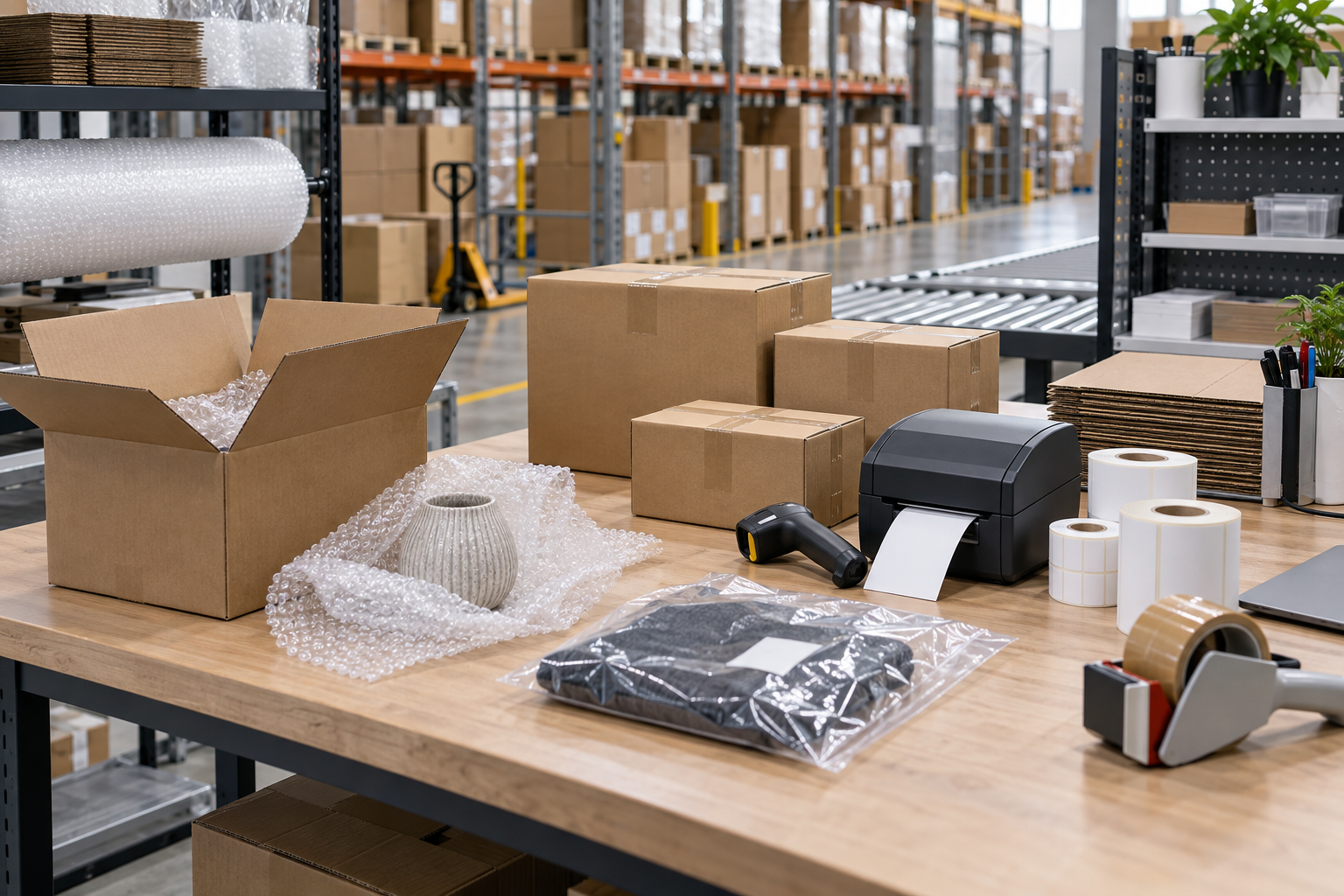
A few shelves of stock. Parcels packed after work. Labels printed from a laptop. Orders carried to the courier drop-off point.
That approach often works in the beginning.
Then growth changes everything.
More orders mean more stock, more packing time, more delivery pressure, more customer emails and less time to focus on revenue. At that point, many brands face a serious commercial decision:
Should we keep fulfilment in house or move to a 3PL?
The 3PL vs in house fulfilment debate is one of the most important operational decisions an ecommerce business will make. Get it right and growth becomes easier. Get it wrong and margins, customer experience and momentum can suffer.
In this guide, we will compare 3PL vs in house fulfilment across cost, control, speed, scalability and customer experience so you can make the right decision for your business.
What Is In House Fulfilment?
In house fulfilment means your business stores inventory and ships orders using your own people, systems and space.
That may include:
- Home storage
- Office stockrooms
- Self-managed warehouse units
- Internal warehouse staff
- Direct courier accounts
- Self-managed returns process
Many startups begin with in house fulfilment because it gives control and keeps early costs simple.
What Is a 3PL?
A 3PL (third-party logistics provider) stores your stock and handles order fulfilment on your behalf.
Most modern ecommerce 3PL providers offer:
- Goods receiving
- Warehousing
- Pick and pack
- Courier shipping
- Returns handling
- Inventory reporting
- Shopify and marketplace integrations
Instead of running logistics internally, you outsource fulfilment to a specialist partner.
That is why the question of 3PL vs in house fulfilment becomes so important once order volume rises.
3PL vs In House Fulfilment: Quick Summary
If you need maximum control and lower early-stage volume, in house fulfilment can work well.
If you need scale, speed and operational leverage, a 3PL often becomes the stronger option.
There is no universal winner.
The right answer depends on your stage, order profile, margins and growth ambition.
1. 3PL vs In House Fulfilment on Cost
Cost is usually the first comparison point.
In House Fulfilment Costs
Many founders underestimate true internal fulfilment costs because some costs are hidden inside daily operations.
Typical costs include:
- Rent or storage space
- Shelving and equipment
- Packaging materials
- Staff wages
- Courier accounts
- Insurance
- Software
- Time spent managing operations
- Hiring during peak periods
3PL Costs
A 3PL usually charges through variable pricing such as:
- Storage fees
- Pick and pack fees
- Shipping charges
- Returns handling
- Receiving stock
- Optional account management
Which Wins on Cost?
For very low order volumes, in house fulfilment may be cheaper.
For growing brands, a 3PL vs in house fulfilment comparison often shifts once internal labour, space pressure and errors are included.
The real question is not “which is cheaper today?”
It is “which model is most efficient at our next stage of growth?”
2. 3PL vs In House Fulfilment on Control
Control matters to founders.
In House Fulfilment Control
Running fulfilment yourself means:
- Direct oversight of stock
- Immediate packaging changes
- Fast operational decisions
- Hands-on quality control
This can be valuable for premium brands or businesses with bespoke packing needs.
3PL Control
With a 3PL, control becomes process-led rather than physically hands-on.
Strong providers offer:
- Dashboards
- Stock visibility
- SLAs
- Reporting
- Account support
Which Wins on Control?
If total daily control is your priority, in house fulfilment usually wins.
If structured operational control is enough, a quality 3PL can still perform strongly.
3. 3PL vs In House Fulfilment on Scalability
This is where many brands hit a wall.
In House Fulfilment Scaling Challenges
Growth often creates:
- Space shortages
- Staff recruitment pressure
- Packing delays
- Founder burnout
- Operational mistakes
- Weekend fulfilment backlog
3PL Scaling Benefits
A specialist provider is already built for volume.
That often means:
- Trained teams
- Existing warehouse capacity
- Carrier relationships
- Peak readiness
- Multi-shift operations
Which Wins on Scalability?
In most cases, 3PL vs in house fulfilment heavily favours the 3PL once order volume rises consistently.
4. 3PL vs In House Fulfilment on Customer Experience
Customers judge brands by delivery experience.
They notice:
- Dispatch speed
- Packaging quality
- Tracking updates
- Delivery reliability
- Returns simplicity
In House Fulfilment
Can be excellent if operations are disciplined and well managed.
Can decline quickly if growth outpaces capability.
3PL
Strong 3PLs often improve customer experience through better systems and faster dispatch.
Weak providers can damage it.
Which Wins?
This category depends more on execution quality than model.
A poor warehouse is poor whether internal or outsourced.
5. 3PL vs In House Fulfilment on Founder Time
This factor is often ignored.
Every hour spent:
- packing boxes
- solving courier issues
- counting stock
- managing temp labour
…is an hour not spent on:
- product growth
- marketing
- partnerships
- retention
- fundraising
- strategy
For many founders, this is where the 3PL vs in house fulfilment decision becomes obvious.
When In House Fulfilment Still Makes Sense
In house fulfilment may still be the right move if:
- Order volume is low
- Products are highly customised
- Margins are tight
- You need bespoke presentation
- Logistics runs smoothly already
- You have suitable space and team capacity
Some brands stay in house longer than expected and do well.
When a 3PL Usually Makes Sense
A 3PL often becomes attractive when:
- Orders are rising monthly
- Founder time is trapped in operations
- Dispatch errors are increasing
- Storage is becoming painful
- Paid marketing growth is limited by ops
- You need better delivery speed
- Expansion plans are growing
This is where outsource fulfilment becomes a strategic move, not just an operational one.
Warning Signs You Have Waited Too Long
Many brands move too late.
Common signs include:
- Packing late into evenings
- Customer complaints rising
- No clear stock accuracy
- Launches causing chaos
- Team morale dropping
- Delayed dispatch becoming normal
If this sounds familiar, your 3PL vs in house fulfilment decision may already be overdue.
A Practical Example
Imagine two brands.
Brand A
- 12 orders per day
- Simple SKU range
- Good margins
- Spare room fulfilment
- Founder has capacity
In house fulfilment may still work.
Brand B
- 120 orders per day
- Bundles and multiple SKUs
- Heavy ad spend
- Returns increasing
- Founder buried in ops
A strong 3PL may unlock faster growth.
This is why context matters more than theory.
How to Compare the Right 3PL
If moving externally, compare providers on:
Technology
Can they integrate with Shopify, Amazon or marketplaces?
Accuracy
What are their dispatch and picking standards?
Transparency
Are fees clear?
Communication
Do they feel responsive before sale?
Sector Fit
Have they worked with your product type?
Growth Capacity
Can they support you in 12 months?
How FulfilQ Can Help
Many brands waste time speaking to fulfilment providers that were never right for them.
The websites look similar. The terminology sounds similar. The fit can be very different.
FulfilQ is being built to help ecommerce brands compare relevant fulfilment partners based on practical needs such as:
- order volume
- category
- location
- integrations
- shipping priorities
- growth stage
That helps businesses make sharper decisions faster.
Final Verdict: 3PL vs In House Fulfilment
There is no automatic winner in 3PL vs in house fulfilment.
Early-stage brands often benefit from staying lean and internal.
Growth-stage brands often benefit from specialist external support.
The smartest decision is the one that supports your next chapter, not your last chapter.
If fulfilment is slowing momentum, creating stress or limiting growth, it may be time to rethink the model.
Great brands rarely scale on operational friction for long.
Frequently Asked Questions
Is a 3PL cheaper than in house fulfilment?
Sometimes. It depends on order volume, labour costs, space costs and efficiency.
When should I move from in house fulfilment to a 3PL?
Usually when growth creates time pressure, errors or space issues.
Can small brands use a 3PL?
Yes. Many providers support smaller ecommerce businesses.
Does in house fulfilment offer more control?
Usually yes, but it also creates more management responsibility.
What matters most in 3PL vs in house fulfilment?
Fit for your current stage and growth plans.



Comments
Share a question or insight about this article.