
What Causes Warehouse Stockouts in Practice?
A product can show as available in Shopify, a marketplace, or an ERP while the warehouse has no sellable unit left to pick. That gap is the practical answer to what causes warehouse stockouts: inventory is not simply missing, but unavailable at the point, in the location, or in the condition needed to fulfil demand.

For ecommerce brands, stockouts are rarely one isolated planning mistake. They are usually the outcome of weak signals passing between demand planning, suppliers, freight, warehouse systems and sales channels. The commercial impact goes beyond a lost order. Bestseller rankings can fall, paid media spend is wasted, wholesale allocations are missed and customer confidence takes a hit that is difficult to measure on a monthly report.
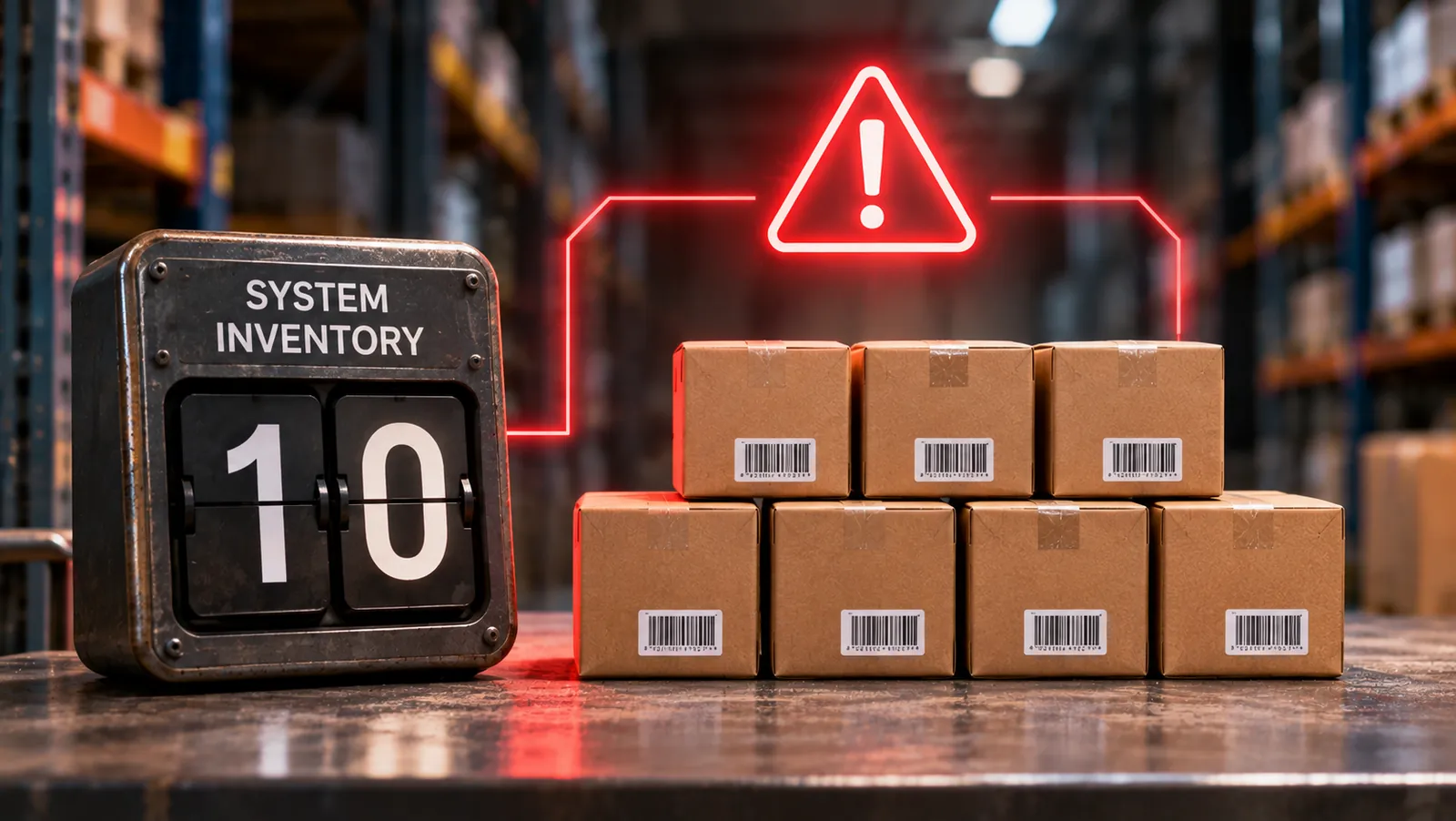
The most common cause is a mismatch between the stock record and physical, sellable stock.
But the reason for that mismatch varies. A brand may hold 10,000 units on paper, for example, while 2,000 are still on an inbound container, 1,500 are in quarantine after a quality check, 1,000 have been allocated to a retailer, and another 800 sit in a warehouse location that has not been counted correctly. The available figure is far lower than the headline inventory total.
A capable warehouse partner can reduce these risks, but it cannot compensate for poor replenishment logic, late supplier communication or a sales plan it has never seen. Stock availability is a shared operating discipline.
1. Forecasts do not reflect real demand
Many forecasts are built from last year's sales, then adjusted by a percentage. That can work for a stable product range with predictable repeat purchase. It breaks down when a brand launches into a new marketplace, runs an influencer campaign, gains a wholesale account or changes price.
Seasonality creates another common blind spot. Demand for gifting, travel products, beauty bundles or winter ranges can rise sharply over a few weeks. If the forecast treats November like October, the reorder trigger will arrive too late. Equally, forecasting at total brand level can conceal a stockout in a hero SKU, size or colourway while slower variants remain overstocked.
The trade-off is obvious: more safety stock protects availability but ties up cash and warehouse space. The right answer depends on replenishment lead time, margin, product lifecycle, supplier reliability and the cost of missing a sale. A high-margin bestseller sourced on a 90-day lead time warrants a different buffer from a low-margin accessory that can be reordered locally within a fortnight.
2. Reorder points ignore the full lead time
A reorder point should cover expected demand during replenishment lead time, plus an appropriate buffer. Brands often count only the supplier's production time. The real lead time may include purchase order approval, raw-material delays, factory booking, quality control, collection, port congestion, customs clearance, delivery appointments and warehouse goods-in processing.
This matters particularly for imported inventory. A shipment may be technically on schedule yet still miss availability because it arrives during peak, lacks correct paperwork or needs relabelling before it can be received. If a 3PL needs booked delivery slots and two working days to check in a mixed-SKU container, that must be included in the plan.
Reorder points should also be SKU-specific. Treating every product as though it has the same supplier lead time and sales volatility creates predictable gaps.
3. Inbound stock is treated as available too soon
An inbound purchase order is not inventory. Neither is stock that has reached the port, been collected by the freight forwarder or been delivered to the warehouse yard.
Stock only becomes available when it has been received, identified, checked and put away in a sellable location. For regulated, cosmetic, food, battery-powered or batch-controlled products, the process may also require expiry-date capture, batch verification, compliance review or quarantine release. Those controls are necessary, but they change the availability date.
Brands should agree a clear inbound status model with their warehouse. At minimum, teams need to distinguish stock that is ordered, in transit, delivered, received, quarantined, allocated and sellable. When every status is rolled into one optimistic “on hand” number, the business is planning against stock it cannot ship.
4. Inventory data is delayed or not connected
A stockout can begin with an integration issue rather than a physical shortage. If the warehouse management system, ecommerce platform, marketplaces and ERP update at different intervals, a channel can continue accepting orders after the final available unit has been picked.
Overselling is especially likely where brands sell the same SKU across their own site, Amazon, TikTok Shop, retail stores and wholesale. Reserved stock also needs to be visible. A retailer allocation, subscription order or pre-order commitment may not have left the warehouse, but it is no longer free stock.
Integration quality should be assessed before appointing a 3PL, not discovered after go-live. Ask how often stock updates flow, whether updates are event-led or batched, how cancelled orders are returned to available inventory, and how the provider handles inventory adjustments. A low fulfilment rate is sometimes a warehouse performance issue. It can also be a channel inventory logic problem disguised as one.
5. Poor receiving and inventory control create phantom stock
Phantom stock is inventory the system says exists but the operative cannot find. It is a common source of short picks, delayed dispatch and last-minute order cancellations.
The causes can be mundane: a carton received against the wrong SKU, an unscanned pallet move, a picking error not reversed in the system, a damaged unit left in a live location, or a return placed back into stock before inspection. High SKU counts, similar packaging and frequent bundle changes increase the risk.
Cycle counting is the practical control. Rather than waiting for an annual stocktake, the warehouse counts selected locations and high-value or fast-moving SKUs continuously. Brands should understand the provider's count frequency, adjustment approval process and stock accuracy target. Accuracy matters more than a polished dashboard if the dashboard is reporting the wrong quantity.
6. Stock is in the wrong place
Total inventory can be healthy while a specific fulfilment node is empty. This is increasingly common for brands using UK and EU warehouses, two-coast US inventory splits, or separate ecommerce and wholesale operations.
If most demand is in the South East but the stock sits in a northern warehouse, it may still be fulfilable, but at a higher delivery cost and with later cut-off performance. If the relevant stock is in an EU facility while UK demand has accelerated, customs and transfer lead times may turn a regional imbalance into a customer-facing stockout.
Network decisions need to follow order data. Review demand by delivery region, channel and SKU rather than allocating inventory evenly by intuition. It can be more economical to hold less total stock in better locations than to carry excess inventory in a single place and repeatedly pay to move it.
7. Supplier reliability is assumed, not measured
A purchase order confirmation is not a guarantee. Suppliers can miss dates because of material shortages, quality failures, capacity constraints or production prioritisation. Brands that have grown quickly often discover that a supplier capable of supporting 2,000 units per month cannot reliably support 20,000 units during peak.
Measure promised versus actual ship dates, fill rates and defect rates by supplier and product line. This reveals whether a safety-stock problem is really a supplier-performance problem. For critical lines, a second approved supplier or an earlier purchasing commitment may be more valuable than negotiating a slightly lower unit cost.
8. Peak planning starts after capacity has gone
Peak stockouts are not always caused by demand exceeding forecast. They can happen because the warehouse cannot receive, put away or replenish inventory quickly enough while outbound order volumes are surging.
A provider may have physical storage space but limited goods-in labour, appointment availability, pallet positions or operational capacity for kitting and retailer compliance work. The same applies to freight capacity. Booking inbound transport at the last minute during a busy period leaves fewer viable options and less room to recover from disruption.
Peak planning should cover more than unit volumes. Share expected inbound deliveries, promotional dates, SKU launches, bundles, wholesale routing-guide requirements and returns volumes. The warehouse needs enough notice to staff and configure the operation, particularly where stock must be decanted, labelled or quality checked before sale.
How to Reduce Warehouse Stockout Risk
The most useful starting point is a weekly exception view, not a generic inventory report. Flag SKUs where projected cover falls below lead time plus buffer, where inbound dates have slipped, where sellable and system stock differ, or where stock is concentrated in the wrong location. Review those exceptions with commercial, procurement and warehouse teams together.
Then establish ownership. Demand planners should own forecast quality, procurement should own supplier commitments, freight teams should own transit visibility, and the 3PL should own accurate receiving, storage and stock reporting. The brand remains accountable for the decisions that connect those functions, including when to reorder, where to hold stock and which sales channels receive priority during constrained supply.
When selecting or replacing a logistics partner, test the operational fit behind the proposal. Ask about receiving cut-offs, inventory accuracy, cycle counts, batch handling, integration behaviour, peak capacity and the time needed to make stock sellable. The cheapest quote means very little if the operation behind it cannot support your replenishment profile.
A stockout is often visible weeks before it reaches the checkout page. The advantage comes from treating inventory availability as a live operational signal, then choosing partners and processes that give your team time to act.


Comments
Share a question or insight about this article.